

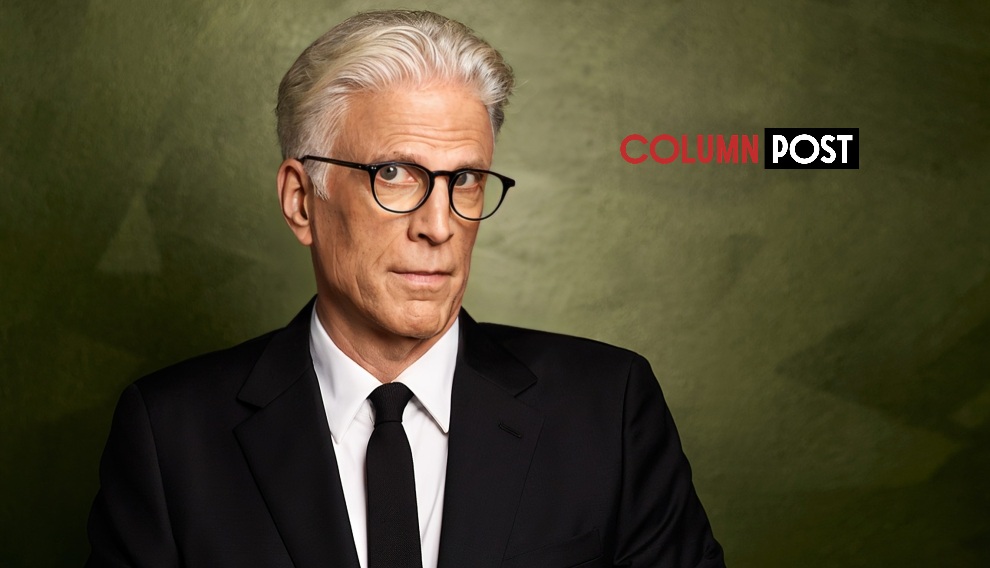
Ted Danson is one of the most enduring figures in American television history — a performer whose easy charm, comic instinct, and dramatic range have kept him at the centre of popular culture for more than four decades. From the smoke-hazed warmth of a fictional Boston bar to the ethereal architecture of the afterlife, he has inhabited roles that became genuine cultural landmarks. Yet his story is not only one of triumph. It is also a story of a very public fall from grace, a period of hard reflection, and an eventual return to form that few actors manage so convincingly.
Biography at a Glance
| Detail | Information |
|---|---|
| Full Name | Edward Bridge Danson III |
| Date of Birth | December 29, 1947 |
| Place of Birth | San Diego, California, USA |
| Raised | Flagstaff, Arizona |
| Nationality | American |
| Height | 6 ft 2 in (1.88 m) |
| Education | Kent School (Connecticut); Stanford University; Carnegie Mellon University (BFA, Drama, 1972) |
| Occupation | Actor, Producer, Environmental Activist, Author |
| Years Active | 1975 – present |
| Spouse (1) | Randall “Randy” Lee Gosch (m. 1970; div. 1977) |
| Spouse (2) | Cassandra “Casey” Coates (m. 1977; div. 1993) |
| Spouse (3) | Mary Steenburgen (m. 1995 – present) |
| Children | Kate Danson, Alexis Danson (with Casey Coates); two stepchildren (with Steenburgen) |
| Net Worth (est.) | $80 million |
Roots and Formation
Edward Bridge Danson III was born into a family shaped by intellect and curiosity. His father, Edward Bridge Danson Jr., was an archaeologist and museum director — a man whose professional life was devoted to excavating the past. His mother, Jessica MacMaster Danson, brought warmth to a household that relocated from San Diego to Flagstaff, Arizona, where the desert landscape and his father’s academic world left a lasting impression on the young Danson. That early exposure to the natural world and its fragility would later manifest in a decades-long commitment to environmental causes.
Danson attended the Kent School in Connecticut, a prestigious boarding school where he played basketball with genuine ability and began drifting toward drama. It was at Stanford University, however, that the drift became a decisive turn. Midway through his studies there, he transferred to Carnegie Mellon University in Pittsburgh, where he earned a Bachelor of Fine Arts in drama in 1972. Carnegie Mellon’s rigorous conservatory training gave him the technical foundation he would eventually put to devastating comic effect on network television.
After graduation, he worked as an understudy in a Tom Stoppard production off-Broadway, relocated to Los Angeles in the late 1970s, and supplemented his training with study at the Actor’s Institute. He picked up television commercials — he was notably the face of Aramis cologne for a period — and began accumulating guest credits on series including Laverne & Shirley, Taxi, Magnum P.I., and Benson.
The Making of Sam Malone
In 1979, Danson made his feature film debut in The Onion Field, a crime drama based on Joseph Wambaugh’s non-fiction account of the murder of a Los Angeles police officer. He played the ill-fated Officer Ian Campbell with restrained emotional intelligence, and critics took notice. A role in Lawrence Kasdan’s celebrated neo-noir Body Heat followed in 1981, and it was his work in that film that brought him to the attention of producer Glen Charles — one of the creators of a new NBC sitcom set in a Boston bar.
Cheers premiered in 1982, and with it, Ted Danson became one of the defining faces of American television for the following eleven years. He played Sam Malone, a former Red Sox relief pitcher turned barkeep: vain, womanising, charming, occasionally wise, and stubbornly loveable. The character walked the line between parody and sympathy with precision, and Danson calibrated that balance over 275 episodes with a comic timing that made the work look effortless. It was not.
The show struggled in its first season and nearly did not survive. By the time it ended in May 1993, its finale was watched by an estimated 42 million American households — one of the most-watched television events in history. Danson won two Primetime Emmy Awards for the role (in 1990 and 1993) and two Golden Globe Awards, cementing his status as not just a sitcom star but as one of the finest comic actors of his generation.
Cheers: Key Series Facts
| Statistic | Detail |
|---|---|
| Network | NBC |
| Run | 1982 – 1993 |
| Episodes | 275 |
| Danson’s Character | Sam Malone |
| Emmy Awards (Danson) | 2 (1990, 1993) |
| Golden Globe Awards (Danson) | 2 |
| Series Finale Viewership | Approx. 42 million households |
| Final Season Ranking | No. 1 in the US |
Film Career: Highs, Stumbles, and Cameos
Danson’s film work ran in parallel to Cheers rather than after it. Three Men and a Baby (1987), a remake of the French comedy Trois hommes et un couffin, became a genuine blockbuster — the highest-grossing film of that year in the United States. Its sequel, Three Men and a Little Lady (1990), performed well enough commercially if less spectacularly. These films positioned Danson as a viable leading man in mainstream comedy, though he would not sustain that status in cinema the way he did in television.
His dramatic film credits were more fitfully realised. A supporting appearance in Steven Spielberg’s Saving Private Ryan (1998) demonstrated he could anchor a serious ensemble, but the years between Cheers and his television renaissance in the mid-2000s produced largely forgettable work. Getting Even with Dad (1994), Loch Ness (1996), and several other titles did little to expand his reputation.
Selected Filmography
| Year | Title | Role | Notes |
|---|---|---|---|
| 1979 | The Onion Field | Officer Ian Campbell | Film debut |
| 1981 | Body Heat | Assistant D.A. Lowenstein | Led to Cheers casting |
| 1982 | Creepshow | Farmer Jordy Verrill | Stephen King anthology |
| 1987 | Three Men and a Baby | Jack Holden | Highest-grossing film of the year |
| 1989 | Dad | Jake Tremont | Drama; overlooked |
| 1990 | Three Men and a Little Lady | Jack Holden | Sequel |
| 1993 | Made in America | Hal Jackson | Co-starred with Whoopi Goldberg |
| 1998 | Saving Private Ryan | Captain Hamill | Brief but notable dramatic role |
| 2008 | Mad Money | Don Cardigan | Supporting |
| 2012 | Big Miracle | Col. Scott Boyer | Ensemble drama |
The Friars Club Roast: Understanding the Ted Danson Blackface Incident
On the evening of October 8, 1993, Ted Danson walked onto a stage at the New York Hilton Hotel ballroom before an audience of more than 3,000 people at a Friars Club roast honouring his then-girlfriend Whoopi Goldberg. What he delivered in the following minutes became one of the most notorious and debated celebrity controversies of the modern era.
Danson appeared in blackface — his face darkened with makeup, his lips exaggerated in white — and performed a set of racially charged jokes. He used the N-word more than a dozen times during the routine, discussed his sexual relationship with Goldberg in explicit detail, joked about her cleaning his parents’ house, and at one point ate watermelon on stage. The audience, accustomed to the Friars Club’s tradition of extreme and transgressive roast humour, was not prepared for the performance. Accounts from those present describe laughter giving way to silence, wincing, and finally, people walking out. Roger Ebert, who covered the event, wrote that the audience began hiding their faces in their hands.
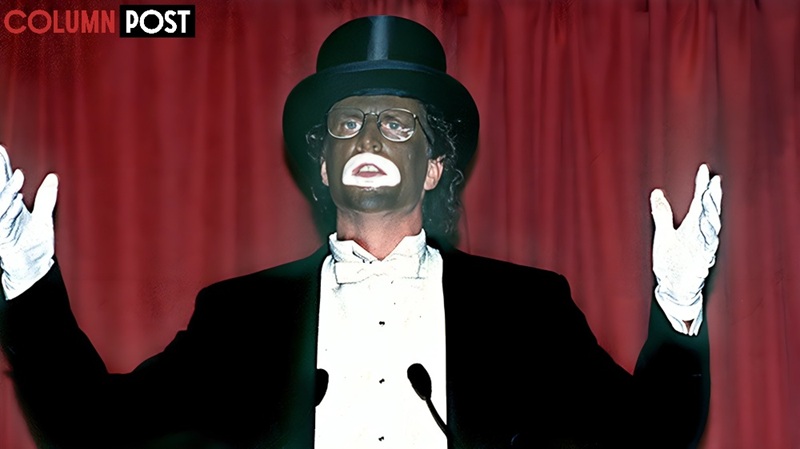
The fallout was immediate and severe. Talk show host Montel Williams resigned from the Friars Club on the spot, comparing the atmosphere to a Klan rally. New York Mayor David Dinkins was reported to be appalled. The incident was covered by every major news outlet and triggered what the New York Times called a national debate about race, comedy, the First Amendment, and the boundaries of satirical intent.
Goldberg’s response added considerable complexity to the story. She publicly defended Danson, arguing that she had helped write some of the material and that the critics were missing both the point and the context of Friars roast tradition. She insisted that Danson had taken genuine courage to perform as he did, and that those condemning him should have understood the format before attending. Her defence was fierce, but it did not quell the criticism — and in some quarters, it deepened the controversy around her own judgment.
The couple announced their separation less than a month after the roast.
Danson rarely discussed the incident publicly in the years that followed, but in a 2009 interview on NPR’s Fresh Air, he described it as a “graceless moment” in his life — an acknowledgment of failure rather than an attempt at exoneration. He did not revisit the performance as a misunderstood joke. He characterised it as a mistake, and let that stand.
The ted danson blackface incident remains a case study in the limits of comedic intent, the historical weight of racial imagery, and the way context — even sincerely offered — cannot fully neutralise the pain embedded in certain symbols. Whatever Danson intended, and whatever Goldberg had authorised, the performance drew from a tradition of minstrelsy with roots in the most dehumanising chapters of American racial history. The roast format provided no immunity from those roots. The moment has since been discussed repeatedly in broader conversations about how entertainment culture evolves, how accountability works, and what it means for intent and impact to diverge so completely.
The Wilderness Years and the Road Back
The period following Cheers and the roast controversy was not kind to Danson professionally. He was simultaneously freed from the role that had defined him and burdened by the weight of public scandal. The films he made in the mid-1990s were modest. The short-lived CBS sitcom Ink (1996–97), which he made alongside his new wife Mary Steenburgen — they had met on the set of Pontiac Moon in 1994 and married in 1995 — showed promise but failed to find an audience.
Becker, which began airing on CBS in 1998, proved a genuine second act. Danson played Dr. John Becker, a brilliant, misanthropic, permanently irritated physician who railed against his patients, his neighbourhood, and life in general. The contrast with Sam Malone’s easy charm was sharp and deliberate. Becker ran for six seasons and 129 episodes, demonstrating not only that Danson could anchor a new long-running series but that he had range that the Cheers years had only partially revealed.
The Renaissance: Damages, CSI, and The Good Place
If Becker restored Danson’s television standing, his casting in the FX legal drama Damages (2007–2010) announced something more significant: a late-career flowering as a dramatic actor of genuine authority. He played Arthur Frobisher, a scandal-plagued billionaire whose surface charm concealed layers of menace and self-deception. Critics were surprised and delighted. Emmy nominations and a Golden Globe nomination followed. He was no longer Sam Malone in a different outfit. He was something else entirely.
A long run as Raymond Langston’s replacement on CBS’s CSI: Crime Scene Investigation (2011–2015) kept him visible in mainstream drama, and recurring appearances as a comic version of himself on Larry David’s Curb Your Enthusiasm (2000–2024) reminded audiences of his comic instincts.
Then came The Good Place. Michael Schur’s philosophical comedy ran on NBC from 2016 to 2020 and featured Danson as Michael, the architect of a simulated afterlife neighbourhood — a character who began as a villain and evolved, over four seasons, into something approaching moral consciousness. The performance required Danson to carry equal parts slapstick absurdity and genuine emotional weight, and he managed both with a lightness that belied considerable technical craft. Emmy nominations followed, as did renewed critical affection and a new generation of admirers who had no particular memory of Cheers.
In 2024, he starred in A Man on the Inside on Netflix, earning a Golden Globe nomination for Best Actor in a Comedy Series. As of 2024, Danson had appeared as a series regular in twelve separate television shows — reportedly more than any other actor in the medium’s history.
Major Television Credits
| Years | Show | Network | Role | Awards |
|---|---|---|---|---|
| 1982–1993 | Cheers | NBC | Sam Malone | 2 Emmys, 2 Golden Globes |
| 1996–1997 | Ink | CBS | Mike Logan | — |
| 1998–2004 | Becker | CBS | Dr. John Becker | — |
| 2000–2024 | Curb Your Enthusiasm | HBO | Himself (recurring) | — |
| 2007–2010 | Damages | FX | Arthur Frobisher | Emmy nominated |
| 2009–2011 | Bored to Death | HBO | George Christopher | — |
| 2011–2015 | CSI: Crime Scene Investigation | CBS | D.B. Russell | — |
| 2015 | Fargo | FX | Floyd Gerhardt (guest) | — |
| 2016–2020 | The Good Place | NBC | Michael | Emmy nominated |
| 2021–2022 | Mr. Mayor | NBC | Neil Bremer | — |
| 2024– | A Man on the Inside | Netflix | Charles | Golden Globe nominated |
Environmental Activism and Public Life
Separate from his acting career, Danson has maintained a decades-long commitment to ocean conservation that pre-dates his most famous television roles and has outlasted them in terms of personal investment. In 1987, he co-founded the American Oceans Campaign, an organisation dedicated to combating the pollution, oil spills, and offshore development that threaten marine ecosystems. That organisation later merged with and helped build Oceana, now one of the largest international ocean advocacy groups in the world.
Danson has testified before the United States Congress on ocean policy and authored a book — Oceana: Our Endangered Oceans and What We Can Do to Save Them, published in 2011 — that made the case for environmental protection in accessible, non-specialist prose. His activism has been consistent, financially supported, and substantive rather than merely reputational.
In 2025, he received the Carol Burnett Award — the Television Academy’s highest honour for career achievement in television comedy — a recognition that placed him alongside the medium’s most celebrated names.
Awards and Honours
| Year | Award | Category | Project |
|---|---|---|---|
| 1990 | Primetime Emmy Award | Outstanding Lead Actor – Comedy | Cheers |
| 1993 | Primetime Emmy Award | Outstanding Lead Actor – Comedy | Cheers |
| 1990 | Golden Globe Award | Best Actor – TV Comedy | Cheers |
| 1993 | Golden Globe Award | Best Actor – TV Comedy | Cheers |
| 1999 | Hollywood Walk of Fame | Star | Career honour |
| 2025 | Carol Burnett Award | Career Achievement in TV Comedy | Career honour |
Legacy
Ted Danson is not an easy figure to reduce to a single narrative. He is the man who made Sam Malone one of the most beloved characters in the history of American sitcoms. He is also the man who walked onto a stage in blackface at the height of his fame and delivered a performance that still troubles cultural critics and historians today. He is the environmental activist who has spent real political capital on causes that do not advance his career. He is the actor who, in his sixties and seventies, produced some of the most compelling work of his life.
What holds these elements together is not resolution but continuity — the persistence of a person who has lived publicly, made serious mistakes publicly, and continued working with evident commitment and craft. The ted danson blackface incident of 1993 did not end him, but it could not be separated from him either. It became part of the record: a genuine failure that he has acknowledged without drama and carried without special pleading.
His career from the 2000s onward suggests that audiences — and critics — are capable of holding complexity. The Carol Burnett Award did not arrive despite his history. It arrived because of the full arc: the Cheers years, the wilderness, the renaissance, and everything in between.
Career Timeline
| Year | Milestone |
|---|---|
| 1947 | Born in San Diego, California |
| 1972 | Graduates from Carnegie Mellon University with BFA in Drama |
| 1975 | Television debut on Somerset (NBC) |
| 1979 | Film debut in The Onion Field |
| 1981 | Appears in Body Heat; casting attention leads to Cheers |
| 1982 | Cheers premieres on NBC; Danson cast as Sam Malone |
| 1987 | Three Men and a Baby becomes the year’s top-grossing film |
| 1987 | Co-founds American Oceans Campaign |
| 1990 | First Primetime Emmy Award for Cheers |
| 1993 | Cheers finale watched by 42 million households; second Emmy |
| 1993 | Friar’s Club roast blackface incident; widespread condemnation |
| 1995 | Marries Mary Steenburgen |
| 1998 | Becker premieres on CBS |
| 1999 | Receives star on the Hollywood Walk of Fame |
| 2007 | Career renaissance begins with Damages (FX) |
| 2011 | Publishes Oceana: Our Endangered Oceans and What We Can Do to Save Them |
| 2011 | Joins CSI: Crime Scene Investigation as series regular |
| 2016 | The Good Place premieres; Danson plays Michael |
| 2024 | A Man on the Inside premieres on Netflix |
| 2025 | Receives Carol Burnett Award from the Television Academy |