
The Dream That Became a Disaster
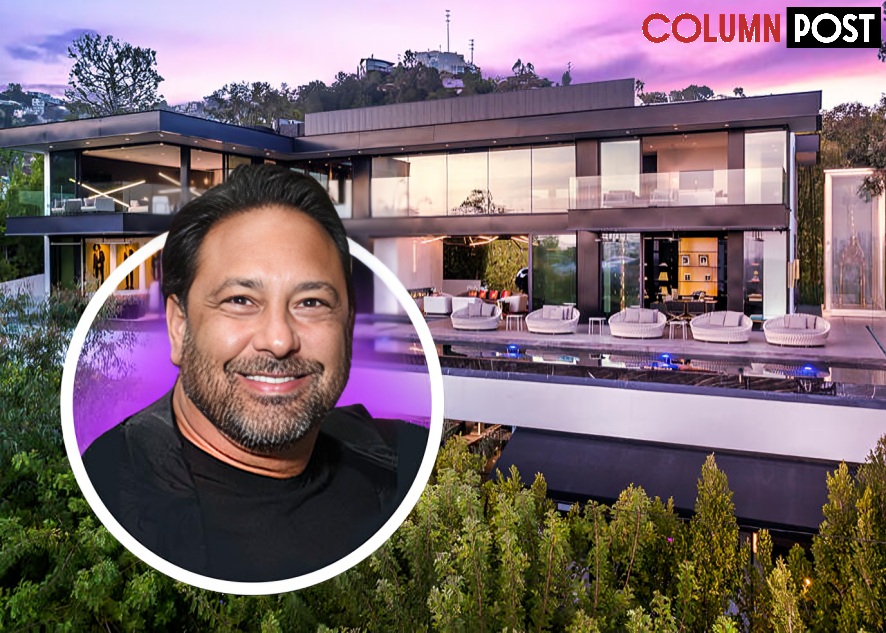
At one point, Nile Niami was the man who was going to sell the most expensive home in American history. A 105,000 square foot mega-mansion perched in the Bel Air hills of Los Angeles, listed at a staggering $500 million. It had a moat. A four-lane bowling alley. A casino. A full-size nightclub. A room designed purely for jellyfish.
It also never sold for anywhere close to that number — and the story of how it all collapsed is one of the most fascinating, cautionary, and genuinely jaw-dropping tales in modern real estate history. Nile Niami is a former film producer turned luxury real estate developer who became world-famous for building “The One” — and then watched it slip through his fingers in one of the most public financial collapses the property world has ever seen.
Nile Niami – Fast Facts
| Detail | Info |
|---|---|
| Full Name | Nile Niami |
| Nationality | American |
| Profession | Real Estate Developer, Former Film Producer |
| Known For | Developing “The One” — listed at $500 million |
| Peak Net Worth | Estimated $100M+ (at height of career) |
| Notable Project | The One, Bel Air, Los Angeles |
| Final Sale Price of The One | Approximately $126 million (at foreclosure auction) |
| Current Status | Largely out of the public spotlight |
Before the Mansions – The Man Behind the Vision
To understand Nile Niami, you have to go back before the marble floors and the infinity pools and the nine-figure price tags.
He didn’t come from old money. He didn’t inherit a real estate empire. Niami built his reputation the old-fashioned way — through hustle, vision, and a willingness to take risks that most people would never seriously entertain.
Born and raised in the United States, Niami developed an early appreciation for aesthetics and scale. He was drawn to things that were big — big ideas, big visuals, big impressions. That instinct would later define everything he built.
But before real estate, there was Hollywood.
The Film Years – Learning to Sell a Vision
Before anyone knew his name in real estate circles, Nile Niami was a movie producer.
His film career wasn’t headline-grabbing in the traditional sense — he wasn’t producing Oscar contenders. But what the entertainment industry gave him was something arguably more valuable for his future: he learned how to sell a feeling.
Films are, at their core, experiences. You’re not selling a story — you’re selling how that story makes someone feel. And that psychological understanding of desire, aspiration, and emotional response turned out to translate perfectly into luxury real estate.
| Film Production Career | Details |
|---|---|
| Industry | Hollywood film production |
| Role | Producer |
| Key Skill Developed | Selling vision and aspiration over tangible product |
| Transition Period | Early 2000s pivot toward real estate |
| Crossover Advantage | Understanding of high-net-worth clientele and lifestyle marketing |
When Niami eventually crossed over into property development, he didn’t approach it like a contractor or an investor. He approached it like a director — with a vision, a story, and an audience in mind.
The Pivot to Real Estate – Where the Real Story Begins
Niami entered the luxury real estate market at exactly the right time.
Los Angeles in the early 2000s was hungry for a new kind of property — not just expensive homes, but statements. Trophy properties for billionaires, tech moguls, and entertainment elite who didn’t just want a house. They wanted an experience. A destination. A conversation piece.
Niami understood that assignment completely.
His early properties started turning heads fast. He had a gift for identifying locations — usually in the hills above LA — and transforming them into something that felt less like real estate and more like a lifestyle. Clean lines. Dramatic views. Spaces that photographed like a magazine shoot and felt like a five-star resort.
The sales followed. And with each successful sale, Niami’s ambitions grew.
Which, in hindsight, is both how he built his reputation and how he eventually overreached.
The Niami Method – How He Developed and Sold Luxury Homes
Before The One consumed everything, Niami had a portfolio of high-end properties that established him as a serious player in the ultra-luxury market.
Here’s a look at how his approach evolved:
| Property / Project | Location | Listed Price | Notable Features |
|---|---|---|---|
| Early Bel Air spec homes | Bel Air, LA | $20M–$50M range | Modern design, hillside views |
| Sunset Strip properties | Hollywood Hills | $30M–$70M range | Entertainment-focused design |
| Mid-career flagship homes | Beverly Hills area | $50M–$100M range | Resort-style amenities |
| The One | Bel Air, LA | $500 million | 105,000 sq ft, full resort amenities |
His method was consistent: buy land in a premium location, build something visually stunning and technically massive, then market it to an ultra-high-net-worth global buyer pool.
For years, it worked beautifully.
The properties sold. The reputation grew. And each project got bigger — in size, in scope, and in the financial risk Niami was willing to take on.
The One – Inside the $500 Million Mega Mansion
Nothing in Niami’s career — or arguably in American residential real estate history — compares to what he tried to do with The One.
Located in Bel Air, overlooking the entirety of Los Angeles, The One was conceived as the ultimate residential property. Not just the most expensive home in America — the most extraordinary home anywhere.
The numbers alone are staggering:
| Feature | Detail |
|---|---|
| Total Size | 105,000 square feet |
| Bedrooms | 21 |
| Bathrooms | 42 |
| Garage Capacity | 30+ cars |
| Special Features | Moat, casino, nightclub, bowling alley, cinema, jellyfish room |
| Outdoor Space | Multiple pools, tennis court, panoramic city views |
| Construction Start | Approximately 2012 |
| Original Listing Price | $500 million |
| Location | Bel Air, Los Angeles, California |
The vision was genuinely extraordinary. Niami wanted to create something that would attract the wealthiest buyers on the planet — Saudi royalty, tech billionaires, global moguls — people for whom $500 million was a legitimate budget.
He told anyone who would listen that there was no other property like it on earth. And in terms of raw scale and ambition, he wasn’t wrong.
The problem wasn’t the vision. The problem was everything it took to execute it.
Where It All Unraveled – The Timeline of Collapse
Construction on The One dragged on for years beyond its original schedule. Costs spiraled. Lenders grew impatient. And the $500 million listing — bold and headline-grabbing when it launched — started to look less like a price and more like a fantasy.
Here’s how the collapse unfolded:
| Year | Event |
|---|---|
| 2012 | Construction begins on The One |
| 2017 | Property listed for $500 million — worldwide media attention |
| 2018–2020 | Construction delays mount, costs balloon significantly |
| 2021 | Lenders file for foreclosure proceedings |
| Early 2022 | Court-appointed receiver takes control of the property |
| February 2022 | The One goes to foreclosure auction |
| March 2022 | Property sells for approximately $126 million |
The gap between $500 million and $126 million tells the whole story.
Niami had borrowed heavily to finance the construction — reportedly over $165 million in loans from various lenders. When those lenders lost confidence and called in their debts, the entire structure came down fast.
There were also reports of unpaid contractors, legal disputes with construction teams, and mounting liens against the property. The One wasn’t just a house anymore — it was a legal and financial battlefield.
The Foreclosure & Auction – The Final Chapter of The One
When The One went to auction in February 2022, it was one of the most-watched events in real estate history.
The property that had been marketed to global billionaires — the home with the moat and the jellyfish room and the $500 million price tag — was sold through a foreclosure proceeding.
The winning bid came in at around $126 million. After fees, commissions, and outstanding debts, the amount that actually flowed back was significantly less than what was owed.
For context:
| Amount | |
|---|---|
| Original Asking Price | $500,000,000 |
| Reported Construction & Loan Costs | $165,000,000+ |
| Final Auction Sale Price | ~$126,000,000 |
| Difference from Asking Price | ~$374,000,000 |
The numbers are brutal in their clarity. A project that was supposed to redefine luxury real estate ended up selling for roughly a quarter of what Niami believed it was worth.
It wasn’t just a financial loss. It was a very public, very documented collapse of one of the most audacious real estate bets ever placed.
Where Is Nile Niami Now?
After the auction, Nile Niami largely stepped back from the public eye.
He hasn’t made major headlines since the fall of The One. There have been no announced comeback projects, no splashy new listings, no public statements reclaiming his position in the market.
What has emerged occasionally are reflections — from people who know him and from rare public comments — suggesting that Niami still believes in his vision. That he still sees The One as something extraordinary that the market simply wasn’t ready for.
Whether that’s a healthy perspective or a defense mechanism is hard to say from the outside. But it does speak to something genuine about his character — he’s not someone who does things halfway, and he’s not someone who easily accepts that the dream was wrong.
What comes next for him remains genuinely unclear. He’s not old. He still has knowledge, contacts, and a track record — imperfect as it now is. Real estate has seen comebacks before. Whether Niami has one in him is a question only time will answer.
The Lessons Behind the Legend
It would be easy to look at Nile Niami’s story and reduce it to a punchline. The guy who tried to sell a $500 million house and couldn’t.
But that reading misses the actual complexity of what happened.
Niami identified something real — there is a global market for ultra-luxury residential properties. He wasn’t wrong about that. Properties in that tier do sell. His execution, however, ran headfirst into several brutal realities:
| Lesson | What It Reveals |
|---|---|
| Vision without liquidity is fragile | Borrowed capital at extreme scale leaves no room for delay |
| Market timing matters enormously | A $500M listing requires the right buyer at the right moment |
| Ambition can outpace demand | Even among billionaires, there are limits to what the market absorbs |
| Scale creates complexity | The bigger the project, the more ways it can go wrong |
| Reputation is hard to rebuild | Public failure at this scale follows you |
These aren’t abstract lessons. They’re written in the $374 million gap between what Niami asked for and what the market gave him.
A Figure Worth Understanding
Nile Niami is not a villain in this story. He’s not a fraud or a con artist. He’s something more interesting and more human than that — he’s a true believer who bet everything on a vision and lost.
There’s something genuinely fascinating about people who operate at that level of conviction. The same quality that drives someone to build a 105,000 square foot house with a moat and list it for half a billion dollars is the quality that, in a slightly different context, produces genuine greatness.
The difference between visionary and cautionary tale is often just a matter of timing, debt structure, and market conditions. Niami had the vision. The other pieces didn’t align.
His story deserves to be told fully — not as mockery, but as a real account of what happens when ambition and reality finally collide. It’s a story about Los Angeles, about luxury, about the nature of risk, and ultimately about what it means to dream at an almost incomprehensible scale.
For better or worse, there will never be another story quite like it.