
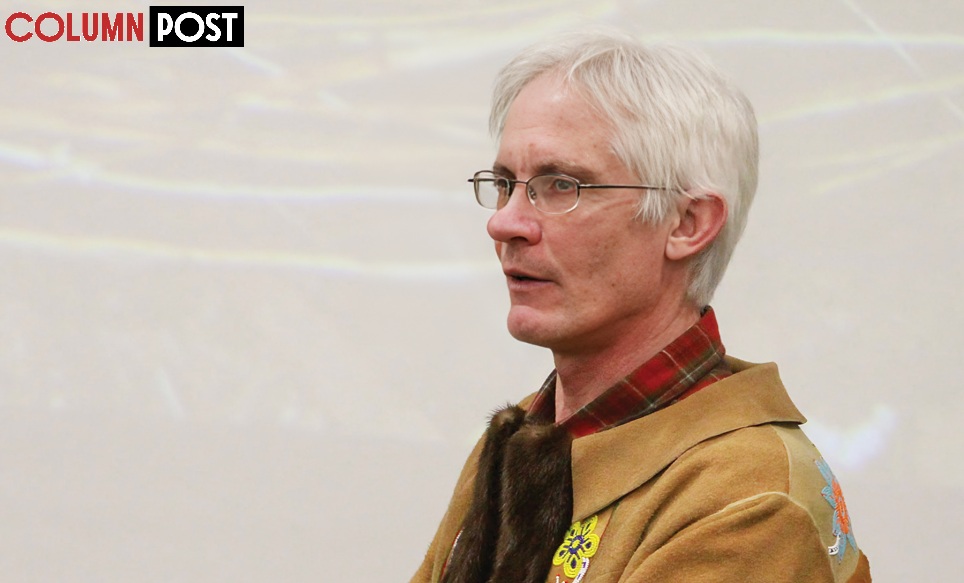
In 1980, a twenty-two-year-old carpenter from Wheaton, Maryland, named Andy Bassich arrived in Alaska with no specific plan beyond a general conviction that the outdoor life he had been gravitating toward since adolescence could not be fully realised in the suburbs of Washington D.C. He had graduated from John F. Kennedy High School four years earlier, spent time working as a carpenter and cabinet maker in Virginia, developed a passion for hunting and fishing that the Eastern Seaboard’s managed landscapes could not adequately satisfy, and eventually made the decision that a great many people who feel the pull of the wilderness consider and most decline to act on: he went.
| Quick Facts | Details |
|---|---|
| Full Name | Andy Bassich |
| Date of Birth | January 25, 1958 |
| Birthplace | Washington D.C., USA |
| Raised | Wheaton, Maryland |
| Age (2026) | 68 years old |
| Height | 5 ft 9 in (1.75 m) |
| High School | John F. Kennedy High School, Wheaton, Maryland (graduated 1976) |
| Occupation | Carpenter, musher, riverboat captain, hunter, trapper, outdoorsman |
| Moved to Alaska | 1980 — age 22 |
| Alaska base | Calico Bluff, Yukon River — near Eagle, Alaska |
| Riverboat career | Captain on the Yukon River — approximately 20 years |
| Sled dogs | Up to 37 dogs at peak; currently 25+ |
| Mushing school | Alaska-Yukon Adventures — co-founded with Kate Rorke |
| 2009 Flood | Eagle, Alaska flood; Andy and Kate rescued by helicopter; major property loss |
| TV debut | Life Below Zero — premiere episode, May 19, 2013 (original cast) |
| Wife (ex) | Kate Rorke Bassich — met Dawson City 2003; married ~2006; Kate left January 2015; divorced 2016 |
| Abuse allegations | Kate publicly alleged verbal and physical abuse; Andy received significant fan backlash |
| Children | No biological children; Kate has children from a previous relationship |
| 2018 Hip Injury | Near-fatal muscle and bone infection; treated in Florida |
| Current girlfriend | Denise Becker — Canadian trauma nurse; met on canoe trip Florida 2017; engaged |
| Social media | None — not active on any platform |
| Annual salary (est.) | ~$100,000 from Life Below Zero |
| Net Worth (est. 2026) | $350,000 – $500,000 |
More than four decades later, he is still there. The specific location — Calico Bluff, on the Yukon River, near the small community of Eagle in interior Alaska — is one of the more remote permanently inhabited locations in the United States, accessible primarily by river during the summer months and by frozen river and trail during the winter. He has lived subsistence-style for decades, mushes a team of sled dogs, hunts and traps for food, operates the camp and outbuildings that constitute his home, and has spent over a decade documenting that life for the cameras of National Geographic’s Life Below Zero — one of the longest-running and most critically decorated reality documentary series in American television history.
The story of Andy Bassich is not simply a story of physical endurance in extreme conditions, though it is certainly that. It is the story of a man whose identity was formed in a particular direction from an early age, who pursued that direction without compromise, and who has paid the specific price — in isolation, in physical injury, in a marriage that ended with serious public allegations of abuse — that total commitment to a particular way of life tends to extract from the people who choose it.
Wheaton, Maryland: The Suburban Childhood That Pointed Elsewhere
Andy Bassich grew up in Wheaton, Maryland — a dense, diverse suburb in Montgomery County, immediately north of Washington D.C., whose character in the 1960s and 1970s was shaped by the federal government employment base that defines the entire D.C. metropolitan area, by a working and middle-class residential culture, and by the specific atmosphere of a community whose proximity to the capital gives it political awareness without the capital’s direct intensity.
It was not a wilderness environment. The Potomac River and the C&O Canal trail offered some access to outdoor activity, and the Appalachian foothills were within reasonable driving distance, but Wheaton’s landscape is fundamentally urban-suburban — a place where hunting and trapping are not daily realities but weekend activities for people who drive somewhere to do them, and where the particular orientation that would eventually take Andy Bassich to the Yukon River needed some other outlet while he was young.
He found that outlet in exactly the activities — hunting, fishing, working with his hands — that the D.C. suburbs made available at the margins, and developed the mechanical and physical competencies that would define his professional identity through the carpenter and cabinet maker work he began after graduating from Kennedy High School in 1976. The fine arts interest he pursued at Kennedy — the school offered a strong arts curriculum — reflects the same aesthetic sensibility that would later express itself in the quality of the handcraft he brought to his Alaska construction work: a person who sees making things well as both a practical and an expressive act.
He did not go directly from high school to Alaska. There were years in Virginia, working as a carpenter, developing the trade skills that would serve him in environments where every structural problem requires a practical solution because there is no one else to call. The move to Alaska came in 1980, when he was twenty-two — old enough to know what he was choosing and young enough to build a life from the choice.
The first thing he did upon arriving in Alaska, by his own account, was trade a truckload of wood for his first sled dog, Muzzle. The transaction tells you almost everything you need to know about his priorities.
Twenty Years on the Yukon: Life as a Riverboat Captain
The Yukon River is the dominant geographic and cultural feature of interior Alaska’s human landscape — a 1,980-mile waterway that drains an area larger than Texas and France combined, that has shaped the lives of the Indigenous peoples who lived along it for thousands of years, that became the highway of the Klondike Gold Rush and the infrastructure of the Alaska trading economy in the decades that followed, and that remains, in the communities along its banks, the primary axis of movement, commerce, and survival.
Andy Bassich spent approximately twenty years as a captain on the Yukon River — running boats between the communities, fishing camps, and supply points that line its banks through interior Alaska and across the border into the Yukon Territory of Canada. It is work that requires deep practical knowledge of the river: its seasonal variations, its shallow channels and hidden obstacles, its behaviour during the spring breakup when the ice disintegrates and the water levels surge, and the specific mechanical demands of vessels operated in conditions that range from the mild temperatures of the brief Arctic summer to the extreme cold of early and late season operations.
The riverboat work placed Andy at the centre of the Yukon River community — a network of year-round residents, seasonal workers, subsistence hunters, and the various transient populations that remote Alaska attracts and sustains. It also placed him in Dawson City, the historic Klondike Gold Rush town on the Yukon Territory side of the border, where he would be working as a riverboat captain in the summer of 2003 when a tourist named Kate Rorke came through.
During the same years, he was developing the dog mushing capability that would become the most visually distinctive aspect of his Life Below Zero portrayal. He built his team incrementally — trading, training, breeding — until he had reached a peak of approximately 37 sled dogs, a number that represents not a hobby but a substantial ongoing operational commitment: feeding, exercising, maintaining the health, and managing the social dynamics of a large working dog team in an environment where veterinary services require a flight rather than a drive. He established himself at Calico Bluff — a location on the Yukon River approximately twelve kilometres from Eagle — building the structures, caches, and infrastructure that subsistence life in that environment requires.
He also taught himself skills that went well beyond his original carpentry training: how to make bullets, how to forge knives, how to construct solar chambers for food preservation, how to manage the annual cycle of food production and storage that keeps a person fed through an Arctic winter without a supply chain within practical reach. The accumulation of those skills across two decades produced the person that Life Below Zero eventually documented — not a man performing survivalism for a camera but a man who had been doing exactly this for longer than most of his eventual audience had been following the show.
The 2009 Eagle Flood: Losing Everything
In the summer of 2009, the Yukon River flooded at Eagle — one of the most severe floods in the river’s documented history, triggered by an ice jam breakup that sent a wall of water and ice through the community with extraordinary speed and force. Andy has described the onset as occurring within fifteen minutes of the initial ice break — a timeframe that gave residents almost no opportunity to secure property or make orderly evacuations.
The flood destroyed Andy’s house, swept away his machinery, and took with it the accumulated physical investments of years of construction and equipment acquisition. He and Kate were rescued by helicopter — along with their sled dogs, whose welfare in the evacuation reflects the specific priority that working dog teams hold for mushers in the Yukon River community. The dogs were not optional cargo. They were the operational foundation of his subsistence life, and losing them would have meant losing the capacity to function through the winter months in the way he had built his existence around.
The aftermath of the flood forced Andy to relocate temporarily to Washington D.C. — a return to the suburban environment he had left nearly thirty years earlier, made necessary by the practical reality that his Alaska home no longer existed. It was, by every account, a profoundly disorienting experience for a man whose identity had been constructed so completely around the Yukon River landscape. He returned to Alaska as soon as circumstances permitted, rebuilt, and reinforced a forty-foot arc of levee around the rebuilt structure to protect it against future flood events.
The flood brought the attention of Life Below Zero‘s production team to Andy and Kate’s story — a couple who had built something extraordinary in a remote location, lost it to one of Alaska’s periodic reminders of its own authority over human constructions, and rebuilt it with the same practical determination that had built it the first time. The show’s producers approached them in the aftermath of their return. They accepted. The premiere aired on May 19, 2013.
Kate Rorke: How They Met, What They Built, How It Ended
Kate Rorke was born on December 1, 1956, in Canada — a woman with a longstanding passion for wildlife research and outdoor environments who had spent time in Alaska before the summer of 2003, when she arrived in Dawson City as a tourist and encountered Andy Bassich working as a riverboat captain.
By multiple accounts, the attraction was immediate and mutual. Kate was not an Alaska outsider who stumbled into a wilderness she didn’t understand — she had genuine knowledge of and affection for northern environments, had conducted wildlife research in Alaska previously, and brought to the relationship a capability and willingness that the life Andy had built at Calico Bluff actually required. They began dating, and after approximately three years together, married around 2006 — the specific ceremony details not publicly documented.
The life they built together at Calico Bluff was, in its productive years, a genuine partnership. They co-founded Alaska-Yukon Adventures — a survival and dog mushing school that offered clients approximately twenty days of immersive wilderness education, including dog sledding, river travel, hunting, and the practical skills of Arctic subsistence living. Kate managed the sled dogs alongside Andy — at one point describing the morning routine of feeding twenty dogs as one of the day’s genuinely pleasurable rituals. They were photographed together, interviewed together, and presented on Life Below Zero as the show’s most recognisable couple — two people who had chosen a life together that most of their audience could barely imagine.
Kate’s final episode of Life Below Zero was Season 5, Episode 6, “Darkness Falls.” In January 2015, she left Calico Bluff. The departure was announced publicly in a 2015 episode of the show. The divorce was finalised in 2016.
What came after the departure was harder and more damaging to Andy’s public image than the divorce itself. Kate broke her public silence about the marriage in an interview with DailyTwoCents that was widely shared within the Life Below Zero audience: “The hardest part is understanding why I stayed so long in an abusive relationship. I do know I love the land, I loved the lifestyle but I could not love the man he really is. I lived in a fairytale belief that someday he would become a kind, faithful, loving person. That fairytale was not to be mine.”
She alleged both physical and verbal abuse — claims that were, she noted, not spontaneous post-divorce accusations but the explanation for a departure that she had needed the courage to make. Fans of the show who had noticed what they described as Andy’s dismissive and harsh treatment of Kate on camera — his tone, his impatience, the way he spoke to her as though her contributions were inadequate — felt the allegations confirmed something they had already observed. The backlash against Andy on social media was significant.
Andy Bassich has not made public statements that directly address Kate’s specific allegations. He has continued to appear on Life Below Zero through its subsequent seasons, working alone and then with his current partner Denise Becker. His public position on the marriage’s end has been maintained with the same reserve that characterises his general approach to anything personal — he does not use social media, does not give interviews on private matters, and has let the Life Below Zero camera document his life without providing a verbal counter-narrative to Kate’s account.
Kate has since relocated first to British Columbia and then to Newfoundland, Canada. She has a cancer scare in 2021 that she documented publicly and recovered from. She engages with fans on Facebook and has spoken about writing a book about domestic abuse. She has not returned to Alaska or to Life Below Zero.
The 2018 Hip Infection: The Injury That Nearly Killed Him
In 2018, Andy Bassich suffered a severe infection in the muscle and bone of his hip — a medical crisis that, by the accounts available from the Life Below Zero episodes and interviews that addressed it, came close to killing him. The specific origin of the infection is not fully documented in publicly available sources, but the combination of the physical demands of his subsistence lifestyle, the limited access to medical facilities in interior Alaska, and the particular vulnerability of deep tissue infections in remote environments where early intervention is difficult created a situation that required him to leave Alaska for treatment.
He travelled to Florida — a journey that placed him as far from his Yukon River home as it is possible to go within the continental United States, in terms of both geography and climate — for the sustained medical treatment his condition required. In Florida, during his recovery, he encountered Denise Becker on a canoe trip in 2017 — the timeline overlapping with his medical treatment period in a way that multiple sources describe as the beginning of a relationship that developed alongside his physical recovery.
Denise Becker is a Canadian trauma nurse — a professional background that was, given the circumstances of their meeting, practically relevant as well as personally significant. A trauma nurse’s clinical knowledge and her specific comfort with serious physical injury and extended recovery processes made her both a capable support during Andy’s treatment and a person whose professional instincts were attuned to exactly the kind of medical situation he was navigating. She moved to Alaska with him when he was well enough to return, and has appeared in Life Below Zero alongside him in subsequent seasons.
The hip infection and its treatment represent, in the arc of Andy’s Life Below Zero story, the clearest evidence that the physical cost of the life he has chosen is accumulating in ways that his body registers even if his determination does not. The 2018 crisis was not a bear attack, not a flood, not an accident — it was a medical emergency generated by the cumulative toll of decades of hard physical work in an environment that does not forgive inattention to the body’s signals.
Life Below Zero: What the Camera Documents
Life Below Zero premiered on May 19, 2013, with Andy and Kate Bassich among the original six cast members — alongside Sue Aikens, Chip and Agnes Hailstone, and Glenn Villeneuve. The show documented the daily and seasonal rhythms of their subsistence life at Calico Bluff: hunting moose, caribou, wolf, and salmon; maintaining the dog team; managing the camp’s infrastructure through freeze-up and breakup; navigating the specific logistics of living in a location where the nearest community is accessible by river or trail rather than by road.
Andy’s segments have consistently emphasised the mechanical and constructional dimensions of his subsistence life — the practical problem-solving of a trained carpenter applied to an environment where every structural failure is a survival issue, not merely an inconvenience. He has, across the show’s run, built and rebuilt camp structures, maintained riverboats and dog sleds, constructed food caches and fuel storage, and demonstrated the accumulated practical knowledge of four decades in the Yukon River environment.
He earns approximately $100,000 annually from the show — a figure that, combined with the income from Alaska-Yukon Adventures and the subsistence food production that reduces his cash expenditure requirements, constitutes a modest but functional economic basis for the life he has chosen. He is not wealthy by any mainstream measure. He is, by his own evident assessment, exactly where he wants to be.
Net Worth: The Honest Picture
| Income Source | Estimated Contribution |
|---|---|
| Life Below Zero — annual salary | ~$100,000/year |
| Alaska-Yukon Adventures mushing/survival school | Variable; seasonal |
| Carpenter and construction work | Historical |
| Subsistence hunting/fishing (food cost reduction) | Significant practical value |
| Estimated Total Net Worth (2026) | $350,000 – $500,000 |
The net worth figure is the most modest of any Life Below Zero cast member — a reflection of the specific economic structure of Andy’s life, which prioritises subsistence capability and operational self-sufficiency over asset accumulation. He owns the land at Calico Bluff. He has his dog team. He has the camp he built with his own hands. He has the skills that have kept him alive in interior Alaska for four decades. By the measure he appears to apply to his own situation, that is the inventory that matters.
Conclusion
Andy Bassich left Wheaton, Maryland in 1980 at the age of twenty-two, traded a truckload of wood for his first sled dog, became a Yukon River boat captain for twenty years, built a subsistence camp at Calico Bluff with Kate Rorke, lost everything to the 2009 Eagle flood, rebuilt it, joined Life Below Zero as an original cast member in 2013, went through a marriage that ended with serious public abuse allegations, nearly died from a hip infection in 2018, met a Canadian trauma nurse named Denise Becker during his recovery in Florida, brought her back to the Yukon River, and is still there — at sixty-eight years old, in one of the most remote locations in North America, doing what he came to Alaska to do.
He is not on social media. He does not give interviews about his personal life. The camera documents what it sees, and what it sees, season after season, is a man who made a choice in 1980 and has not revised it.