
| Quick Facts | Details |
|---|---|
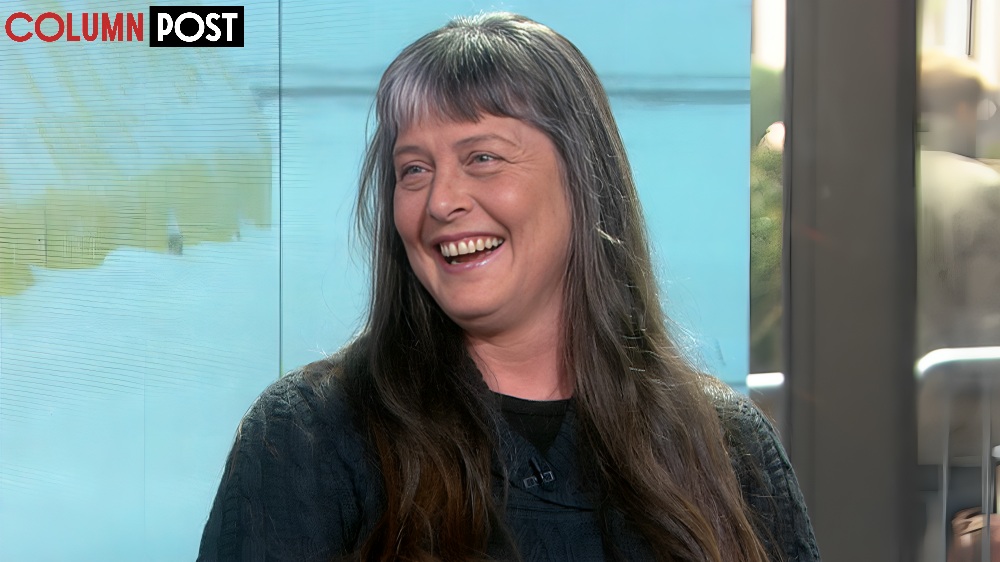
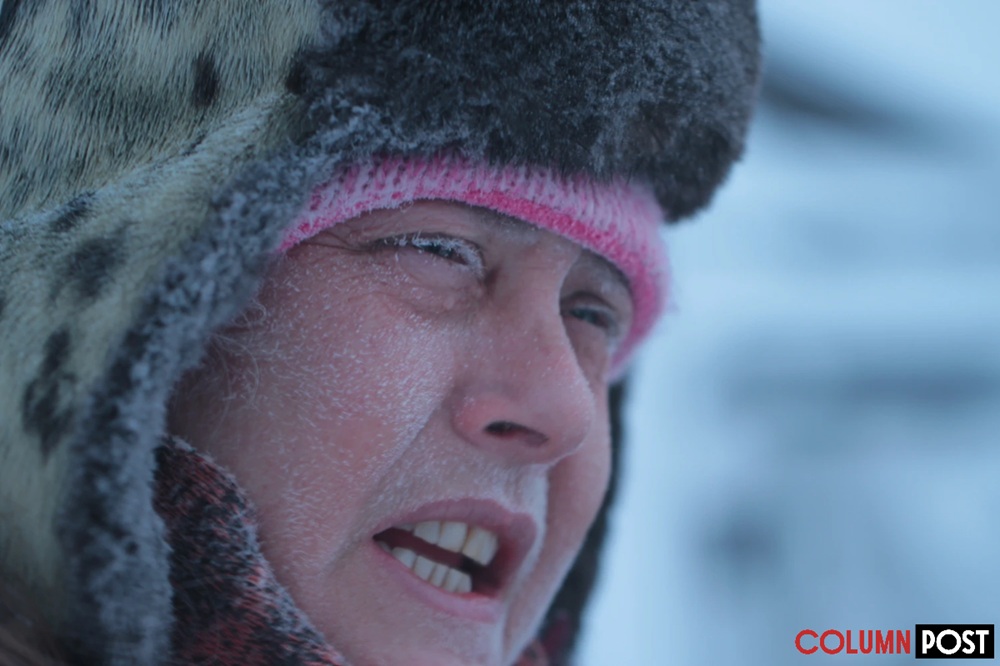
| Who | Sue Aikens — wilderness camp operator; later star of Life Below Zero (National Geographic) |
| When | Autumn 2007 — late season, before Kavik River froze solid |
| Where | Kavik River Camp, 197 miles north of the Arctic Circle, Alaska |
| Bear | Juvenile male grizzly — described by Sue as an “alpha push” animal |
| Trigger | Sue removing caribou carcasses the bear had buried on her helipad |
| Why rifle was down | Operating the water pump required both hands |
| Attack type | Bear snatched her from the riverbank; dragged her between the dining hall and river |
| Injuries | Both hips torn from sockets; teeth marks in skull (top and bottom); severe head wound; arm wounds; throat compression |
| Immediate response | Played docile; waited for bear to drop her; sewed own head and arm wounds |
| Hip management | Used her gun belt to hold hips in place before they gave out entirely |
| Bear’s fate | Sue found it, crossed the river, and shot it before her hips failed |
| Rescue attempts | Called Alaska State Troopers — got answering machine; called one or two others; could not reach help |
| Time alone | Ten days |
| Who found her | A local pilot — airlifted to Fairbanks for treatment |
| Hospital treatment | Hip surgery; head wounds closed; full physical recovery |
| Long-term scars | Permanent — teeth marks still palpable in skull as of 2024 |
| Sue’s response | Returned to Kavik River Camp as soon as physically able; never left permanently |
In the autumn of 2007, somewhere between the last days of the operating season and the moment the Kavik River froze solid for winter, Sue Aikens put down her rifle to operate a water pump. She had glanced around first. She had looked. She had not seen the bear anywhere.
The bear was hiding in the cut bank of the river.
What happened in the minutes that followed is one of the most extraordinary individual survival stories in the recorded history of Alaskan wilderness life — and it is not extraordinary because of any single dramatic action, though there were several of those. It is extraordinary because of the accumulation: the injuries sustained and managed, the decisions made under conditions of extreme physical trauma and total isolation, the ten days that followed before a pilot found her and the question of whether she would survive was finally, definitively answered. It is the kind of story that, told to someone who does not know the person at its centre, sounds like embellishment. Told about Sue Aikens — a woman who was abandoned in Alaska at twelve, raised herself in the wilderness, and built a life at the most remote operational outpost on the North American continent — it sounds exactly like what it is: Tuesday, taken to its extreme conclusion.
The Bear: An Alpha Push
To understand the 2007 attack, it is necessary to understand the specific bear and the specific dynamic that preceded it — because the attack did not come without warning. There was a warning. Sue Aikens read it correctly. She simply could not avoid it.
In the weeks before the attack, she had noticed a juvenile male grizzly in the area around the camp. He was burying caribou carcasses — kill cache behaviour, common in young male bears establishing territory — and the location he had chosen for his cache was Sue’s helicopter landing pad. The problem was immediately practical: a cache of decomposing caribou on the helipad meant the landing surface was compromised, and the regular smell of cached meat would attract every other bear within scenting range, which in the Arctic tundra around Kavik could mean animals from ten or fifteen miles in any direction.
She dug up the carcasses and burned them. She did this as a matter of operational necessity, not as a provocation. The bear experienced it as a provocation regardless.
Sue Aikens described what she recognised happening as an “alpha push” — the specific behavioural pattern of a young male bear without established status attempting to assert dominance over a territory and its occupant. The juvenile male grizzly had not yet reached the size or confidence of a fully mature bear, but it was moving in that direction, and the removal of its carefully buried food cache by the human who occupied the space it was attempting to claim was, in bear terms, a direct challenge to the hierarchy it was trying to establish.
This context matters for two reasons. First, it explains why the attack that followed was a dominance assertion rather than a predatory attack — a distinction that would ultimately determine whether Sue’s survival strategy worked. Second, it illustrates the specific kind of knowledge that separates someone who has lived in bear country for decades from someone who has not: Sue Aikens understood what the bear was communicating, understood the risk it represented, and understood — critically — what the correct response to that kind of attack would be if it came.
The bear had been watching the camp for weeks. It knew where she was. She knew it was out there. The question was never whether the confrontation was coming. The question was when, and what the conditions would be.
The Moment the Rifle Went Down
Late autumn in Arctic Alaska is a race against the freeze. The Kavik River, which provides the camp’s water supply during the operating season, begins to freeze from the edges inward as temperatures drop in September and October — and once it freezes solid, the water it contains is inaccessible until the following spring. The last pumping of the season — pulling water from the river before it locks up completely — is a critical operational task that cannot be delayed or skipped.

On the day of the attack, Sue Aikens went to the river to collect water. She brought her rifle, as she always did when working outdoors at Kavik. This is not a precaution she took selectively; it is the standard operating procedure of a person who has understood, from years of experience and from her own earlier close encounters with bears, that at Kavik River Camp, working outdoors without a rifle is a decision that accepts unnecessary risk. She had encountered bears on her runway from her first landing at the camp. She had experienced them investigating her tent while she slept. She understood, with the specific clarity of someone who has counted the consequences of inattention, that the rifle was not optional.
To operate the water pump — the mechanical device that pulls water from the river and transfers it to the camp’s storage — she needed both hands. She set the rifle down. She glanced around the horizon. She looked toward the riverbank. She saw nothing. She put both hands on the pump.
In her own account, given to Men’s Journal and referenced in multiple subsequent interviews: “I glanced around, glanced around, looked, didn’t see him anywhere. I had to set the rifle down to pick up the pump and get it in the water. And he ended up hiding in a little bit of the cut bank and snatched me up.”

The bear had been in the cut bank of the river — a slight depression or overhang in the bank’s edge, invisible from the angle at which Sue had been scanning — the entire time. It came out of the fog of the riverbank the moment she put down the rifle and picked up the pump. There was no time to reach the weapon. There was no time for anything except the instinct of a woman who had been thinking about this possibility for weeks and who had, in the processing of that thinking, already decided what she would do.
The Attack: Hips Out of Sockets, Teeth in the Skull
The bear snatched her up from the riverbank and dragged her into the tundra — specifically, she later said, into the area between the camp’s dining hall and the river. It was a grizzly bear performing the physical behaviours of dominance assertion: grabbing, dragging, establishing that it was larger and stronger than the thing it had decided to challenge.
The injuries she sustained in those initial moments were severe by any clinical measure. The bear’s jaws closed on her head — top and bottom — compressing her skull and tearing the scalp. It seized her by the throat and tightened. It tore both hips out of their sockets through the combination of dragging and the specific mechanics of a large predator’s grip on a human body.
“He put his jaws on the throat and tightened,” she later told the Daily Record, “and you can still feel where his teeth went into my head, top and bottom, and he bluff charged me. He had torn the hips out of the sockets and thrown me around.”
Dislocated hips — both simultaneously — represent an injury of extraordinary severity. The hip joint is the largest ball-and-socket joint in the human body, stabilised by some of the strongest ligaments in the skeletal structure. To dislocate both hips simultaneously through external force requires an application of energy that gives some sense of what the bear’s physical engagement with Sue’s body actually involved. In clinical settings, hip dislocation is treated as an orthopaedic emergency; it is associated with severe pain, inability to bear weight, risk of damage to the sciatic nerve, and — if not reduced promptly — avascular necrosis of the femoral head. It is the kind of injury that, in a hospital, is addressed immediately with anaesthesia and specialist intervention.
Sue Aikens was in the Arctic tundra. There was no hospital. There was no anaesthesia. There was no specialist.
She played docile — the survival decision that she had already reasoned through before the attack came. The bear she was dealing with was not a predatory animal hunting for food. It was a young male asserting hierarchy, demonstrating to the human occupant of its claimed territory that it was the dominant creature in this relationship. Playing dead against a predatory attack is a more complicated calculation; against a dominance-asserting attack from a juvenile male, it was the correct response. The bear needed to establish that it had won. Once it had — once the creature it had challenged was lying still, not fighting back, not representing ongoing competition — it had no reason to continue the engagement.
The bear dropped her and retreated to the riverbank.
What She Did Next: The Sequence That Defines Everything
The bear had dropped her. She was alive, with both hips out of their sockets, serious wounds to her head, wounds to her arm, compression injuries to her throat, and a rifle lying by the river yards away. She was in the tundra between the dining hall and the river. She was alone. The nearest neighbour was not within any practical travel distance. The nearest city was Fairbanks, 500 miles to the south.
The sequence of decisions and actions that followed is the foundation of everything that people who know Sue Aikens’s story understand about her character:
She sewed her own head wound together. The specific materials she used are not documented in clinical detail in the public record — the accounts describe her as using available materials to close the wound — but the act itself is confirmed in her own words across multiple interviews: “I had to sew my head together, and my arm, and then before my hips popped out, because they had been dislocated, I went across the river.”
The timing in that sentence is critical. She sewed her own wounds before her hips gave out entirely — meaning that there was a window, in the immediate aftermath of the attack, when the hips that had been torn from their sockets had not yet reached the point of complete structural failure, and she used that window to manage her wounds before the opportunity closed. She understood that if she waited, she would lose the physical capability to do it at all.
She then did something that requires a particular explanation, because it seems, to anyone who has not thought it through, like the action of someone in shock rather than someone thinking clearly: she found her rifle, used her gun belt to create a crude hip stabilisation support, crossed the river, tracked the bear, and shot it.
This was not aggression or revenge. It was strategic necessity, thought through in the specific terms of someone who understood her situation completely. She was injured, alone, and incapable of defending herself against further attack. The bear that had attacked her was still in the area. Bears return to cached food. A bear that had successfully established dominance over a human in a location would return to that location. With both hips compromised and no physical capability to move quickly or defend herself, the bear’s continued presence represented a threat to her survival that was as concrete and immediate as the injuries themselves. She had to eliminate that threat while she still had the physical capability to do it.
She shot the bear. Then, as she described to Men’s Journal: “I got myself back in. I could not reach any communications.”
Ten Days: The Wait
She made it back to the camp. She called the Alaska State Troopers. She got their answering machine. She called one or two other people. She could not reach anyone who could respond.
She lay there for ten days.
The ten-day period between the attack and her rescue is not a passive story. It is an active management problem conducted by a person who was severely injured, alone, in an environment where the temperature was dropping toward the winter extremes that Kavik’s location guarantees, and where the bears she could hear moving in the darkness outside the camp’s structures had the sensory capability to detect her presence, her pain, and the specific biological signals that an injured animal radiates in the wilderness.
“I knew the bears knew where I was thanks to their sense of smell,” she has said. “It was terrifying at night when I could hear the sounds of a bear feasting on another animal, and knowing it was only a tent that separated me from that.”
She managed her injuries as best she could. She kept herself hydrated and as stable as possible. She was unable to reach a restroom — an indignity compounded by the awareness that the resulting smells increased her detectability to the bears she could hear outside. She waited. She maintained the orientation toward survival that she has described, across multiple interviews, as the foundation of everything her life in the Arctic has taught her: the understanding that comfort with one’s own death does not mean indifference to life but rather the practical, unsentimental commitment to doing what survival requires without the paralysing interference of fear.
After ten days, a local pilot found her. She was airlifted to Fairbanks for treatment. Her hips were surgically reduced and stabilised. Her head wounds were properly closed. She received the hip surgery her injuries required and then travelled to the Lower 48 for further spinal work.
She made a full physical recovery — or as full a recovery as an injury of that severity permits. The teeth marks in her skull remain palpable to the touch. She noted as recently as 2024: “You can still feel where his teeth went into my head.”
The Aftermath: What It Changed and What It Didn’t
The 2007 bear attack changed Sue Aikens’s daily operational protocols at Kavik River Camp in specific, practical ways. She became more systematic about her scanning routines — using binoculars from an elevated position at the camp to check the horizon in a full 360-degree arc every time she prepared to work outdoors. She became more consistent about never setting down her rifle for any reason, regardless of the task at hand. She became more attentive to the bear activity monitoring that she had always conducted — Kavik’s surrounding territory, she has estimated, contains at least 80 bears within ten miles of the camp, with a further two to three times that number of uncollared animals in the broader area.
What the attack did not change is the more significant fact. Sue Aikens did not leave Kavik River Camp. She recovered, she returned, and she continued operating the camp in exactly the same manner she had before — alone, through the winter months, in the middle of grizzly bear territory, in conditions that most people would consider uninhabitable. The bear attack did not represent to her a reason to reconsider the life she had chosen. It represented a lesson about a specific operational failure — the moment the rifle went down — and she incorporated that lesson without revising the broader commitment that the lesson had tested.
“If you live my lifestyle, you must be comfortable with your own death,” she said in a post-attack interview. “I hear people say ‘Life is knocking me down.’ I say, ‘No, it’s not. It’s just playing with you.'”
The attack features prominently in Life Below Zero — the National Geographic series that began following Sue’s life at Kavik in 2013 — not as a formal episode reconstruction but as biographical context, the formative event that explains the operating procedures and the specific wariness that viewers observe in her daily routines. In the show’s framing, and in Sue’s own framing, the 2007 attack is not the story of how she almost died. It is the story of how she lived — and of what that living required.
The Medical Legacy: Hip Surgery and the Ongoing Physical Cost
The immediate surgical treatment in Fairbanks addressed the acute injuries — hip reduction, wound closure, stabilisation. The longer-term medical legacy of the attack, combined with the cumulative physical demands of decades of hard wilderness labour, has been a series of ongoing surgical interventions that reflect the specific way a body in its sixties carries the weight of everything it has done in its forties and fifties.
Sue Aikens has undergone multiple hip and spinal surgeries in the years since 2007. In September 2020, she had spinal surgery and referred to herself during recovery as “Sue 2.0.” In January 2024, she announced she was preparing for long-overdue spinal fusion surgery to address issues in her cervical spine — surgery performed on February 8, 2024, involving discectomies and laminectomies on multiple vertebrae, followed by targeted injections in her lumbar spine. During recovery from that surgery, an old bear-bite wound at the surgical site became infected; it was successfully treated.
She documented the February 2024 surgery on social media with the matter-of-fact transparency that characterises her public communication — photographs of surgical scars, updates on recovery progress, expressions of gratitude for support received. National Geographic sent flowers. The combination of institutional acknowledgement and the visible physical evidence of what her life has cost her body is, in its way, a complete picture of what Sue Aikens’s story actually is: a person who chose a life that required everything, paid for it physically across decades, and has not once suggested the price was too high.
Conclusion
In autumn 2007, Sue Aikens was getting water from the Kavik River before it froze. She put down her rifle for thirty seconds. A juvenile male grizzly that had been watching her for weeks came out of the cut bank and snatched her up. It tore both hips from their sockets and put its teeth into her skull. It dropped her, went back to the riverbank, and left her in the tundra between the dining hall and the river.
She sewed her own wounds. She used her gun belt to hold her hips together. She crossed the river and shot the bear before her hips gave out. She called the troopers and got their answering machine. She lay there for ten days. A pilot found her. She went to hospital, had surgery, recovered, and went back to Kavik River Camp.
The teeth marks are still in her skull. She can feel them now.
She never left.