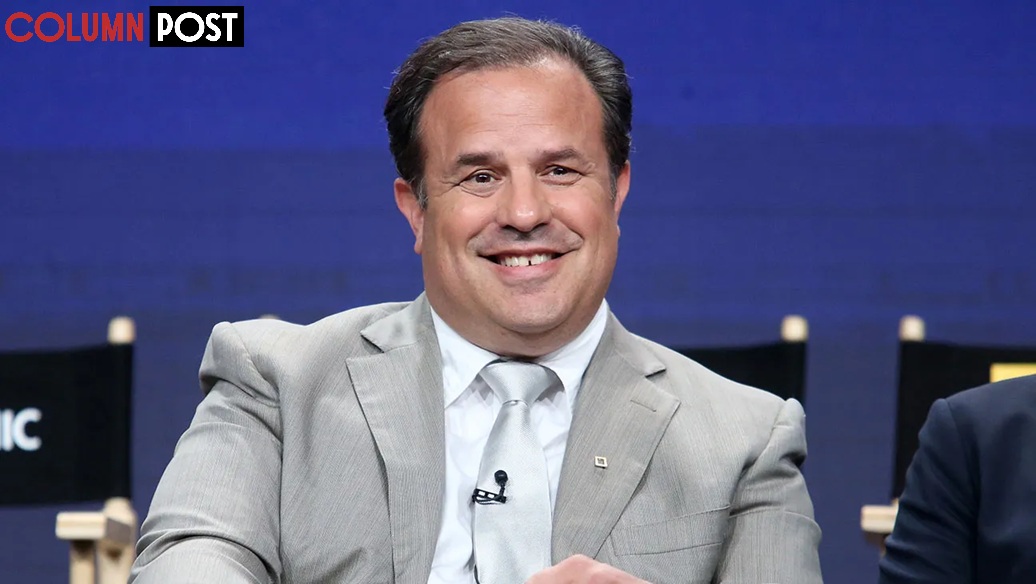

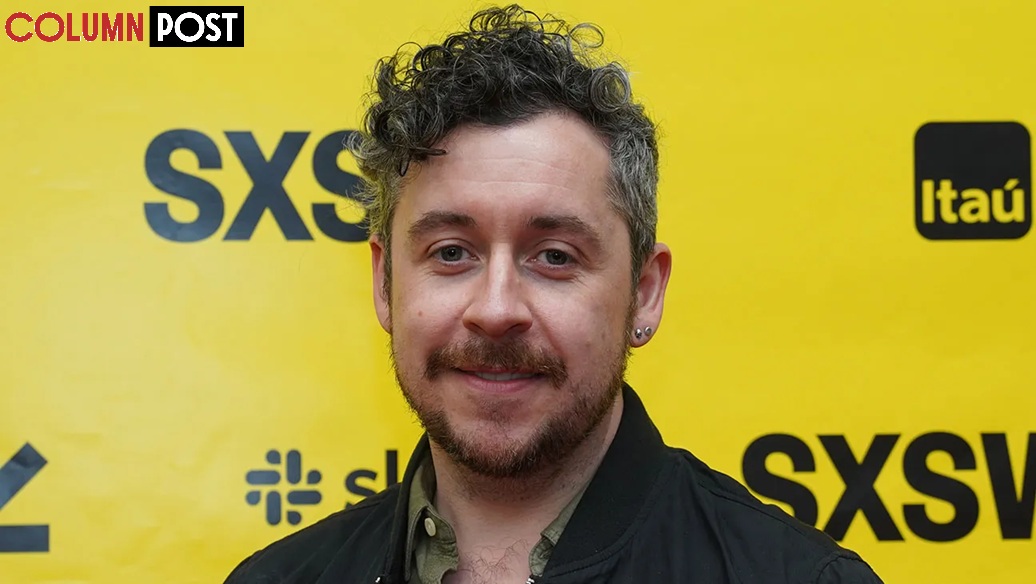
In the spring of 2021, a forty-year-old Irish director sat in a Los Angeles meeting room with Sam Raimi and Rob Tapert — the producer and director whose names are synonymous with the Evil Dead franchise — and was given approximately fifteen minutes to make his case for why he should be the one to make the next entry in one of the most fiercely loved horror series in cinema history. He made the case. He left. His agents called shortly afterward with the specific message that success in a franchise pitch produces: “Evil Dead is yours to lose if you don’t get it right.”
| Quick Facts | Details |
|---|---|
| Full Name | Lee Cronin |
| Date of Birth | January 24, 1982 |
| Birthplace | Dublin, Ireland |
| Age (2026) | 44 years old |
| Nationality | Irish |
| Training | National Film School — IADT, Dún Laoghaire, Ireland |
| Short films | Wilbur & Anto (2004); Through the Night (2010); Billy & Chuck (2011); Ghost Train (2013) |
| Ghost Train award | Méliès d’Argent — Best European Fantastic Short Film, Molins Film Festival |
| Ghost Train anthology | Featured in Minutes Past Midnight (2016) |
| Feature debut | The Hole in the Ground (2019) — A24/DirecTV; Sundance world premiere |
| Hole in the Ground awards | Saturn Award nomination Best Breakthrough Director; IFTA nominations |
| TV credit | 50 States of Fright (2020, Quibi) — one episode; connection to Sam Raimi |
| Raimi pitch meeting | 15-minute LA conversation; agents called after: “Evil Dead is yours to lose” |
| Raimi’s key advice | “Make sure the Deadites are really scary and use the book” |
| Evil Dead Rise | Evil Dead Rise (2023) — New Line/Warner Bros.; world premiere SXSW; $147M worldwide/$19M budget |
| Fake blood | 6,500 litres (1,717 gallons) — hired industrial kitchen; “blood as a character” |
| Filming | New Zealand, June–October 2021; Mount Wellington warehouse; exterior cabin outside Auckland |
| Fangoria award | Fangoria Chainsaw Award — Best Director (2024) |
| New Line deal | First-look deal signed post-Evil Dead Rise success |
| Production company | Wicked/Good (formerly Doppelgängers) — co-founded March 2024 with John Keville and Macdara Kelleher |
| The Mummy | Lee Cronin’s The Mummy — April 17, 2026; New Line/Warner/Blumhouse/Atomic Monster |
| Mummy cast | Jack Reynor, Laia Costa, May Calamawy, Natalie Grace, Veronica Falcón |
| Mummy producers | James Wan, Jason Blum, John Keville |
| Mummy filming | Ireland and Spain, March–June 2025 |
| Mummy tagline | “What Happened to Katie?” |
| Mummy influences | Poltergeist (1982); Se7en (1995) |
| Mummy quote | “This will be unlike any Mummy movie you ever laid eyeballs on before” |
| Upcoming | Thaw — New Line horror thriller |
| Personal life | Extremely private — no confirmed public information |
| Net worth (est. 2026) | $5–$7 million |
He did not get it wrong. Evil Dead Rise (2023) grossed $147 million worldwide on a $19 million budget — the highest-grossing entry in the Evil Dead franchise — and introduced approximately 6,500 litres of fake blood into the cinematic record, a quantity that required hiring an industrial kitchen to cook, that a young actress named Nell Fisher spent three months covered in, and that Cronin described with the specific conviction of someone who had thought carefully about the decision: “I wanted blood to be a character.”
The story of Lee Cronin is the story of an Irish filmmaker who trained at a film school in Dún Laoghaire, spent a decade making short films that won European genre awards, broke through at Sundance with an A24 debut, pitched a 40-year-old franchise in a 15-minute meeting, made the most commercially successful Evil Dead film in history, and is now releasing a Mummy film on April 17, 2026, that he has described as unlike anything you have ever laid eyeballs on. He is forty-four years old, extremely private about his personal life, and one of the most commercially significant horror directors working in the English language.
Dublin, IADT, and the Education of a Genre Filmmaker
Lee Cronin was born on January 24, 1982, in Dublin, Ireland — the capital city whose specific character, shaped by the tension between ancient and modern, between Catholic institutional identity and the secular cosmopolitanism of a European capital, gives its artists a particular relationship to myth, folklore, and the uncanny that runs through Irish cultural production with remarkable consistency. That Ireland has produced a disproportionate number of horror and dark fantasy filmmakers — Neil Jordan, The Crying Game; Declan McGrath, Sweety Barrett; and now Cronin himself — reflects something specific about the Irish imaginative tradition’s comfort with the uncanny, the changeling, the thing beneath the familiar surface.
He trained at the National Film School at IADT — the Institute of Art, Design and Technology in Dún Laoghaire, the south Dublin coastal town whose film school has produced multiple significant Irish filmmakers, and whose training methodology combined technical film production with the broader creative context of art and design education. The IADT training gave Cronin the foundation for the short film career that would develop across the following decade — a series of projects that built his technical capabilities, developed his visual voice, and eventually produced the specific work that placed him on the international genre film radar.
He was, across those early years, a working filmmaker in the specific sense of someone who makes films without institutional support or commercial resources — finding the stories that small-budget production can sustain, building the crew relationships that careers are made of, and developing the patience and technical ingenuity that no-budget filmmaking demands of people who want their work to look like something.
The Short Film Career: Ghost Train and the Méliès d’Argent
The short films that Lee Cronin made across the decade following his IADT training document a filmmaker developing his voice in the specific register of horror and dark fantasy — the register that would define his feature career and that each short pushed a little further.
Wilbur & Anto (2004) — his earliest documented short — established his capacity for character-based narrative within the specific environment of Irish working-class life, grounding the genre impulses that would become more explicit in later work within the recognisable human textures of Dublin’s urban landscape.
Through the Night (2010) and Billy & Chuck (2011) continued the development — the specific directorial intelligence of someone building a body of work rather than making isolated projects, each film absorbing the lessons of the previous one and extending the technical and narrative capabilities they had demonstrated.
Ghost Train (2013) was the breakthrough in the short film world — a horror short that won the Méliès d’Argent for Best European Fantastic Short Film at the Molins Film Festival in Spain, the prize awarded by the European Fantastic Film Festivals Federation that represents the most significant formal recognition available to European genre short filmmakers. The film’s quality was sufficient to earn it a place in the Minutes Past Midnight (2016) anthology — the international horror short compilation whose curators selected it from the European genre short film landscape as one of the most accomplished entries of the preceding years.
The Méliès d’Argent win placed Lee Cronin on the specific radar of international genre film festivals, programmers, and production companies whose attention to European horror short film talent identified him as a filmmaker whose feature debut was a question of when rather than whether.
The Hole in the Ground (2019): Sundance, A24, and the Changeling
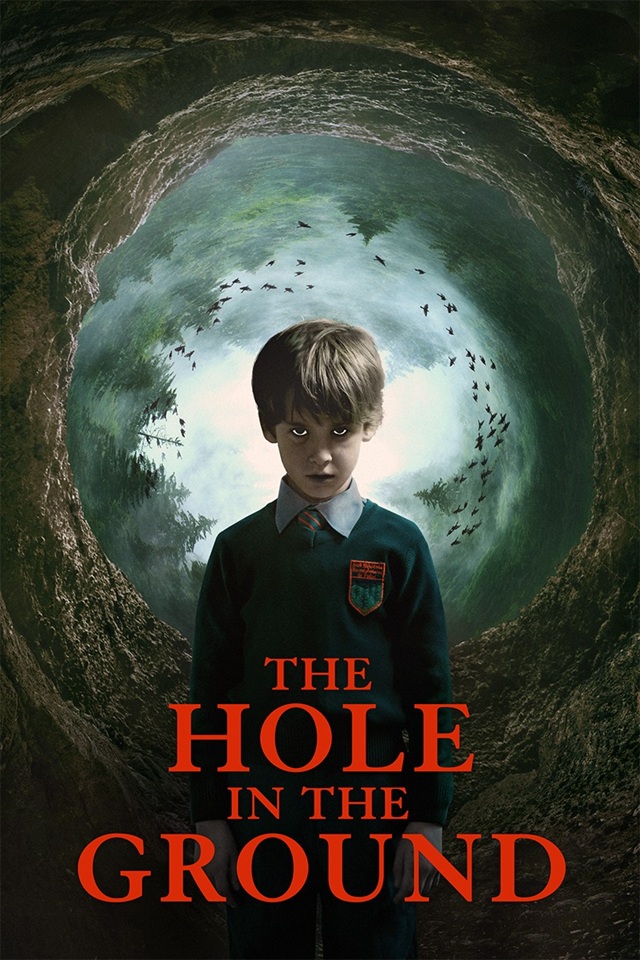
The Hole in the Ground premiered at the Sundance Film Festival in January 2019 — the festival’s World Dramatic Competition programme, which represented the specific institutional recognition that independent feature debuts require to attract distribution and industry attention simultaneously. The film was acquired by A24 and DirecTV Cinema — a distribution partnership that placed it within A24’s specific horror portfolio whose critical prestige and target audience alignment were exactly suited to what Cronin had made.
The film is rooted in the specific mythology of the Irish countryside — the changeling, the creature left in a child’s place when the real child is taken, whose long history in Irish folklore represents the cultural processing of childhood death and transformation through the specific narrative form of supernatural substitution. Its premise: a mother and her young son move to a rural Irish home, the boy falls into a mysterious sinkhole in the woods, and the mother begins to suspect that the child who returned from the woods is not her son. The film stars Seána Kerslake as the mother, whose performance carries the specific weight of maternal dread across a sustained 90 minutes of escalating uncertainty.
The film received a Saturn Award nomination for Best Breakthrough Director — the genre industry’s formal recognition of Cronin as a significant new voice — alongside multiple IFTA (Irish Film and Television Awards) nominations that acknowledged the specific achievement of an Irish filmmaker working at this level on Irish material.
The Hole in the Ground demonstrated the specific quality that would subsequently make Lee Cronin attractive for franchise work: the capacity to take familiar horror premises — the changeling narrative is as old as Irish storytelling — and execute them with sufficient technical precision, tonal control, and genuine menace that they feel both familiar and genuinely frightening. He understood how genre machinery worked. He understood how to make it work on audiences rather than alongside them.
50 States of Fright and the Raimi Connection
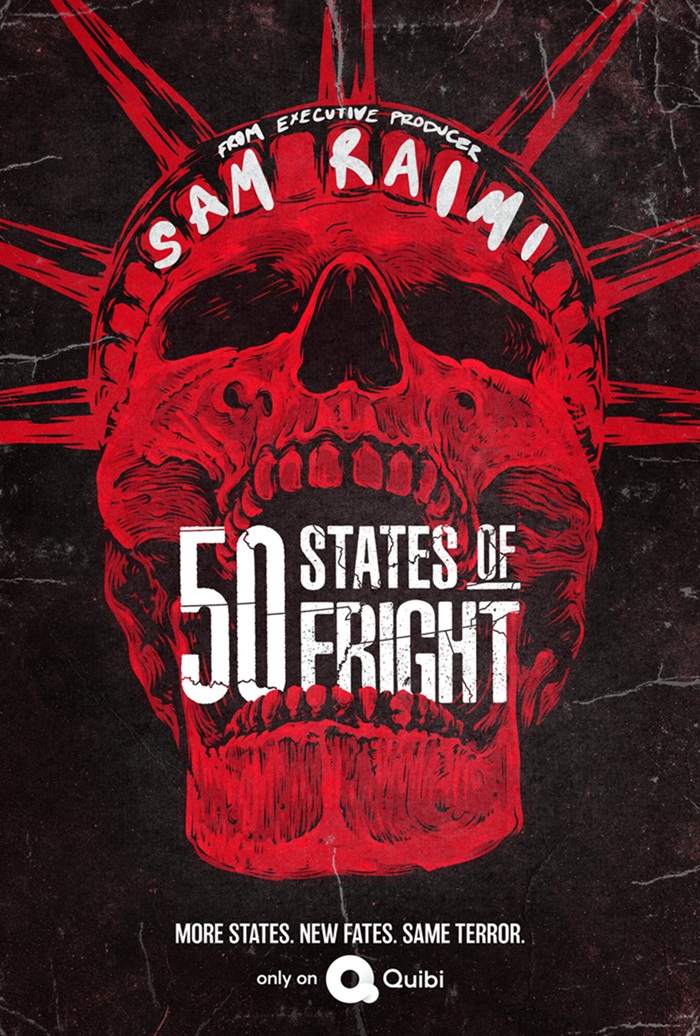
The path from The Hole in the Ground to Evil Dead Rise ran through an unlikely intermediate stop: 50 States of Fright — the 2020 Quibi short-form horror anthology series whose episodes were each set in a different American state and directed by filmmakers from around the world.
Quibi was, as a platform, one of the more spectacular commercial failures in the history of streaming media — it launched in April 2020, raised $1.75 billion in funding, and shut down after six months having never found the audience its investors had projected. But for Lee Cronin, directing one episode of 50 States of Fright produced something considerably more valuable than its commercial context suggested: it placed him in the professional world of Sam Raimi, who was involved with the anthology.
The specific mechanics of how Raimi and Cronin connected through the anthology are not documented with precision in public sources. What is documented is the outcome: Cronin was identified, by the people responsible for the Evil Dead franchise’s continued development at New Line Cinema, as a filmmaker whose sensibility, whose specific genre intelligence, and whose capacity to work effectively within established franchise mythology made him worth a meeting.
The fifteen-minute meeting was, by Cronin’s own account in Variety, unusually brief for a conversation whose outcome would be so significant. Sam Raimi and Rob Tapert sat across from him. Cronin made his case for why his vision for the next Evil Dead film was the right one. He left. His agents called with the message that the franchise was his to lose.
Raimi’s key piece of advice — “Make sure the Deadites are really scary and use the book” — was, in retrospect, both obvious and essential: stay true to what made the franchise what it was, and trust the mythology that four decades of audience engagement had built. Cronin took the advice and then went considerably further with it.
Evil Dead Rise (2023): 6,500 Litres and $147 Million
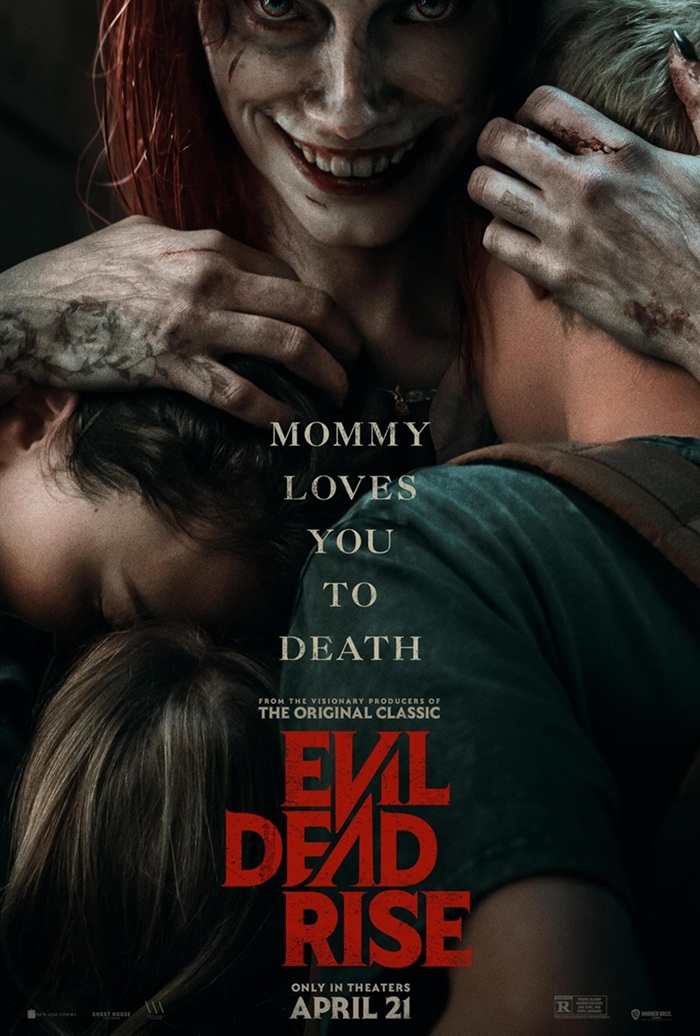
Evil Dead Rise was filmed in New Zealand between June and October 2021 — a production location chosen primarily for logistical and economic reasons connected to New Zealand’s COVID-era management framework, which allowed international film productions to operate with a level of consistency that Los Angeles or London could not provide during the same period. The interiors were shot on sets constructed in a warehouse in Mount Wellington, Auckland; an exterior cabin set was built outside Auckland for the rural sequences.
The film’s premise was a deliberate departure from the franchise’s established rural setting: moving the evil to a Los Angeles apartment building, the story follows a mother (played by Alyssa Sutherland) who becomes possessed by the Necronomicon and threatens her own children — with her sister (played by Lily Sullivan) and the children themselves as the story’s survivors. The decision to relocate the evil from the classic woodland cabin to an urban high-rise was Cronin’s most significant structural innovation, and one whose implications — the inability to escape, the intimacy of the danger, the specific horror of domestic space turned threatening — he exploited with sustained effectiveness.
The 6,500 litres of fake blood — approximately 1,717 gallons — is the production detail that has entered the public record most completely, and that most fully captures Cronin’s directorial philosophy. The decision to hire an industrial kitchen to cook the blood — to produce it at the scale and with the consistency that the film’s escalating violence demanded — reflected a commitment to practical effects whose quality gives the film’s most extreme sequences a physical credibility that CGI-substituted alternatives rarely match. “I wanted blood to be a character,” Cronin has said — the specific conviction of a filmmaker who understood that in the Evil Dead universe, the quantity and quality of blood on screen is not gratuitousness but grammar: the language through which the franchise communicates the specific, visceral horror that its audience has always come for.
The film had its world premiere at SXSW in March 2023 and was released theatrically in April 2023. It grossed $147 million worldwide against a $19 million production budget — a return ratio of approximately 7.7:1 that represents one of the most commercially efficient horror productions of the decade. It became the highest-grossing Evil Dead film in franchise history — surpassing the original and both sequels on whose foundation it built.
The Fangoria Chainsaw Award for Best Director in 2024 was the genre industry’s specific acknowledgement of what Cronin had achieved — the award that the horror community’s most longstanding publication gives to the year’s best horror direction, won in the year after a film that redefined what the Evil Dead franchise could be for a contemporary audience.
One casting detail from Evil Dead Rise connects directly to our previous article in this session: Nell Fisher played Kassie — the young actress who described spending three months covered in fake blood and deciding, on the basis of that experience, that filmmaking was exactly what she wanted to do with her life. The director’s preparation for working with a young performer in a horror environment — having her play with fake blood and fake vomit before principal photography to normalise the sensory experience — reflects the specific thoughtfulness about young actors that subsequent projects confirmed as a consistent quality of his directorial approach.
Wicked/Good and the New Line First-Look Deal
The commercial success of Evil Dead Rise produced the institutional consequences that major franchise success in Hollywood typically generates: New Line Cinema signed Lee Cronin to a first-look deal — the industry mechanism through which a studio secures priority access to a filmmaker’s projects while they develop the specific pipeline of work that both parties want to make.
In March 2024, Cronin co-founded Wicked/Good — the production company, formerly operating as Doppelgängers, that he established with John Keville and Macdara Kelleher as the institutional infrastructure for his ongoing work. Keville is a significant figure in Irish film production whose previous work includes producing The Hole in the Ground; his continued partnership with Cronin through the formation of Wicked/Good reflects the specific creative and professional trust that has been building since the feature debut.
The production company’s name captures something specific about Cronin’s directorial sensibility — the “wicked” of the horror tradition he has inhabited most completely, and the “good” of the craft ambition and emotional investment that distinguishes his work from the purely mechanical production of genre product.
Lee Cronin’s The Mummy (April 17, 2026): “Unlike Any Mummy Movie You Ever Laid Eyeballs On”
The film that Lee Cronin is releasing on April 17, 2026 — produced by New Line Cinema, Warner Bros., Blumhouse Productions, and Atomic Monster (James Wan’s production company), with James Wan, Jason Blum, and John Keville as producers — is not, by any available description, a conventional Mummy movie.
The title — Lee Cronin’s The Mummy — carries his name in the possessive, a branding decision that positions the film as an auteur work within a franchise context rather than as a corporate sequel-by-committee. The creative ownership signal is explicit: this is his Mummy.
The premise is specific and, by the standards of the Mummy franchise’s established mythology, genuinely original: a journalist’s daughter Katie disappears in rural Ireland, and eight years later she returns — transformed into a mummy-like creature, ancient in some unspecified way, frightening in ways whose specific nature the production has kept carefully under wraps. The tagline — “What Happened to Katie?” — operates in the register of domestic horror rather than archaeological adventure, suggesting a film more interested in the specific grief of a parent confronting something that has the face of their lost child than in the spectacle of Egyptian ruins and cursed artefacts.
The cast — Jack Reynor (the Irish-American actor whose Midsommar performance established him as a face of contemporary prestige horror), Laia Costa (the Spanish actress whose British and Hollywood career has built steadily since her debut), May Calamawy (the Egyptian-American actress whose Ramy and Eternity work established her dramatic range), Natalie Grace, and Veronica Falcón (the Mexican actress whose Narcos: Mexico and The Falcon and the Winter Soldier profile has made her one of the more distinctive presences in international genre television) — reflects both the film’s international character and the specific ambition of a casting approach that sought genuine Egyptian representation alongside its broader ensemble.
Filming took place in Ireland and Spain between March and June 2025 — locations whose specific landscape and architectural character Cronin has used before in The Hole in the Ground, and whose combination of Celtic and Mediterranean histories provides exactly the kind of layered mythological setting that a “very ancient and very frightening” creature requires. The stated influences — Poltergeist (1982) and Se7en (1995) — are revelatory: the former for its domestic horror, its specific dread of familiar space, and its use of a child in jeopardy as the emotional centre; the latter for its procedural tension, its visual darkness, and its sustained commitment to making the audience profoundly uncomfortable without releasing that discomfort through conventional resolution.
“This will be unlike any Mummy movie you ever laid eyeballs on before,” Cronin has said. “I’m digging deep into the earth to raise something very ancient and very frightening.” The statement is, by the standards of horror film promotional language, unusually specific: he is not promising spectacle but age, and not adventure but genuine fear.
Net Worth and the Economics of a Franchise Director
| Income Source | Estimated Contribution |
|---|---|
| The Hole in the Ground (2019) — A24/DirecTV | Debut feature director fee |
| 50 States of Fright (2020) — Quibi | Short-form TV fee |
| Evil Dead Rise (2023) — $147M worldwide | Significant director fee + backend |
| New Line first-look deal | Ongoing deal value |
| Wicked/Good production company (2024) | Development and production fees |
| Lee Cronin’s The Mummy (April 2026) | Major studio director fee |
| Thaw — New Line horror thriller (upcoming) | Pre-production/development |
| Estimated Total Net Worth (2026) | $5–$7 million |
The figure reflects a career whose commercial breakthrough is recent — Evil Dead Rise was released in April 2023 — and whose financial trajectory is accelerating rapidly. The combination of the New Line first-look deal, the Wicked/Good company structure, and The Mummy‘s release places Cronin at exactly the point in a horror director’s career where the financial rewards of franchise success begin to compound.
Conclusion
Lee Cronin was born in Dublin on January 24, 1982. He trained at the National Film School at IADT in Dún Laoghaire. He spent a decade making short films whose quality was sufficient to win the European genre film world’s most significant short award. He made The Hole in the Ground in the Irish countryside, premiered it at Sundance, and got picked up by A24. He directed one episode of a Quibi anthology series that failed commercially and introduced him to Sam Raimi. He sat across from Raimi and Rob Tapert for fifteen minutes and made the case for his Evil Dead. He was told the franchise was his to lose. He cooked 6,500 litres of fake blood in an industrial kitchen. He filmed in a warehouse in Mount Wellington. He grossed $147 million. He won the Fangoria Chainsaw Award for Best Director. He signed a first-look deal with New Line Cinema. He co-founded Wicked/Good. He filmed a Mummy movie in Ireland and Spain with Jack Reynor and the tagline “What Happened to Katie?”
The film opens on April 17, 2026.
He is extremely private about his personal life and has maintained that privacy across every dimension of his public profile since the beginning of his career. What he has made public is the work — and the work, across a decade of shorts and four years of features, has been consistently, deliberately, and effectively frightening.
He is, by the specific evidence of what he has built in four years at the level of major studio horror, one of the most significant figures in the genre working anywhere in the world. He is also Irish. Dublin, apparently, is still producing directors who understand what lives beneath familiar surfaces.