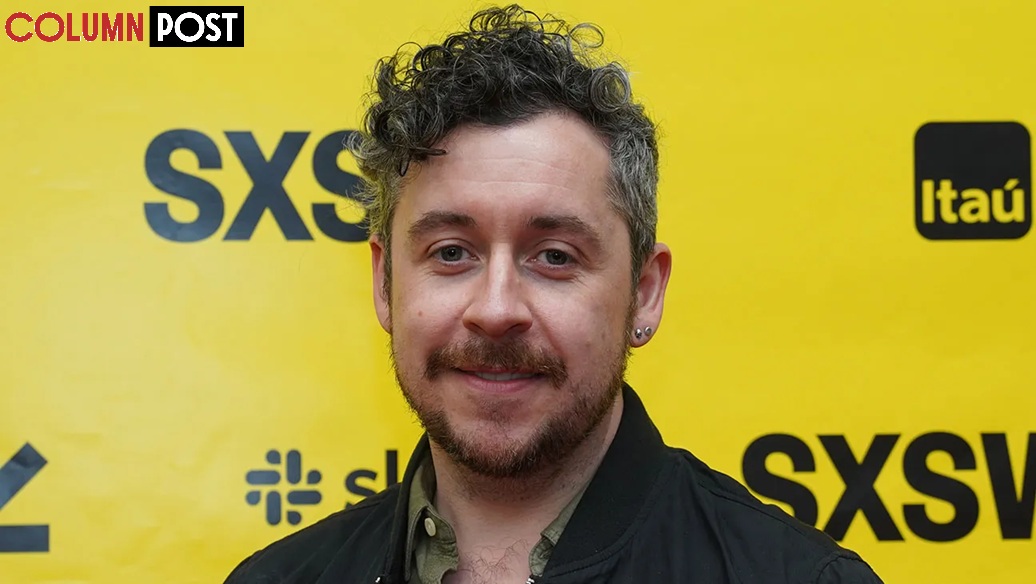

| Quick Facts | Details |
|---|---|
| Full Name | Rod Lurie |
| Date of Birth | May 15, 1962 |
| Birthplace | Tel Aviv, Israel |
| Raised | New York → Greenwich, Connecticut → Honolulu, Hawaii |
| Age (2026) | 63 years old |
| Nationality | Israeli-American |
| Father | Ranan Lurie (1932–2022) — internationally syndicated political cartoonist; born Port Said; Israeli military veteran; nominated for Nobel Peace Prize 2002; Guinness World Record: most widely syndicated political cartoonist for 20 consecutive years |
| Mother | Tamar Lurie (née Fletcher) — real estate executive, Coldwell Banker |
| Siblings | Barak Lurie (b.1963, attorney, Lurie & Seltzer, LA); Dr. Daphne Lurie (b.1965, psychologist, Scripps Research Institute, San Diego); Danielle Lurie (film director, New York — Filmmaker Magazine 25 New Faces of Independent Film) |
| Education | West Point — B.S. Political Science, 1984 |
| Military service | U.S. Army Air Defense Artillery Officer, 4 years post-West Point |
| First film reviews | Greenwich News — $25/week while still in Army |
| Journalism | NY Daily News; News12 Connecticut; LA Magazine (1990–1995) — film critic and investigative reporter |
| DeVito incident | Called Danny DeVito “a testicle with arms” in LA Magazine — banned from Warner Bros. screenings |
| Radio | KABC 790 LA — on-air Oscar bets with Mel Gibson, Martin Landau, James Cameron — all thanked him in acceptance speeches |
| Book | Once Upon a Time in Hollywood: Moviemaking, Con Games, and Murder in Glitter City (Pantheon Books, 1995) |
| Short film debut | Four Second Delay (1998) — Best Short Film, Atlanta Film Festival; Crested Butte Reel Fest; Prix du Jury, Festival of American Cinema, Deauville |
| Feature debut | Deterrence (1999) — Kevin Pollak as first Jewish U.S. President; Timothy Hutton |
| Breakthrough | The Contender (2000) — written for Joan Allen; Jeff Bridges, Gary Oldman, Christian Slater; 2 Oscar nominations; $51.5M worldwide |
| Spielberg story | One print; canceled New Line screening; Spielberg called next day; DreamWorks distributed |
| West Point tributes | Hidden tributes to West Point in every film — characters who are fictional “Long Gray Line” graduates |
| TV — Line of Fire | ABC, 2003–2004; FBI drama; David Paymer; critically praised, cancelled |
| TV — Commander in Chief | ABC, 2005–2006; Geena Davis; Golden Globe Best Actress + Best Drama Series nom; ratings collapsed after Lurie’s departure |
| The Last Castle | (2001) — Robert Redford, James Gandolfini, Mark Ruffalo; commercial failure |
| Nothing But the Truth | (2008) — Kate Beckinsale, Alan Alda, Matt Dillon; Plame/Miller inspired |
| Straw Dogs | (2011) — James Marsden, Kate Bosworth, Alexander Skarsgård; negative reviews; $11.3M worldwide |
| The Outpost | (2020) — Scott Eastwood, Caleb Landry Jones, Orlando Bloom; Battle of Kamdesh; filmed Bulgaria; Jake Tapper book; topped iTunes charts during COVID |
| The Senior | (2023) — USC Cinematic Arts |
| Lucky Strike | Announced 2024 — Scott Eastwood, Colin Hanks; war film |
| First wife | Gretchen — two children: Hunter and Paige; lived Pasadena |
| Current wife | Kyra Davis — bestselling novelist; Los Angeles |
| Children | Hunter Lurie (b. Oct 6, 1990 — died July 2, 2018, age 27, cardiac arrest); Paige Lurie (b. July 16, 1992); Isaac (with Kyra Davis) |
| Political views | Liberal Democrat — self-identified |
| Net worth (est. 2026) | $3–$5 million |
In the mid-1990s, Rod Lurie was working as a film critic for Los Angeles Magazine — a position he had secured by telling an editor he had an inside connection to the stalker who had murdered actress Rebecca Schaeffer, when in truth everything he knew about the case came from newspapers. He was, by his own candid account, willing to do whatever it took to get the job. What he did with the job, once he had it, was considerably less diplomatic.
He called Whoopi Goldberg a traitor to her race for the roles she played. He described Gus Van Sant’s My Own Private Idaho as not his “cup of swill” and was accused of homophobia. He got into trouble with the National Enquirer over a story about fake sources. He appeared on 60 Minutes to discuss the fallout. And — most consequentially for his subsequent career trajectory — he described actor Danny DeVito as “a testicle with arms” in print, which resulted in his being banned from Warner Bros. screenings and placing him in the specific professional position of a critic who had so thoroughly alienated the Hollywood machinery that when he tried to make the jump to filmmaker, almost no one in the industry was willing to help him.
Almost no one. One night, there was one print of his first feature film, and Steven Spielberg wanted to see it.
The story of Rod Lurie is the story of someone who understood, earlier than most, that the only way to make the films he wanted to make was to refuse to be anything other than exactly himself — and who discovered that this specific quality, which made him enemies in the journalist phase of his career, was precisely what made the films worth watching in the directing phase. He is a West Point graduate who writes hidden tributes to the academy into every film he makes. He is the son of the most widely syndicated political cartoonist in the world. He is the director who wrote a role for Joan Allen and got her two Oscar nominations. He is the man who lost his son Hunter at twenty-seven and continued making films about service, sacrifice, and what it means to hold the line.
Tel Aviv, Greenwich, and the Cartoonist’s Household
Rod Lurie was born on May 15, 1962, in Tel Aviv, Israel — the son of Ranan Lurie, whose career as an internationally syndicated political cartoonist would eventually earn him the Guinness World Record for most widely syndicated political cartoonist for twenty consecutive years, a Nobel Peace Prize nomination from the Republic of Cyprus in 2002, and the distinction of being received by more than 250 world leaders across five decades of political illustration.
Ranan Lurie — born in Port Said, Egypt, in 1932, to a family that had been in Jerusalem for six generations — was a man whose professional identity was built around the specific ability to distil the complexity of global politics into a single visual image with sufficient accuracy and wit to persuade editors across dozens of countries to publish it simultaneously. The household in which Rod Lurie grew up was one in which geopolitical events were not background noise but daily professional material — where Watergate was discussed at the dinner table, where the people shaping the world arrived for portrait sittings, and where the relationship between image and argument was the fundamental language of the profession that surrounded him.
His mother, Tamar Lurie (née Fletcher), was a real estate executive at Coldwell Banker — the practical, commercially oriented counterweight to Ranan’s creative and political world, and whose professional competence and grounding provided the domestic stability that a household whose father was regularly traveling to interview world leaders requires.
The family emigrated to the United States when Rod was five — settling initially in New York, then relocating to Greenwich, Connecticut, where Rod spent his youth, and subsequently to Honolulu, Hawaii. The specific route — Israel to New York to Greenwich to Honolulu — was driven by Ranan’s professional opportunities, including his placement at Life Magazine in New York, and gave Rod the specific bicultural formation of someone who was American by upbringing and Israeli by origin, whose identity contained both without being fully resolved into either.
His siblings reflect the specific intellectual ambition that the Lurie household consistently produced: Barak Lurie (born 1963) is a Stanford graduate and the Managing Partner of Lurie & Seltzer, a Los Angeles law firm, also known for his radio programme Lurie’s Law. Dr. Daphne Lurie (born 1965) is a Williams College alumna and a licensed clinical psychologist serving as Director of Counseling and Psychological Services at the Scripps Research Institute in San Diego. Danielle Lurie is a Stanford graduate and a New York-based film director who was named by Filmmaker Magazine as one of the 25 New Faces of Independent Film — the sibling whose professional proximity to Rod’s own industry is the most direct of the four.
West Point, the Army, and the $25-a-Week Film Reviews
After graduating from a Greenwich high school, Rod Lurie applied to and was accepted at the United States Military Academy at West Point — the decision of someone shaped by a father who had served in the Israeli military and by the specific values of a household that took service, discipline, and institutional excellence seriously.
He graduated in 1984 with a Bachelor of Science in Political Science — and was commissioned as a second lieutenant in the United States Army, where he served for four years as an Air Defense Artillery Officer: a combat arms position whose specific demands of tactical thinking, operational planning, and leadership under pressure gave him the framework for understanding military culture from the inside that would permeate every significant film of his directorial career.
While still in the Army — writing film reviews secretly on the side for the Greenwich News at twenty-five dollars per week — he was developing the critical voice that would eventually take him, through a sequence of journalism positions including the New York Daily News and Channel 12 in Fairfield, Connecticut, to Los Angeles Magazine in 1990. The $25-a-week Greenwich News reviews were, in retrospect, the beginning of a critical career that would burn multiple Hollywood bridges before it ever gave him the opportunity to build any.
LA Magazine and the Bridges Burned
The Los Angeles Magazine years (1990–1995) are the chapter of Rod Lurie’s biography that most clearly established the specific quality — or, depending on perspective, the specific liability — that defined him: the willingness to say exactly what he thought, regardless of professional consequences, about the people and work he was covering.
The Danny DeVito “testicle with arms” incident is the most frequently cited consequence — the review that got him banned from Warner Bros. screenings and that became the specific symbol of a critic who had made himself too many enemies to navigate the Hollywood machinery he was trying to enter. The consequences were real and sustained: when he tried to transition from criticism to filmmaking, the meetings he needed were cancelled, the partners he required pulled out, the financing he assembled dissipated.
The story of the Ralph Fiennes meeting at CAA — cancelled when Lurie’s producing partner warned him that security would escort him out of the building if he showed up — captures the specific professional environment his reviews had created. A meeting with Eric Roberts for a screenplay he had written, Porkchop, collapsed a week before prep when Roberts pulled out, taking the financing with him.
The radio years at KABC 790 — where Lurie hosted a Saturday morning programme that softened his critical posture without abandoning it — produced the specific story that most completely illustrates his understanding of how the entertainment industry actually works: he made on-air bets with Mel Gibson, Martin Landau, and James Cameron that each of them would win the Oscar they were nominated for, with the agreement that if they won, they would publicly thank him in their acceptance speeches. All three won. All three thanked him. The bets were, in their way, the critic becoming part of the story — a natural evolution for someone whose specific personality made it inevitable.
Four Second Delay and the Jump to Filmmaking
The short film that gave Rod Lurie his first directing credit was Four Second Delay (1998) — a 27-minute drama about a crazed radio show caller who attempts to get Bob Woodward to reveal the identity of Deep Throat, whose subject matter sits exactly at the intersection of political journalism, institutional accountability, and dramatic tension that the subsequent feature career would consistently explore.
The film won the Best Short Film award at the Atlanta Film Festival, the same recognition at the Crested Butte Reel Fest, and — most significantly in terms of international visibility — the Prix du Jury at the Festival of American Cinema in Deauville, France: the recognition that placed it within the international genre conversation and that demonstrated Lurie’s capacity for the kind of work that international festival audiences and juries take seriously.
The short was followed by his first feature, Deterrence (1999) — a low-budget nuclear thriller starring Kevin Pollak as the first Jewish President of the United States, confronting a nuclear standoff in the Midwest during a snowstorm. The film demonstrated the core qualities of what a Rod Lurie film would consistently be: politically charged, dialogue-driven, focused on institutional power and individual conscience, made on a budget that required the maximum efficiency from every production decision.
The Contender (2000): Joan Allen, the Spielberg Print, and the Two Nominations
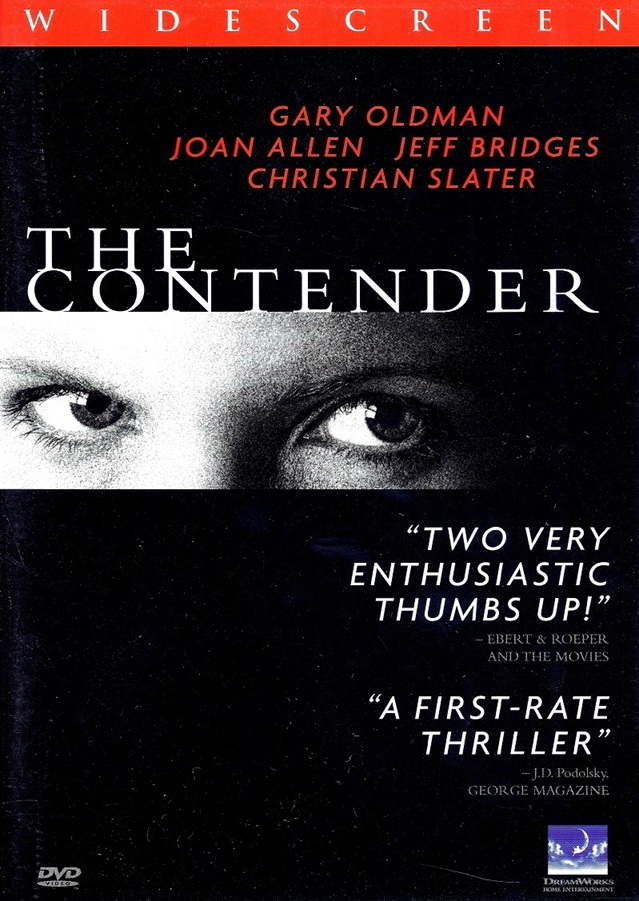
The Contender is the film that established Rod Lurie as a director of the first rank — and its production history is one of the more remarkable in the specific annals of low-budget political cinema reaching an audience it had no institutional reason to expect.
He wrote the role of Senator Laine Hanson specifically for Joan Allen — the actress whose specific combination of moral authority, contained intelligence, and capacity for sustained suppressed emotion matched precisely what the character required: a vice presidential nominee whose refusal to respond to sexual allegations against her, on the grounds that her private life is not the public’s business, becomes both a political and personal stand of the kind that defines or destroys careers.
Jeff Bridges plays the sitting President. Gary Oldman plays the Republican congressman leading the investigation. Christian Slater appears in a smaller role. The budget was approximately $9–10 million, raised largely from German investors, for a political drama set in the corridors of Washington power — a subject matter whose commercial viability the American studio system had consistently underestimated.
The film had one print. A New Line Cinema screening was cancelled. Steven Spielberg wanted to see the film. He called the next day. DreamWorks distributed it. Joan Allen received an Academy Award nomination for Best Actress. Jeff Bridges received an Academy Award nomination for Best Supporting Actor. The film grossed $51.5 million worldwide on a $9–10 million budget.
The specific story of the single print and the Spielberg call is the compressed version of what the film represents in Lurie’s biography: the work was good enough that when it reached the right person, everything followed.
West Point Tributes: The Hidden Long Gray Line
Every film Rod Lurie has made contains a hidden tribute to his alma mater. In Deterrence, an aide-de-camp to the President admits he “had to settle for the Air Force Academy because he couldn’t get into West Point.” In The Contender, Jeff Bridges’ President Evans is seen wearing a West Point sweatshirt. In The Last Castle, Robert Redford’s imprisoned general is a West Point graduate. In Line of Fire, FBI agent Paige Van Doren is identified as a Long Gray Line alumna. In Commander in Chief, General Warren Keaton — the Vice Presidential nominee — is a fictional West Point graduate.
The tributes are not merely nostalgic. They are the specific expression of a filmmaker whose values — the emphasis on service, institutional loyalty, individual conscience within institutional structures, and the specific moral weight that military authority carries — were formed at West Point and have informed every professional choice since.
Television: Line of Fire and Commander in Chief
Rod Lurie’s two major television projects represent both the heights of his industry recognition and the specific frustrations of working within network television’s commercial dynamics.
Line of Fire (ABC, 2003–2004) — which he created, wrote, directed, and executive produced — was an FBI drama focused on an undercover team infiltrating a Southern mob family, starring David Paymer as the mob boss and featuring the specific political and institutional complexity that characterises his best work. The show was critically praised, demonstrating the quality of the enterprise, and cancelled mid-season — demonstrating the gap between critical recognition and commercial survival in network television.
Commander in Chief (ABC, 2005–2006) was the more consequential project — a political drama in which Geena Davis played Vice President Mackenzie Allen, who ascends to the presidency following the death of the sitting President and navigates the specific challenges of being the first female Commander in Chief. The pilot, which Lurie directed, aired on September 27, 2005, and established a tone whose combination of political seriousness and dramatic accessibility found an immediate audience.
Geena Davis won the Golden Globe Award for Best Actress in a Drama Series for her performance. The show was nominated for the Golden Globe for Best Drama Series. And then Lurie left — the creative and contractual dynamics of his departure from a show he had created remaining the most discussed episode of his television career — and the ratings collapsed. The show was cancelled shortly after.
Lurie acknowledged in a press conference that the show was effectively a vehicle exploring the prospect of a female presidency — at a time when Hillary Clinton’s potential run for the office was increasingly discussed — whose conservative critics’ charge that it was political advertising for that prospect he did not strenuously deny.
The Outpost (2020): Battle of Kamdesh and the iTunes Number One
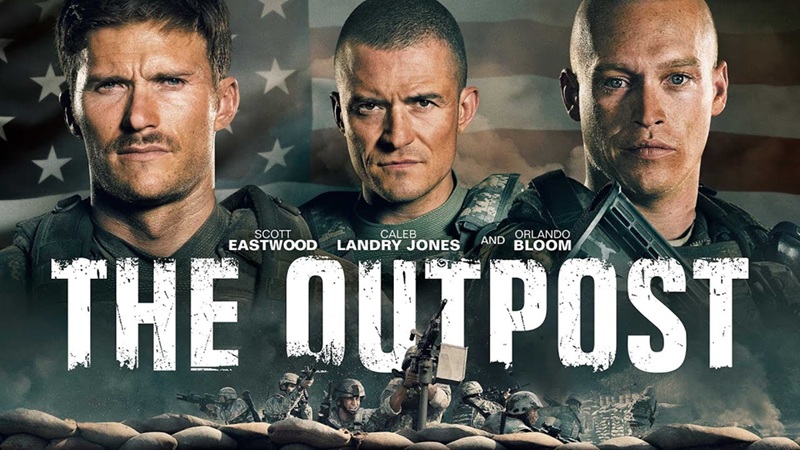
The Outpost (2020) — based on CNN Chief Washington Correspondent Jake Tapper’s bestselling book of the same name, telling the true story of the Battle of Kamdesh on October 3, 2009, in which 53 U.S. soldiers and Afghan security forces at Combat Outpost Keating defended against an overwhelming Taliban assault — is the film that most completely fulfils the specific promise of a West Point-trained, Army-serving filmmaker making a war movie.
The film stars Scott Eastwood and Caleb Landry Jones in the central roles, with Orlando Bloom in a supporting part. It was filmed in Bulgaria — practical locations used to approximate the Afghan mountain landscape — with the specific attention to military procedure, tactical reality, and the physical and psychological demands of combat that distinguishes films made by people who understand military culture from those who are performing it.
Released during the COVID-19 pandemic in July 2020 — when theatrical distribution had collapsed — the film found its audience through streaming and VOD platforms, topping the iTunes charts and demonstrating that the quality of the work could overcome the catastrophic timing of its release.
The Battle of Kamdesh resulted in two living service members — Ty Carter and Clint Romesha — being awarded the Medal of Honor: the first time that had happened in fifty years. The film honours their specific actions with the seriousness that honour requires.
Hunter Lurie: The Loss That Nothing Prepares You For
On July 2, 2018, Hunter Lurie — Rod’s eldest son, born October 6, 1990, at twenty-seven years old — died of a cardiac arrest.
Hunter was the child whose birth had preceded his father’s career as a filmmaker, who had grown up in Pasadena with his mother Gretchen alongside his sister Paige, and whose death at twenty-seven represents the specific kind of loss for which no professional accomplishment, no critical recognition, no military training, and no filmmaking philosophy provides adequate preparation or consolation.
Rod Lurie has not spoken at length publicly about Hunter’s death. The Wikipedia entry documenting it is brief: “Hunter Lurie died on July 2, 2018, aged 27 from a cardiac arrest.” The brevity is not indifference. It is the specific reticence of a private person processing a loss that public statement cannot address.
He continued making films. The Outpost was released two years after Hunter died. The film’s specific subject matter — soldiers who hold their position against overwhelming force, who die and who survive, and whose sacrifice requires of the survivors a specific quality of continuing — is the film that a father who has lost a child might, without announcement, make in the years after that loss.
Kyra Davis, Isaac, and the Current Chapter
Rod Lurie lives in Los Angeles with his wife Kyra Davis — a bestselling novelist whose career includes the Sophie Katz mystery series and multiple other commercially successful fiction titles. Their son Isaac is the third of Rod’s children — the child whose existence documents the ongoing life that continues after both professional disappointment and personal loss.
His upcoming film Lucky Strike — announced in 2024, starring Scott Eastwood and Colin Hanks in a war film whose specific details have not been publicly disclosed beyond the casting — continues the professional partnership with Eastwood that The Outpost established and the genre orientation toward military material that his career has consistently demonstrated.
He is, at sixty-three, exactly the filmmaker he has always been: politically engaged, institutionally respectful, formally competent, and willing to say exactly what he thinks. The Hollywood bridges he burned in LA Magazine were rebuilt, one film at a time, through the specific quality of the work. Spielberg made one phone call. Joan Allen got two nominations. The Outpost topped the charts during a pandemic.
The film critic who called Danny DeVito a testicle with arms became the director who honoured the Battle of Kamdesh with the seriousness it deserved. The Long Gray Line runs through everything he has made, and the West Point sweatshirt is in every film, and his son Hunter is gone, and he is still at his desk.
Net Worth
| Income Source | Estimated Contribution |
|---|---|
| The Contender (2000) — $51.5M worldwide | First significant directing income |
| The Last Castle (2001) | Studio director fee |
| Line of Fire (2003–2004, ABC) | TV creator/EP fees |
| Commander in Chief (2005–2006, ABC) | TV creator/EP fees; Golden Globe nominee |
| Resurrecting the Champ (2007) | Director fee |
| Nothing But the Truth (2008) | Writer-director fee |
| Straw Dogs (2011) | Studio director fee |
| The Outpost (2020) | Director fee + iTunes performance |
| The Senior (2023) | Independent film fee |
| Lucky Strike (in development) | Director fee |
| Estimated Total Net Worth (2026) | $3–$5 million |
Conclusion
Rod Lurie was born in Tel Aviv on May 15, 1962, the son of the most widely syndicated political cartoonist in the world and a real estate executive from Coldwell Banker. He grew up in Greenwich, Connecticut, watching Watergate unfold at his father’s dinner table. He went to West Point, served four years in the Army writing film reviews for $25 a week on the side, became a film critic who called Danny DeVito a testicle with arms, got banned from Warner Bros. screenings, had a meeting cancelled because security would escort him out of the building, wrote a role for Joan Allen that earned her two Oscar nominations, watched Spielberg call the next day after the New Line screening was cancelled, hid West Point tributes in every film he made, created a television series that won Geena Davis a Golden Globe and then watched the ratings collapse after he left, made a film about the Battle of Kamdesh that topped the iTunes charts during a pandemic, lost his son Hunter to a cardiac arrest at twenty-seven, and is now making Lucky Strike with Scott Eastwood and Colin Hanks.
He is sixty-three years old. He is a self-identified liberal Democrat. He is a Long Gray Line graduate who puts the Long Gray Line into every film as quietly as possible. He has never, by any available evidence, stopped saying exactly what he thinks.