

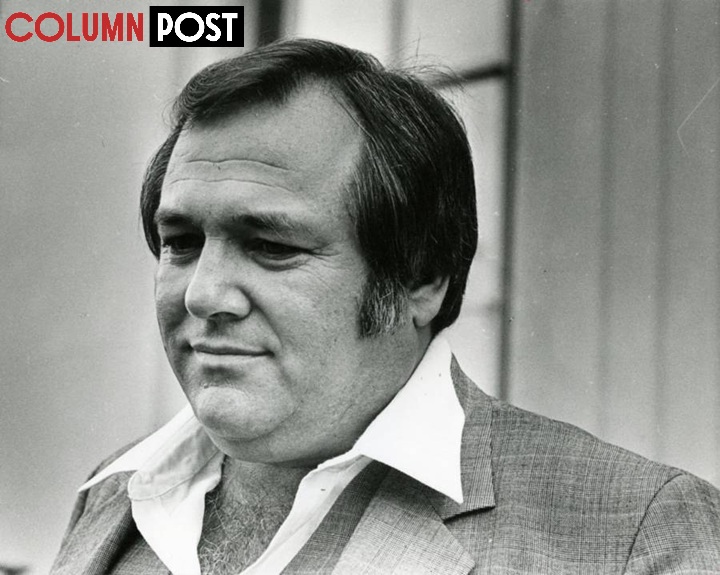
The Arrest That Changed Everything
Long before Barry Seal became America’s most infamous drug smuggler, long before he flew cocaine for Pablo Escobar’s Medellín Cartel, and long before Tom Cruise portrayed him on the big screen in American Made, there was July 1, 1972 — the day a daring explosives smuggling plot unraveled in New Orleans and set Barry Seal’s life on an entirely different trajectory.
This was not a drug bust. It was something far more politically charged, and its full implications have never been entirely resolved.
Background: Who Was Barry Seal in 1972?
By 1972, Adler Berriman “Barry” Seal was a 33-year-old pilot with an impressive resume. He had earned his student pilot certificate at just 15 years old and his private pilot’s license at 16, and had gone on to become one of the youngest command pilots in Trans World Airlines (TWA) history, flying Boeing 707s on transatlantic routes.
On paper, he was the picture of professional success. In reality, he was restless, thrill-seeking, and deeply connected to a shadowy world that blurred the lines between U.S. intelligence operations, Cold War politics, and outright criminal activity.
By his own account — and according to numerous investigators and journalists — Seal had been involved in covert aviation work tied to CIA-backed anti-Castro operations since as far back as the early 1960s. He knew people. He moved things. He kept his mouth shut.
The 1972 Plot: What Actually Happened
In 1972, Seal was approached by a man named Murray Morris Kessler, who claimed to have connections in Mexico with a network of anti-Castro Cuban exiles. These fighters, Kessler said, needed a capable pilot to transport a large shipment of military-grade plastic explosives from the United States into Mexico — explosives that would supposedly be used in operations against Fidel Castro’s government in Cuba.
For a pilot craving danger and already well-acquainted with the grey edges of U.S. covert operations, the offer was hard to refuse. Seal agreed.
What Seal did not know — or chose to ignore — was that Kessler’s Cuban network was, in fact, a federal sting operation.
On July 1, 1972, U.S. Customs agents arrested Seal in New Orleans along with seven other co-conspirators, including James Miller, Richmond Harper, and Marlon Hagler. In connection with the arrest, agents simultaneously seized a DC-4 cargo plane at Shreveport Regional Airport. The plane’s cargo was staggering:
- Nearly 14,000 pounds (approximately seven tons) of C-4 military plastic explosive
- 7,000 feet of high-explosive primer cord
- 2,600 electric blasting caps
The commonly cited figure of “1,350 pounds” refers to the amount attributed specifically to Seal’s portion of the conspiracy in some court documents and biographical accounts, while the total seized from the aircraft was significantly larger. Either way, this was an enormous haul of military-grade ordinance — the kind that could level buildings, sink ships, or destabilize a government.
The CIA Question
Here is where the story becomes murky — and deeply intriguing.
Almost immediately after his arrest, Seal reportedly told his first ex-wife Barbara not to worry. He wasn’t going to prison, he said. According to Barbara, Seal explained that the explosives operation had been done for the U.S. government as part of a plan to overthrow Fidel Castro. He had simply been disavowed — abandoned — once things went sideways.
Veteran CIA operative William “Tosh” Plumlee, who claimed to have worked alongside Seal for years on covert missions, later corroborated this account, stating that the 1972 explosives arrest was a covert government operation to support anti-Castro Cuban exiles in Mexico. According to Plumlee, Seal “took a rap on that, but that was a military op.”
Whether the full truth of those claims will ever be definitively established remains uncertain. What is documented is the outcome:
The Case Was Dismissed — And TWA Fired Him Anyway
When the case finally went to trial in federal court in New Orleans in June 1974, the judge declared a mistrial due to prosecutorial misconduct. The U.S. Attorney’s Office chose not to refile the charges. Barry Seal walked free.
However, the legal victory came at a significant personal cost. TWA fired him — he had been absent from work, falsely claiming medical leave while actually engaged in weapons trafficking. His career as a mainstream commercial airline captain was finished at 34 years old.
The Aftermath: The Birth of a Smuggler
The 1972 arrest and its aftermath left Seal at a crossroads. He was a skilled pilot with a criminal record, no airline job, and a taste for dangerous work that no ordinary aviation career could satisfy. Within a few years, he would begin smuggling marijuana, then cocaine — ultimately building one of the largest drug trafficking operations in American history.
In a very real sense, the 1972 explosives arrest was the fork in the road. It cost him his legitimate career, deepened his ties to a criminal underworld, and set in motion the chain of events that would lead to his work with the Medellín Cartel, his role as a DEA informant, and his assassination on February 19, 1986.
Key Facts: Barry Seal’s 1972 Explosives Arrest
| Detail | Information |
|---|---|
| Date of Arrest | July 1, 1972 |
| Location | New Orleans, Louisiana |
| Arresting Agency | U.S. Customs Service |
| Alleged Destination | Anti-Castro Cuban exiles in Mexico |
| Explosives Seized | ~14,000 lbs C-4, 7,000 ft primer cord, 2,600 blasting caps |
| Co-Conspirators Arrested | 7 others, including Murray Kessler |
| Aircraft Seized | DC-4 cargo plane (Shreveport Regional Airport) |
| Trial Outcome | Mistrial declared; charges not refiled (1974) |
| Career Consequence | Fired by TWA |
The 1972 arrest remains one of the most fascinating and under-examined chapters in Barry Seal’s story — a moment where Cold War politics, covert operations, and criminal ambition all collided, and a talented pilot’s legitimate life came to an abrupt end.


