

| Detail | Information |
|---|---|
| Full Name | Caitríona Mary Balfe |
| Pronunciation | /kəˈtriːnə ˈbælf/ — “Katrina Balf” |
| Born | 4 October 1979, Dublin, Ireland |
| Raised | Tydavnet, County Monaghan, Ireland |
| Nationality | Irish |
| Education | Dublin Institute of Technology — drama studies (not completed); Warner Loughlin Studios; Sanford Meisner Center; Judith Weston Studios (Los Angeles) |
| Occupation | Actress, former model, executive producer, director |
| Years Active | 1998–present (modelling); 2006–present (acting) |
| Breakout Role | Claire Fraser — Outlander (Starz, 2014–2026) |
| Golden Globe Nominations | 4 (Outlander × 3; Belfast × 1) |
| Other Major Nominations | BAFTA, SAG Award, Saturn Awards (×2 wins) |
| Notable Films | Super 8 (2011), Ford v Ferrari (2019), Belfast (2021), The Amateur (2025) |
| Upcoming | Outlander S8 (2026), Sense and Sensibility (2026), Tenzing (TBA), A Long Winter (TBA), The Housekeeper (filming) |
| Spouse | Tony McGill — businessman, former band manager (married August 10, 2019) |
| Son | Born August 2021 (name not publicly disclosed) |
| Residence | London, England |
| Languages | English; conversational French; some Irish |
| Patron | World Child Cancer (since 2014) |
Who Is Caitríona Balfe
Caitríona Balfe is an Irish actress, former model, and executive producer born on October 4, 1979 in Dublin, who grew up in the small village of Tydavnet in County Monaghan. She spent a decade as one of the most sought-after runway models in the world — walking more than 250 shows in a three-year period for houses including Chanel, Louis Vuitton, Givenchy, and Dolce & Gabbana — before abandoning modelling entirely in 2009 to pursue the acting career she had always wanted. The decision to restart in Los Angeles with almost no screen credits led eventually to her casting as Claire Fraser in Starz’s Outlander in 2013, a role she played for twelve years across eight seasons and which made her one of the most globally recognised Irish actresses of her generation.
Since completing Outlander in November 2024, she has moved into the most ambitious phase of her film career — an espionage thriller with Rami Malek, a boxing drama with Orlando Bloom, a Regency adaptation opposite Daisy Edgar-Jones, an Apple Original biopic shot in Nepal, an Andrew Haigh film for Mubi and Film4, and a thriller currently in production — a slate that reflects both her ambition and the industry’s confidence in her capacity to carry work well beyond the franchise that made her famous. Four Golden Globe nominations, two Saturn Awards, a BAFTA nomination, a SAG nomination, and consistent critical recognition for the quality of her dramatic work across very different registers make her case clearly.
Garda Sergeant’s Daughter: The Monaghan Years
Caitríona Balfe was the fourth of five children born to her parents in Dublin, though the family subsequently adopted two further children, making her the fourth of seven. Her father served as a Garda sergeant — the Irish police force — in Tydavnet, a village of few hundred people outside Monaghan Town in the Republic’s northernmost mainland county. Growing up as a Garda sergeant’s daughter in rural Ireland in the 1980s carried a specific social meaning: a position of local authority and respectability that came with its own pressures on the family’s behaviour and visibility in the community.
She has described growing up in Monaghan in the 1980s as a place where there was not a great deal to do, and where theatre — however limited — was the outlet that absorbed her most completely from a young age. Her father had his own inclination toward performance, competing in Scór — the Gaelic Athletic Association’s cultural competitions — and winning at comedy. Balfe has attributed some of her own creative impulse to that paternal thread, alongside what she acknowledged, with characteristic self-deprecation, as simple fourth-child attention-seeking.
Her ambition was always to act. She was devastated, she has said in interviews, that she was not a child actor. She enrolled at the Dublin Institute of Technology to study drama in Rathmines — but never completed the course, because the modelling industry arrived before her degree did.
The Discovery and a Decade on the World’s Runways
The story of how Caitríona Balfe was discovered has become one of the better-known pieces of Irish modelling lore. She was at a supermarket in Dublin, collecting money for multiple sclerosis research, when a Dublin modelling agent spotted her and offered his card. She began working part-time in Dublin while still attending DIT, and within a few months a visiting scout from Ford Models offered her the chance to move to Paris. Her parents’ advice was to finish college. She completely ignored it.
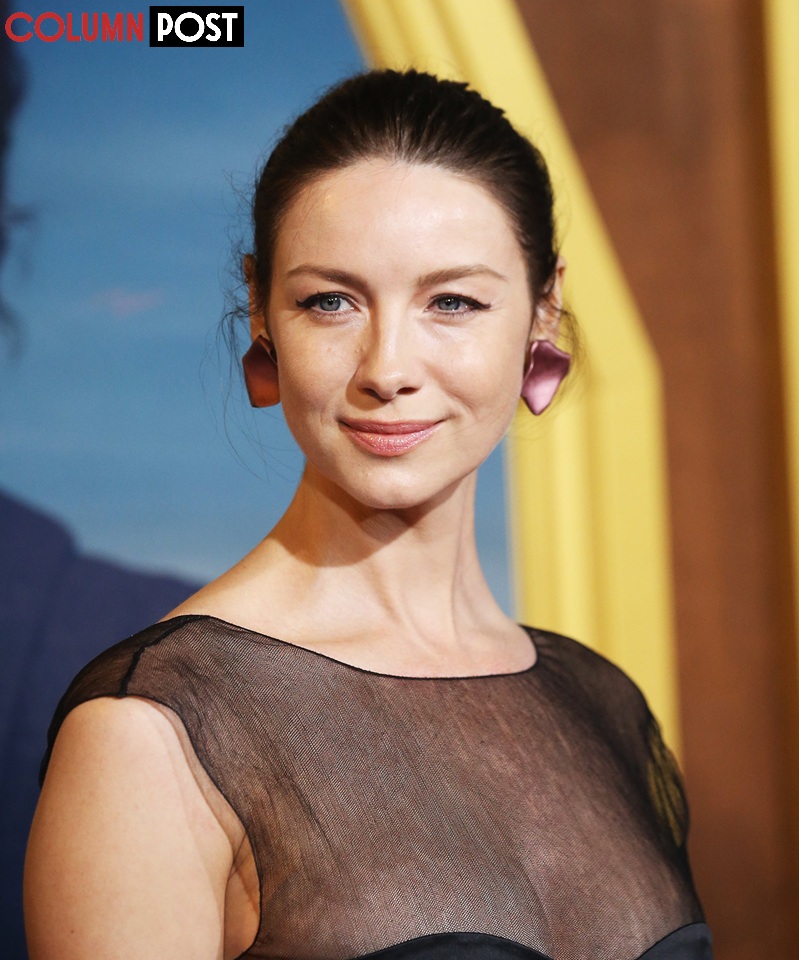
At eighteen she arrived in Paris — barely speaking French, given a set of casting addresses and left to navigate the city alone. The experience was a sharp immersion in the particular world of international modelling: young women from across Europe and beyond, often teenagers, dropped into cities where they knew nobody and were expected to find their own way to castings in countries where the signposts were not in their languages. Balfe has described Japan in similar terms — no English signposts, a map that was not always useful, a job that required self-sufficiency before it required any particular skill.
Her modelling career highlights include opening and closing fashion shows for Chanel, Givenchy, Dolce & Gabbana, Moschino, Alberta Ferretti and Louis Vuitton. In a three-year period she walked in more than 250 runway shows. She was considered among the twenty most in-demand models in the world at her peak, appeared in advertising campaigns for Fendi, DKNY, Burberry, Dior, Valentino, Calvin Klein, Armani, and numerous other houses, and graced the covers of Vogue and Elle. She was a Victoria’s Secret Angel. She lived, across the course of her modelling decade, in Paris, Milan, Hamburg, Tokyo, London, and New York City — a mobility that later informed her reading of Claire Fraser’s capacity to adapt to entirely new environments.
The modelling career produced one notable acting credit before her formal transition: while living in New York City, Balfe played an employee of the magazine Runway in the 2006 film The Devil Wears Prada. It was a small role, appropriate to her experience at the time, but it kept the acting connection alive during the modelling years and pointed toward the decision she was already forming.
The Decision to Stop and Start Again
In 2009, after a decade in the fashion industry, Balfe decided to stop. The decision had been building for some time — the acting ambition had never left, and by her late twenties she had reached the point where continuing to defer it felt like a more significant risk than abandoning a successful career to pursue it. She moved to Los Angeles because a writer she was dating lived there. He was the only person she knew in the city.
She spent her first year and a half in the city exclusively taking acting classes, first at the Warner Loughlin Studios and then at the Sanford Meisner Center and the Judith Weston Studios. The commitment to training before auditioning — rather than trading on her modelling fame to walk into auditions — reflects the seriousness with which she approached the transition. She has described a $5 acting class during those early Los Angeles years as one of the most important she attended: a teacher who spoke about releasing the need to be liked, destroying the anxiety that comes from wanting approval, and giving yourself permission to commit without holding back.
The modelling instincts had to be actively unlearned. She has spoken about the specific discipline modelling requires — stillness, control of the face, never letting anything flicker across the surface that was not intended — as something directly at odds with what acting demanded. Where modelling required her to suppress internal experience, acting required her to access and express it. The transition took real work.
Early screen credits came steadily: Super 8 (2011) as the protagonist’s mother, Now You See Me (2013) as Michael Caine’s character’s wife, and Escape Plan (2013) as the CIA lawyer that hires Sylvester Stallone’s character. The roles were small but the company was significant — J.J. Abrams, Louis Leterrier, and Mikael Håfström are not directors who work with actors they have not assessed carefully.
Outlander: Twelve Years as Claire Fraser
In September 2013, Balfe was cast as the lead character, Claire Beauchamp Randall Fraser, on the Starz television drama series Outlander, based on the novels written by Diana Gabaldon. Claire is a Second World War combat nurse who, in 1945, is transported through a standing stone circle to 1743 Scotland, where she navigates political danger, forced marriage, and eventually genuine love in the midst of the Jacobite rebellion. The role required Balfe to carry a series whose premise was inherently demanding — a time-travel romance built around a female protagonist in historical settings — with the credibility and emotional range that would make the genre elements feel secondary to the human story.
The response across the series’ run confirmed that she had done exactly that. Critical reviews consistently cited her performance as the primary reason Outlander worked as well as it did. Vanity Fair described her as making Claire a spirited, principled, genuinely heroic heroine. The Hollywood Reporter called her reason enough to watch. The New York Times described her as one of the most stunning actresses on television. She received four consecutive Golden Globe nominations for Best Actress in a Television Drama — losing each time to formidable competition including Taraji P. Henson, Claire Foy, Elisabeth Moss, and Sandra Oh — and won Saturn Awards for Best Actress on Television in both 2015 and 2016. In November 2016 she won the Scottish BAFTA Award for Best Actress on Television; in February 2018, the Irish IFTA for Best Actress in a Lead Role Drama.
Balfe also became an executive producer on later seasons of Outlander — a creative investment that reflected her ambitions beyond performance and that gave her direct influence over the series’ development, casting decisions, and creative direction. She has cited the producing experience as one of the most valuable aspects of the Outlander years, and it informs the range of projects she has moved into since.
Filming of the eighth and final season completed in November 2024. The eighth and concluding season of Outlander is set to premiere in early 2026. Balfe has spoken about the end of the series with a mixture of grief and gratitude — twelve years in the same role, with the same cast and crew, in the same Scottish landscapes, represents a continuity of professional life that is unusual even for long-running television.
Key Film and Television Credits
| Title | Year | Role | Director / Network |
|---|---|---|---|
| The Devil Wears Prada | 2006 | Runway employee | David Frankel |
| Super 8 | 2011 | Joe’s mother | J.J. Abrams |
| Now You See Me | 2013 | CIA lawyer | Louis Leterrier |
| Escape Plan | 2013 | CIA lawyer | Mikael Håfström |
| Outlander | 2014–2026 | Claire Fraser (lead) | Starz / MGM+ |
| Money Monster | 2016 | Diane Lester | Jodie Foster |
| Ford v Ferrari | 2019 | Mollie Miles | James Mangold |
| Belfast | 2021 | Ma | Kenneth Branagh |
| The Cut | 2024 | Caitlin Harney | Sean Ellis |
| The Amateur | 2025 | Inquiline | James Hawes |
| Sense and Sensibility | 2026 | Mrs. Dashwood | Georgia Oakley |
| Tenzing | TBA | Jill Henderson | Jennifer Peedom |
| A Long Winter | TBA | TBA | Andrew Haigh |
| The Housekeeper | TBA | Danni | TBA |
Belfast, Ford v Ferrari, and the Film Career Running Alongside
While Outlander occupied the centre of her professional life, Balfe built a parallel film career that demonstrated she was not a television actress who happened to appear in films but a genuine screen performer capable of holding her own in any company. In Jodie Foster’s Money Monster (2016), she co-starred alongside George Clooney and Julia Roberts. In James Mangold’s Ford v Ferrari (2019), she played Mollie Miles — wife of racing driver and engineer Ken Miles, played by Christian Bale — in a biographical drama that won two Academy Awards and required her to hold the emotional intelligence of the film against the spectacle of its racing sequences.
Belfast (2021), directed by Kenneth Branagh, was the most publicly significant film of her career to that point. She played Ma — the mother in a semi-autobiographical account of a young boy’s experience of the 1969 Belfast Troubles — opposite Jamie Dornan’s Pa, with Judi Dench and Ciarán Hinds as grandparents and Jude Hill as the child at the centre. The film was shot largely in Surrey rather than Belfast, a displacement Balfe found poignant given her proximity to the material as an Irish person. Her performance earned a BAFTA nomination for Best Supporting Actress, a SAG Award nomination, and a Golden Globe nomination — her first in a film category — and placed her firmly in the conversation for serious dramatic work at the highest level.
The Post-Outlander Era: Five Projects in Motion
The period since completing Outlander has been the most commercially and creatively ambitious of Balfe’s film career. In 2024, Balfe starred opposite Orlando Bloom in the boxing drama The Cut, directed by Sean Ellis. She played Caitlin Harney, the fighter’s partner who watches with mounting alarm as he submits to a punishing training programme under an unscrupulous trainer played by John Turturro.
The Amateur, released in theatres on April 11, 2025, is an espionage thriller directed by James Hawes in which Balfe co-stars alongside Rami Malek, Rachel Brosnahan, and Laurence Fishburne, based on the 1981 novel by Robert Littell. Balfe will also star in Georgia Oakley’s film adaptation of Sense and Sensibility, which started production in the UK in July 2025 for Focus Features and Working Title Films — playing Mrs. Dashwood, the Regency-era matriarch, alongside Daisy Edgar-Jones, Esmé Creed-Miles, George MacKay, and Fiona Shaw.
Balfe joined the ensemble of Apple Original Films’ Tenzing in spring 2025, which also stars Tom Hiddleston and Willem Dafoe. The film, directed by Jennifer Peedom with a script by Oscar-nominated Luke Davies, tells the story of Sherpa Tenzing Norgay’s 1953 Everest summit alongside Edmund Hillary. Principal photography commenced in Nepal in May 2025, with filming on location in Kathmandu and the Everest region. Balfe plays Jill Henderson, a friend of Tenzing who helped organise mountain expeditions.
In October 2025, Balfe was cast in Andrew Haigh’s A Long Winter — from Mubi and Film4, based on Colm Tóibín’s short story — which also stars Ebon Moss-Bachrach, Fred Hechinger, and Kit Connor, with principal photography underway in Alberta, Canada. Andrew Haigh, whose previous films include 45 Years and All of Us Strangers, is one of the most critically respected directors working in British cinema. A Long Winter also represents Balfe’s first engagement with an adaptation of Colm Tóibín — one of Ireland’s most celebrated living novelists — a connection that carries obvious personal resonance.
She is additionally filming The Housekeeper, in which she plays a character named Danni, with production currently underway.
Marriage, Family, and a Deliberately Private Life

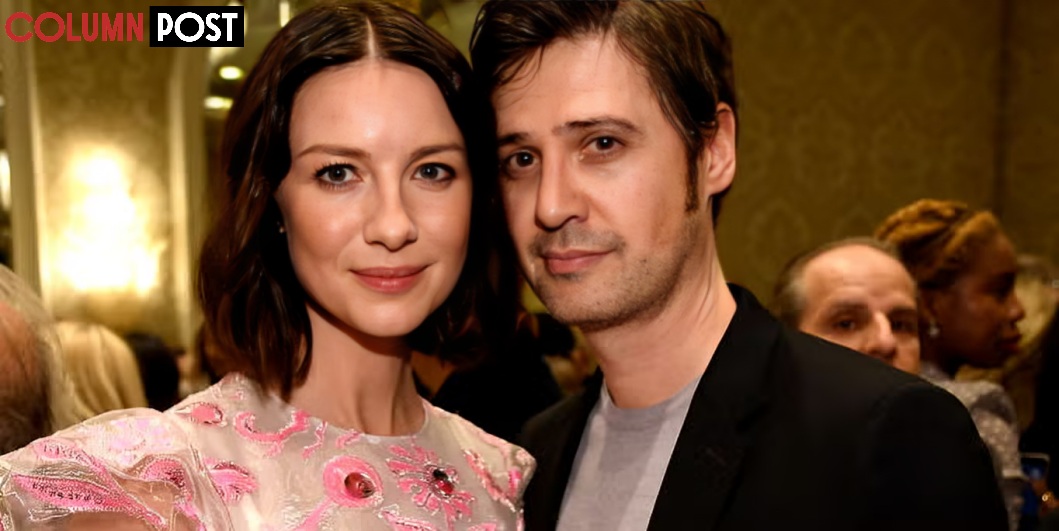
Caitríona Balfe married Tony McGill — a Scottish businessman and former band manager — on August 10, 2019, at St. Mary’s Church in Bruton, Somerset, in a ceremony that the couple kept as private as possible given their respective public profiles. McGill is not a figure in the entertainment industry and has maintained complete privacy throughout the relationship. She announced on August 18, 2021 that she had given birth to their son — the child’s name has never been disclosed publicly, a decision she has maintained across the years since.
She lives in London, having previously lived in Glasgow during Outlander filming seasons, and before that in Los Angeles during her acting training and early career years. The list of cities she has called home across her adult life — Paris, Milan, Hamburg, Tokyo, London, New York, Los Angeles, Glasgow, and now London again — is one of the more extreme expressions of the international mobility that characterised the modelling career and continued, in a different register, through the acting one.
She speaks conversational French and retains some Irish language phrases from childhood, having been more fluent in the language during her school years. She identifies as a lapsed Roman Catholic. Since 2014 she has been a patron of World Child Cancer, visiting the organisation’s facilities in Ghana in 2016. In November 2025, she collaborated with Choose Love — hand-painting a T-shirt through Everpress to raise money for displaced people and refugees worldwide.
An Actress Who Earned Every Room She Walked Into
The shape of Caitríona Balfe’s career is one of the more instructive narratives in contemporary acting. She did not arrive in Hollywood with drama school credentials, a famous family, or the conventional pathway of an actress who always knew what she was doing. She arrived having spent a decade in an entirely different industry, retrained herself from scratch in her late twenties, and built her way to a twelve-year lead role in a major television series through sheer persistence and professional discipline. The modelling world taught her to be tough, self-sufficient, and mobile. The acting training taught her to reverse everything modelling had instilled. The combination produced a performer whose range — from Outlander’s highland romance to Belfast’s domestic grief to the espionage thriller register of The Amateur — is wider than her television identity alone would suggest.
The five projects she has in motion post-Outlander constitute the most ambitious slate of any Irish actress of her generation, and the quality of the directors and co-stars attached to them suggests an industry that has taken full measure of what she can do. What the next decade looks like for a performer now at the mid-point of a career that has already covered more ground than most is a genuinely open question — and in her particular case, that openness has always been the point.