
| Quick Facts | Details |
|---|---|
| Birth Name | Camelia Emily Ortiz |
| Known As | Camelia Kath; Camelia Lynne |
| Date of Birth | September 22, 1953 |
| Birthplace | Puerto Rico |
| Age (2026) | 72 years old |
| Height | 5 ft 5 in (165 cm) |
| Nationality | American |
| Education | University of California |
| Career | Actress; writer; producer; makeup artist; executive assistant |
| Key acting credits | Terror on Tour (1980); Fake-Out (1982); Buchanan High (1984); The Killing Time (1987) |
| Production credits | Executive assistant — The Nanny (10 episodes); writer — The Nanny Season 6 Ep. 17; producer — Roundabout (1999 short) |
| Documentary subject | Behind the Music (2000); The Terry Kath Experience (2016) |
| First husband | Terry Kath — guitarist, Chicago; married 1974; died January 23, 1978 |
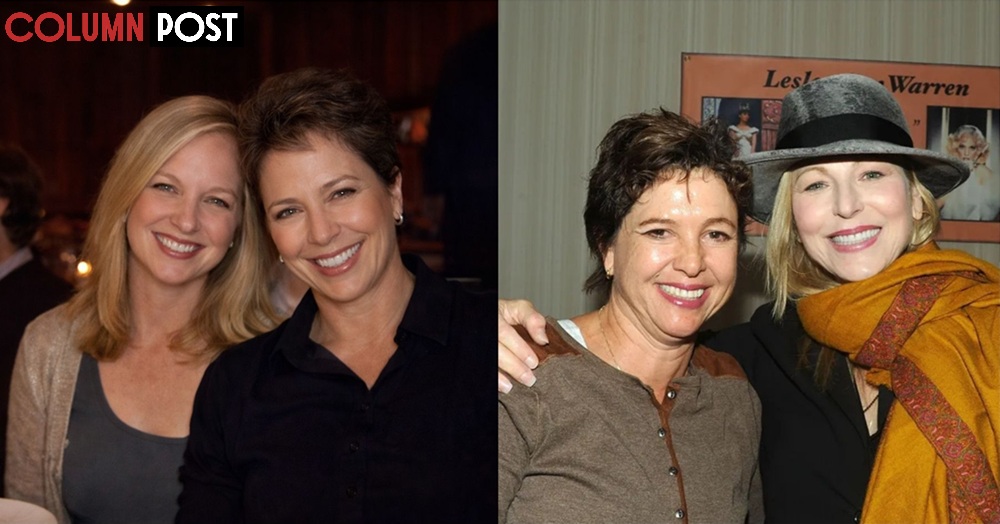
| Daughter (Terry) | Michelle Kath Sinclair (b. May 19, 1976) — documentary filmmaker/actress |
| Second husband | Kiefer Sutherland — married September 12, 1987; divorced February 1, 1990 |
| Daughter (Kiefer) | Sarah Jude Sutherland (b. 1988) — actress (Veep, The Kid Detective) |
| Current husband | Jeff Lynne — married September 19, 2017; engaged since 2008; together since 2006 |
| Jeff Lynne net worth | ~$100 million (ELO founder; Traveling Wilburys; producer) |
| Grandchildren | Hamish Sinclair (b. February 2005); Robert Quinn Sinclair (b. 2011) |
| Net Worth (est. 2026) | $1 million – $2 million |
There are people whose biographies intersect with history not because they sought the intersection but because the people they loved placed them at the centre of events that the world would not forget. Camelia Kath is one of those people. On the evening of January 23, 1978, she was present in a room in Woodland Hills, Los Angeles, when her husband — Terry Kath, the guitarist whose playing Jimi Hendrix had described as better than his own, the founding member and musical soul of the rock band Chicago — picked up a 9mm semi-automatic pistol, demonstrated to a concerned friend that the magazine was empty, replaced the magazine, put the gun to his temple, and pulled the trigger. There was a round in the chamber. Terry Kath died instantly. He was thirty-one years old. Their daughter Michelle was not yet two.
Camelia Kath was twenty-four years old. She had been married for four years to one of the most talented guitarists of his generation. She was now a widow with an infant daughter, standing in a room where her husband had just died from a wound he had caused himself, in circumstances so specific and so terrible that they would be discussed, analysed, and mourned by the music community for decades. She would spend the rest of her life carrying that night alongside everything else her biography contained — a subsequent marriage to one of Hollywood’s most recognisable young actors, a daughter who became an actress in her own right, a long relationship with one of the greatest figures in British rock history, and a modest but genuine career in the entertainment industry she had grown up adjacent to.
The story of Camelia Kath is, at its heart, the story of someone who survived the unsurvivable and continued.
Puerto Rico and the Road to Los Angeles
Camelia Emily Ortiz was born on September 22, 1953, in Puerto Rico — the Caribbean island that is a United States territory and whose population holds American citizenship by birth. Her birth name reflects her Latina heritage: Ortiz is one of the most common surnames in Puerto Rico, of Spanish origin, carried across generations of a family whose cultural roots were in the Spanish-speaking Caribbean.
She relocated to California at some point in her childhood or early adolescence — the specific timeline is not documented in public sources — and eventually obtained her university degree at the University of California, the state’s public research university system whose multiple campuses provided the educational foundation for enormous numbers of California’s professional population. By her early twenties, she was living in Los Angeles, embedded in the social world of the music industry that the city’s specific combination of recording studios, venues, and the concentrated presence of major record labels made one of the defining industries of Southern California life in the 1970s.
It was through that world — through the specific social geography of the Los Angeles music scene in the early 1970s — that she met Terry Kath.
Terry Kath: The Guitarist Hendrix Called Better Than Himself
To understand the full weight of what Camelia Kath experienced in January 1978, it is necessary to understand who Terry Kath was — because his death was not simply the private tragedy of a husband and father but the loss of one of the most genuinely exceptional guitarists in American rock history, a loss that the music world registered immediately and has mourned consistently in the nearly five decades since.
Terry Alan Kath was born on January 31, 1946, in Chicago, Illinois, and grew up in the Norwood Park neighbourhood of the city. He came from a musical family — his mother played the banjo, his brother played drums — and taught himself a variety of instruments before settling on the guitar as his primary instrument in his mid-teens. He played through a series of Chicago-area bands in the mid-1960s, collecting experience in jazz, blues, and rock, before co-founding, alongside Walter Parazaider, Danny Seraphine, James Pankow, Lee Loughnane, Robert Lamm, and eventually Peter Cetera, the group that would first call itself the Big Thing, then Chicago Transit Authority, and finally — shortened after complaints from the real transit authority — simply Chicago.
Chicago’s sound was, from its first album in 1969, something genuinely distinctive in American rock: a large ensemble with a brass section, blending hard rock’s energy with jazz’s harmonic sophistication and classical music’s structural ambition. Kath’s guitar playing was the element that most immediately identified the band — his solos were technically extraordinary, his tone was complex and personal, and his vocal performances had a Ray Charles-influenced soulfulness that complemented and complicated the band’s more straightforwardly melodic tendencies. Jimi Hendrix, who was not given to casual compliments about other guitarists and whose opinion the music world treated with appropriate seriousness, heard Kath and said: “The guitar player is better than me.” Chicago’s trumpet player Lee Loughnane, relaying the quote, understood that it was Hendrix’s genuine assessment rather than generosity.
Camelia met Terry Kath in 1972 — she was eighteen, he was twenty-six. When they married in 1974, she was nineteen and he was twenty-eight. Terry’s IMDB biography records the specific ages plainly: “He was 28 when he married 19-year-old Camelia Lynne Ortiz in 1974.” Their daughter Michelle was born on May 19, 1976, in Los Angeles. By that point, Chicago was one of the most successful bands in America, and Terry Kath’s playing was at its commercial and critical peak.
The late 1970s were harder. Kath’s health and judgment were affected by cocaine and alcohol, and the pressures within Chicago — the tension between his guitar-led vision for the band and Peter Cetera’s more pop-oriented direction — were accumulating. He was reportedly planning a solo album. Whether that project would have resolved the professional frustrations that were clearly building is one of the more poignant counterfactuals in rock history.
January 23, 1978: The Night That Changed Everything
The specific events of January 23, 1978, are documented in multiple first-hand accounts — from the roadie Don Johnson who witnessed the death, from Chicago’s band members who received the news by phone, and from the contemporaneous reports that Camelia Kath’s presence that night produced.
Terry Kath had developed, in his final years, a significant interest in guns. He owned multiple firearms, enjoyed target shooting, and — in the way that certain kinds of recklessness express themselves in people under significant psychological and chemical pressure — had begun to incorporate them into a kind of performative casualness that alarmed the people around him. On the evening of January 23, after a party at the Woodland Hills home of roadie and band technician Don Johnson, Kath began handling his guns.
He spun an unloaded .38 revolver on his finger and put it to his head, pulling the trigger on the empty chambers. Johnson warned him repeatedly to be careful. Kath then picked up a 9mm semi-automatic pistol. “Don’t worry about it,” he told Johnson. “Look, the clip is not even in it.” He showed Johnson the empty magazine. His last words, to Johnson’s repeated expression of concern, were: “What do you think I’m gonna do? Blow my brains out?” He replaced the magazine in the gun, put it to his temple, and pulled the trigger. He did not know — could not have known — that a round remained in the chamber. He died instantly from the gunshot wound to his head.
He was thirty-one years old. He died eight days before his thirty-second birthday. Camelia Kath was present. She was twenty-four years old. Their daughter Michelle was twenty months old.
The impact on Chicago was immediate and profound. The remaining members considered disbanding. They ultimately chose to continue — their decision memorialised in the song “Alive Again” — but the band that continued was, in the assessment of most serious rock historians, a fundamentally different entity than the band Kath had anchored. His position was subsequently filled by Donnie Dacus and then a series of other guitarists, none of whom replicated what Chicago’s founding members knew they had lost.
Raising Michelle Alone: The Widow Years
Camelia Kath spent the eight years following Terry’s death as a single mother — raising Michelle in Los Angeles, maintaining her connection to the music community in which Terry’s memory remained vivid, and building the modest entertainment industry career that her own talents and interests supported. She returned to the professional world that had formed her, landing her first acting credit in 1980.
Terror on Tour (1980) — a low-budget horror film organised around a rock band under suspicion for a series of murders — gave her a small role as “Freebase Chick,” a credit whose title captures something of the specific cultural moment of late 1970s/early 1980s Los Angeles with uncomfortable precision. The film was not a career-making production, but it was a professional credit — evidence that she was working, present, and building rather than retreating.
Fake-Out (1982) gave her a voice role — she is credited as Voice #4 in a crime thriller about a gangster’s girlfriend in witness protection. Buchanan High (1984) gave her a one-episode television appearance as a condo manager. The credits are modest and, in the biographical sense, secondary to the life they punctuated. She was a young widow raising a daughter in a city whose entertainment industry offered intermittent work to people without the specific combination of connections and physical type that mainstream stardom requires.
What she was building, across these years, was not a film career in the conventional sense but an existence — a daily life in Los Angeles with her daughter, her grief, her connections, and her practical intelligence about an industry she understood from the inside.
The Killing Time (1987) and Meeting Kiefer Sutherland
In 1986, Camelia Kath was cast in The Killing Time — a thriller directed by Rick King in which a murderer assumes the identity of a new deputy in order to frame the sheriff for a separate murder. The film featured a young Kiefer Sutherland as the killer. Kath played Laura Winslow — a woman whose abuse by her husband leads her to plot his murder with her lover. The role was more substantial than her previous credits and placed her alongside an actor whose career was in rapid ascent.
Kiefer Sutherland had been born on December 21, 1966, in London — the son of Canadian acting royalty Donald Sutherland and Shirley Douglas — and had been establishing himself in Hollywood through a series of increasingly prominent roles: The Bay Boy (1984), Stand by Me (1986), and the role that would make him genuinely famous, The Lost Boys (1987). He was twenty years old when he met Camelia Kath on the set of The Killing Time. She was thirty-two.
They married on September 12, 1987 — a relationship that had developed with notable speed from the production’s 1986 filming to the ceremony a year later. Their daughter, Sarah Jude Sutherland, was born in 1988. The marriage produced both a child and a genuinely warm personal connection — the accounts of those who knew them during this period describe the relationship as genuine rather than merely convenient.
The divorce was finalised on February 1, 1990, after approximately two and a half years of marriage. The specific reasons for the separation were never publicly disclosed by either party. Kiefer Sutherland went on to marry actress Julia Roberts in 1991 — a high-profile relationship whose own troubled conclusion received considerably more press coverage than his marriage to Camelia. Roberts called off the wedding days before it was scheduled; the public fallout was significant.
Camelia Kath handled the divorce with the same privacy that she had applied to everything else in her public life. She had, by this point, demonstrated a consistent pattern: present for events of enormous historical and personal significance, absent from the media management of their aftermath.
Career Beyond Acting: The Nanny, Roundabout, and the Makeup Chair
Following her divorce from Kiefer Sutherland, Camelia Kath’s entertainment industry work shifted from acting toward the production and writing roles that reflect a mature industry professional’s understanding of where their skills actually lie.
She served as executive assistant on ten episodes of The Nanny — the CBS sitcom starring Fran Drescher as Fran Fine, which ran from 1993 to 1999 and became one of the most successful American sitcoms of its decade. The executive assistant role in a television production is a position of genuine professional responsibility — managing the daily operational logistics of a production at the level where decisions about scheduling, budget, and personnel are made. She also wrote Season 6, Episode 17 of the same series — a writing credit that represents a different kind of contribution, the creative intelligence of someone who understood the show’s voice well enough to construct an episode within it.
In 1999, she produced a ten-minute short comedy film called Roundabout — a self-directed production that demonstrates the ambition of someone who was not content to remain in support roles but wanted to exercise creative control over a project from conception to completion. The same year, the short was completed and distributed.
In 2012, she worked as the makeup artist on Mr. Blue Sky: The Story of Jeff Lynne & ELO — the television documentary about her then-partner’s band and career. Her presence in the production was noted in the special thanks section of the credits; her professional contribution to the appearance of the cast members before filming was entirely practical. The credit is a small biographical detail that speaks volumes: a woman whose life had touched the highest levels of rock royalty — through Terry Kath, through Kiefer Sutherland’s Hollywood orbit, through Jeff Lynne’s extraordinary career — sitting in the makeup chair on a documentary about her partner’s band, doing skilled work, receiving a credit in the small print.
Jeff Lynne: The Third Chapter
Jeff Lynne was born on December 30, 1947, in Shard End, Birmingham, England — the founder and creative force of Electric Light Orchestra, one of the most commercially successful and musically distinctive bands in British rock history, whose string-laden, orchestral pop-rock sound produced a string of hit albums and singles through the 1970s and 1980s. Beyond ELO, Lynne produced albums for George Harrison and Tom Petty, co-founded the Traveling Wilburys alongside Harrison, Petty, Bob Dylan, and Roy Orbison, and produced Roy Orbison’s career renaissance. He was inducted into the Songwriters Hall of Fame in 2022.
Camelia Kath and Jeff Lynne began their relationship in 2006 — a connection that developed from the mutual world of music and Los Angeles’s entertainment community in which both had spent decades. They became engaged in 2008 — Camelia was photographed wearing a substantial engagement ring at public appearances with Jeff that year — and continued their engagement for nearly a decade before marrying on September 19, 2017, in a private ceremony that neither party elaborated on publicly beyond the IMDB record that documents it.
The nine-year engagement is, in the context of Camelia Kath’s biography, not unusual. She had been married twice before — the first marriage ended with sudden death, the second with divorce — and the specific unhurriedness of her approach to the third suggests a person who had learned, at some cost, the value of certainty.
The Children’s Lives: Michelle and Sarah
Both of Camelia Kath’s daughters have built professional careers in the entertainment industry whose quality reflects their mother’s quiet presence within it across decades.
Michelle Kath Sinclair was born on May 19, 1976, in Los Angeles — the daughter whose earliest months were shaped by the specific energy of Chicago’s peak commercial period, and whose childhood was defined by growing up as the daughter of a rock legend who died before she knew him properly. She married Scottish actor Adam Sinclair on May 6, 2004, after meeting him during the production of The End Days in 2001. They have two sons: Hamish Sinclair (born February 2005) and Robert Quinn Sinclair (born 2011). Michelle’s most significant artistic contribution to her father’s legacy came through the 2016 documentary The Terry Kath Experience — a film she produced and directed that chronicles Terry’s life and career with Chicago, drawing on interviews with the surviving band members and recovering the specific musical achievement that his early death had left imperfectly acknowledged. The documentary was screened at film festivals, received strong reviews, and was released on DVD, Blu-ray, and streaming platforms. It is the fullest available account of who Terry Kath was as a musician and as a man.
Sarah Jude Sutherland — born in 1988, the daughter of Camelia and Kiefer Sutherland — has built an acting career of genuine independent substance. She is best known for her role as Catherine Meyer, the awkward, politically positioned daughter of Vice President Selina Meyer, in HBO’s Veep — the Armando Iannucci comedy-drama that ran from 2012 to 2019 and produced some of the sharpest political satire in American television history. She has also appeared in Innocence, Pretty Perfect, and The Kid Detective. Her work has been consistently well-reviewed, her profile is growing, and she has the specific quality of a performer who developed their craft in proximity to genuine professional seriousness rather than simply through access to industry opportunity.
Net Worth: An Honest Assessment
| Income Source | Estimated Contribution |
|---|---|
| Acting career (1980–2016) — modest film and TV roles | Limited cumulative total |
| The Nanny — executive assistant + writing credit (1999) | Mid-level TV industry salary |
| Roundabout short film production (1999) | Minimal |
| Makeup artistry — Mr. Blue Sky documentary (2012) | Professional freelance rate |
| Divorce settlement — Kiefer Sutherland (1990) | Private; not disclosed |
| Shared household — Jeff Lynne (net worth ~$100M) | Shared lifestyle; not personal net worth |
| Estimated Total Net Worth (2026) | $1 million – $2 million |
The figure is honest rather than flattering. Multiple sources cite $5 million — a figure that reflects Jeff Lynne’s wealth rather than Camelia’s independent accumulated assets. Her own professional career, while real and sustained across four decades, operated at the modest-to-mid level of the entertainment industry. The $1–$2 million estimate reflects her independent financial history more accurately.
Conclusion
Camelia Kath was born Camelia Emily Ortiz on September 22, 1953, in Puerto Rico. She married Terry Kath in 1974 when she was nineteen, bore his daughter in 1976, and was present in Woodland Hills on January 23, 1978, when he pulled a trigger he believed was safe and died before she could reach him. She raised Michelle alone for eight years, worked consistently in the entertainment industry, met Kiefer Sutherland on a film set, married him in 1987, had Sarah in 1988, divorced in 1990, worked as a writer and producer and makeup artist across the following decades, met Jeff Lynne in 2006, became engaged in 2008, and married him quietly in 2017.
She has lived through more rock history than most biographers could construct from fiction — and has discussed almost none of it publicly. Her daughters are both accomplished. Her grandchildren are named Hamish and Robert Quinn. She is seventy-two years old and appears, at last, to have arrived at the quiet life she earned the hard way.