

| Detail | Information |
|---|---|
| Full Name | Lindsey Caroline Vonn (née Kildow) |
| Born | October 18, 1984, St. Paul, Minnesota, USA |
| Nationality | American |
| Height | 5 ft 10 in (1.78 m) |
| Raised | Burnsville, Minnesota; Vail, Colorado (from age 12) |
| Ancestry | Irish (father); German and Norwegian (mother) |
| Languages | English; fluent German |
| Discipline | Downhill, Super-G, Giant Slalom, Combined, Slalom |
| World Cup Wins | 84 (second-most all-time, behind Mikaela Shiffrin) |
| World Cup Overall Titles | 4 (2008, 2009, 2010, 2012) |
| World Cup Crystal Globes | 20 (record across men and women) |
| Olympic Medals | Gold — Downhill 2010; Bronze — Super-G 2010; Bronze — Downhill 2018 |
| World Championship Medals | 8 — including 2 gold (2009) |
| World Cup Downhill Titles | 8 (2008–2013, 2015, 2016) |
| Career Active | 2000–2019; 2024–2026 |
| First Marriage | Thomas Vonn (September 29, 2007 – November 2011, divorced) |
| Former Relationship | Tiger Woods (2013–2015); Diego Osorio (2021–February 2025) |
| Mother | Lindy Krohn — died 2022 from ALS |
| Father | Alan Kildow — three-time national junior skiing champion |
| Siblings | Dylan, Karin, Laura, Reed Kildow |
| Foundation | Lindsey Vonn Foundation — empowering girls from underserved communities |
| Production Company | Après Production |
| 2026 Olympics Status | Crashed February 8 — complex tibia fracture; underwent multiple surgeries; currently recovering in Treviso, Italy |
Who Is Lindsey Vonn
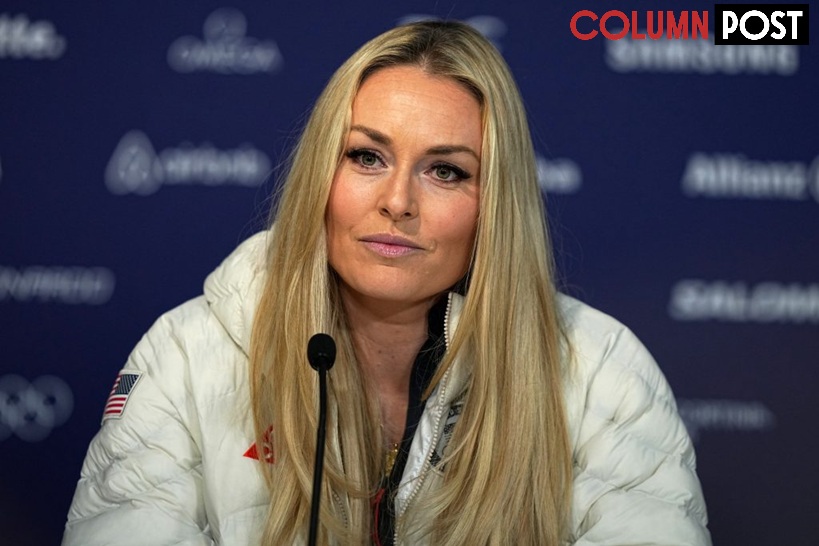
Lindsey Vonn is an American alpine ski racer born on October 18, 1984 in St. Paul, Minnesota, and the most decorated female downhill skier in the history of the sport. In a career that spanned twenty-five years across two separate competitive periods, she accumulated four World Cup overall titles, 84 World Cup victories, 20 World Cup crystal globes — a record across both men and women — three Olympic medals, and eight World Championship medals. She is the only American woman to have won Olympic downhill gold, one of six women in history to have won World Cup races in all five alpine disciplines, and the holder of the most Super-G victories of any skier regardless of gender.
On February 8, 2026 — exactly sixteen days before this article was written — her fifth Olympic appearance ended thirteen seconds into the women’s downhill final at the Milan Cortina Winter Games, when she clipped a gate, lost control, and cartwheeled down the Olympia delle Tofane course before being airlifted to hospital. She was competing with a ruptured ACL that she had sustained nine days earlier. The fracture in her left tibia that resulted has required multiple surgeries, and her father has said publicly that if it were up to him, her career is over. The outcome of the most extraordinary comeback in recent Alpine skiing history ended, with brutal finality, on an Italian mountainside.
Burnsville, Buck Hill, and the Family That Moved for Her
Lindsey Caroline Kildow was born into a family that had skiing in its bones across two generations. Her grandfather was a competitive skier. Her father Alan Kildow was a three-time national junior champion whose own career was ended by a knee injury at eighteen — a biographical detail that would echo with painful resonance through his daughter’s career. Her mother Lindy Krohn, of German and Norwegian ancestry, completed the household; she died in 2022 from ALS, a loss Vonn has described as one of the most significant of her personal life.
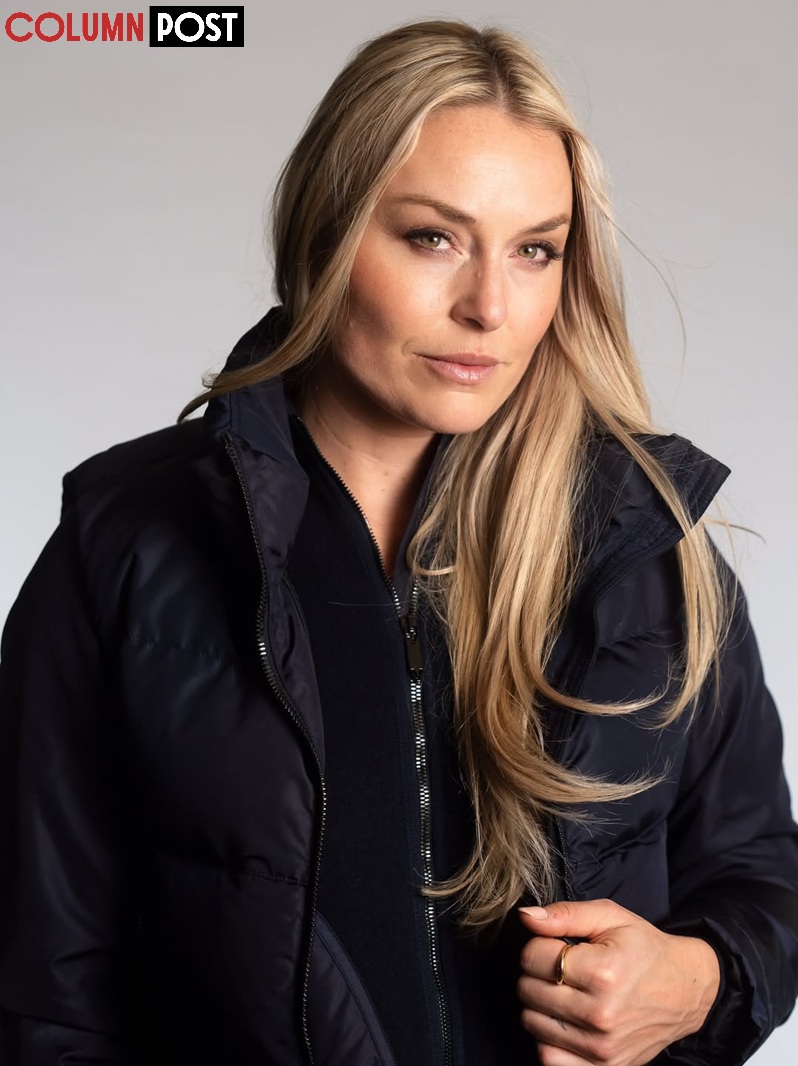
She was on skis at two or three years old — sources vary slightly on this — and was racing at seven. By nine she was competing in international junior events. She trained at Buck Hill in Burnsville, Minnesota — a modest ski area by alpine standards, more hill than mountain — under the instruction of coach Erich Sailer, an Austrian-born former racer who had built a genuinely elite development programme from unpromising Midwestern terrain. Sailer had coached Alan Kildow as well, and the family connection gave the coaching relationship a quality of continuity and trust that is rare in elite sport.
At nine years old, during a visit to see the U.S. Ski Team train, she met Picabo Street — the American ski racer who would go on to win Olympic gold in Super-G at the 1998 Nagano Games — and decided at that moment that winning Olympic gold was what she wanted. She has said in multiple interviews that she never stopped wanting that specific thing from the age of nine onward, and that the clarity of the ambition was both a gift and, at times, a source of enormous pressure.
The family decision to relocate to Vail was made around 1996, when it became clear that Buck Hill’s slopes could no longer provide what her development required. It was a significant sacrifice — Alan and Linda Kildow moved their five children across the country for a sport one of them wanted to pursue. Vonn has spoken about the weight of that sacrifice throughout her career, describing it as the source of the work ethic that never left her regardless of how much she had already won.
The Junior Years and the World Cup Debut
In 1999, competing as Lindsey Kildow, she became the first American to win the slalom at the Trofeo Topolino — the prestigious international junior competition held in Italy — at the age of fourteen. The win marked the point at which she moved from exceptional junior talent to internationally noticed prospect. She made her World Cup debut on November 18, 2000, at the age of sixteen, in Park City, Utah.
Her Olympic debut came at the 2002 Salt Lake City Winter Games at seventeen, where she competed in slalom and combined, finishing sixth in combined. She earned a silver medal in downhill at the 2003 Junior World Championships in Puy-Saint-Vincent, France. Her World Cup breakthrough came on March 12, 2004, when she won her first World Cup race in downhill at Lake Louise, Alberta — the venue where she would go on to win eighteen times, a record for any skier at the same venue.
The 2006 Turin Olympics brought one of the first demonstrations of the resilience that would define her career. During a training run she suffered a severe crash and was airlifted to hospital. She returned to competition, finishing seventh in Super-G and eighth in downhill — results that, given she had been hospitalised days earlier, were themselves remarkable. At the 2007 World Championships in Åre, Sweden, she won silver in both downhill and Super-G.
The Peak Years: Four Overall Titles and the Olympic Gold
The 2007–08 season marked the beginning of the dominant period of Vonn’s career. She won the World Cup overall title in 2008 — her first — and retained it in 2009 and 2010, making her three consecutive overall World Cup champion. The 2009 World Championships in Val d’Isère were a personal high point: she won gold in both downhill and Super-G on the same day, becoming only the second woman in history to achieve that double. She added a fourth overall title in 2012.
The 2010 Vancouver Winter Olympics crystallised everything. Going into the Games she was the world’s top-ranked downhill skier and the overwhelming favourite. A week before the downhill, she suffered a bruised shin in a fall — a setback that would have ended most athletes’ Olympic ambitions. She raced anyway. On February 17, 2010, Lindsey Vonn won the Olympic downhill gold medal — the first ever by an American woman in that event — by a margin of 0.56 seconds over Maria Riesch of Germany. She followed it with a bronze in Super-G two days later. The image of her celebrating at the bottom of the course, arms raised, became one of the defining photographs of those Games.
Records, the Injury Years, and the Road to 82
The middle decade of Vonn’s career was as much a story of recovery as of victory. In February 2013 at the World Championships in Schladming, Austria, she crashed in the Super-G and tore the ACL and MCL in her right knee, simultaneously fracturing the tibial plateau. She missed the 2014 Sochi Olympics entirely. She returned, won her seventh World Cup downhill title in March 2015, and in January 2015 posted her 63rd World Cup victory — surpassing Annemarie Moser-Pröll’s record to become the most successful female skier in World Cup history. In 2016 she won her 20th crystal globe, surpassing Ingemar Stenmark’s record of 19 and becoming the most decorated World Cup skier in history across both genders.
The injuries continued to accumulate: a fractured left ankle in August 2015 at a training camp in New Zealand, a broken right arm in a training crash at Copper Mountain in November 2016 that affected nerves and required months of recovery. Through each of them she returned — not because she was invincible but because she had the specific capacity for physical and psychological recovery that great athletes either possess from the beginning or develop through the necessity of being repeatedly injured.
Key Career Records and Honours
| Record / Honour | Detail |
|---|---|
| World Cup wins | 84 — second all-time (behind Mikaela Shiffrin) |
| World Cup downhill wins | 43 — all-time record |
| World Cup Super-G wins | 28 — all-time record (men or women) |
| World Cup crystal globes | 20 — all-time record (men or women) |
| World Cup podiums | 138 |
| Olympic medals | 3 (Gold: downhill 2010; Bronze: Super-G 2010; Bronze: downhill 2018) |
| Olympic appearances | 5 (2002, 2006, 2010, 2018, 2026) |
| World Championship medals | 8 (including 2 gold — 2009) |
| Lake Louise victories | 18 — record for any skier at same venue |
| 20 crystal globes record | Surpassed Ingemar Stenmark’s 19 in 2016 |
| USOC Sportswoman of the Year | 2009, 2010 |
The 2018 PyeongChang Bronze and the Final Season
The 2018 PyeongChang Winter Olympics produced another bronze in downhill — Vonn’s fourth Olympic medal. She retired her right knee again with an injury during the season but competed through it. At the World Championships in Åre, Sweden in February 2019, she won bronze in downhill in what was her final World Championship race. Days later, she announced her retirement.
“My body is broken beyond repair,” she wrote. The statement was stark, factual, and entirely in keeping with how she had always spoken about injury — directly, without self-pity, and with full acknowledgement of the physical reality. She retired with 82 World Cup victories, the most by any female skier in history. She was thirty-four years old.
Life After the First Retirement: Business, Foundation, and Public Life
The five years between her 2019 retirement and her 2024 comeback were not idle. Vonn founded Après Production, a film and television production company, through which she began developing content. She had invested in the NWSL’s Utah Royals and expanded the Lindsey Vonn Foundation — established to provide educational opportunities and athletic programming for girls from underserved communities — with new partnerships and programmes. She co-authored a graphic novel series, Strong, through which she channelled her personal story of injury and recovery into a format aimed at young readers.
She had been in a relationship with Diego Osorio — described in some sources as an actor, in others as a tequila brand founder — since 2021, a relationship they had kept largely private despite appearing at select events together. They broke up in February 2025, with Vonn confirming the split to People in characteristically direct terms: “Valentine’s Day will look a little different for me this year. But I have my two dogs, so they’ll be my Valentine’s dates.”
Her mother Lindy Krohn died in 2022 from ALS — a loss that Vonn processed publicly and privately, and which she cited in multiple interviews as one of the driving forces behind her sense of urgency about what she still wanted to do in sport. Her relationship with her parents had always been central to her narrative: the father who pushed her onto skis and moved the family to Vail; the mother whose quiet strength was, by Vonn’s account, the more durable influence.
The Comeback: Partial Knee Replacement, the Return, and Milan Cortina
In April 2024, Vonn underwent partial knee replacement surgery — a titanium implant in her right knee, the knee that had been the primary site of her catastrophic 2013 injury. The surgery was presented not as a last resort but as the enabling condition for a comeback: if the knee could be structurally rebuilt, the skiing could resume. Weeks after the surgery, she confirmed exactly that — she was returning to the World Cup circuit, targeting the 2026 Milan Cortina Winter Olympics.
The decision was not universally expected. She was forty years old, had been retired for five years, had a partial knee replacement, and was proposing to compete in downhill and Super-G — disciplines in which the physical demands on the knee are among the most extreme in professional sport. She won her first World Cup race back in November 2024, becoming the oldest downhill World Cup winner in history at forty-one. She finished the 2024–25 season competitive. She qualified for the 2026 Olympics in December 2025, marking her fifth Olympic appearance.
Then, at a World Cup race in Crans-Montana, Switzerland on January 28, 2026 — nine days before the Olympic downhill final — she crashed and ruptured the ACL in her left knee. She was airlifted from the course by helicopter. She announced that her Olympic dream was not over. Against the advice that would ordinarily follow such an injury, and after extensive consultation with her medical team and personal physicians, she confirmed she would race.
February 8, 2026: The Final Run
At the Milan Cortina Winter Olympics on February 8, 2026, Lindsey Vonn tapped her poles together three times at the start gate of the Olympia delle Tofane downhill course — a gesture that those who know her understood as a ritual of focus and commitment — and launched into what would be her final competitive run. Thirteen seconds later, 13.4 seconds to be precise, she clipped a gate with her right shoulder, lost control, and cartwheeled down the slope. Her screams were audible on the broadcast before medical personnel reached her. The race was halted for more than ten minutes.
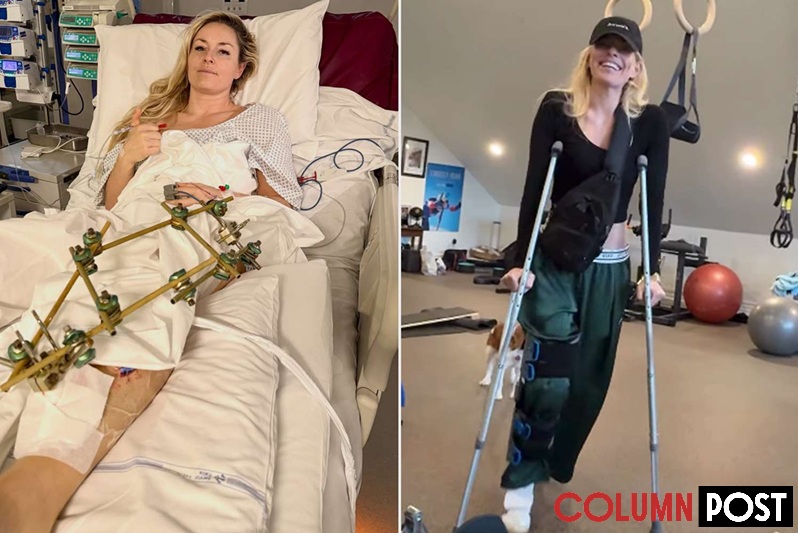
She was airlifted first to a clinic in Cortina, then transferred to Ca’ Foncello Hospital in Treviso. The hospital confirmed she had undergone surgery to stabilise a fracture in her left leg. Her own statement, issued the following day, confirmed a complex tibia fracture requiring multiple surgeries to fix properly. She had already undergone three operations by the time she posted a video from her hospital bed several days later, thanking supporters for their messages and gifts. Her tone was composed. The fracture was stable, she said. There was a long way to go.
The women’s downhill was won by Breezy Johnson of Team USA — who became the first American woman to win Olympic downhill gold since Vonn herself sixteen years earlier. Johnson’s acknowledgement of Vonn at the finish line — “I don’t claim to know what she’s going through, but I do know what it is to be here, to be fighting for the Olympics, and to have this course burn you and to watch those dreams die” — was one of the more graceful moments in a day of extreme feeling.
Vonn’s father Alan, speaking to the Associated Press, was unequivocal: “If it’s up to me, she’s done.” From a medical standpoint, her surgeon noted that she already has a partial knee replacement in the other leg and is competing at speeds above seventy miles per hour. What Vonn herself intends is not yet publicly confirmed.
The Meaning of the Career
The story of Lindsey Vonn does not end cleanly — no career that concludes on a mountainside with a broken leg and a ruptured ACL gets to claim a neat narrative arc. What it does have is a body of achievement so substantial that the manner of its ending cannot diminish it. Eighty-four World Cup wins. Four overall titles. Twenty crystal globes. Olympic gold. A comeback at forty-one that produced two World Cup victories and seven podiums before the last crash arrived. She competed on a torn ACL nine days after rupturing it because the alternative was not competing at the Olympics at all, and she had spent thirty-two years — since the age of nine, since the moment she met Picabo Street — wanting to compete at the Olympics. The question of whether that decision was wise misses the point of who she has always been. The remarkable thing was never that she got hurt. It was always that she came back.