
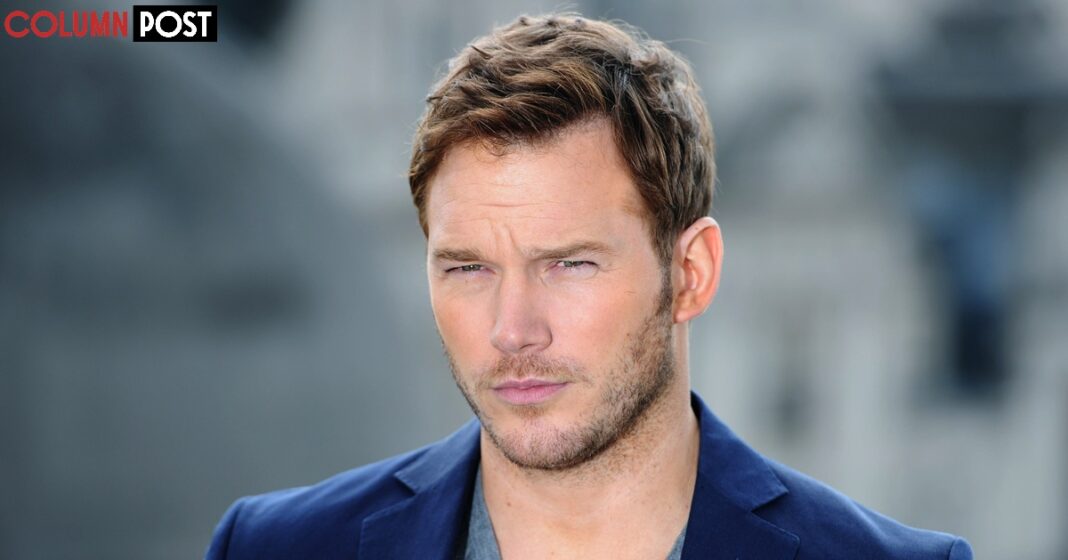
There is a moment in the biography of Chris Pratt that functions as the hinge on which everything turns — not the Oscar nomination, which hasn’t come, not the first day on a Marvel set, which came later, but a conversation at a Bubba Gump Shrimp Company restaurant in Maui, Hawaii, in the year 2000. Chris Pratt was 20 years old. He was working as a waiter, having spent the previous months living out of a van and sleeping in a tent on the beach. He had no professional credits, no industry connections, no plan beyond the next shift. He was, by every conventional measurement, going nowhere.
| Quick Facts | Details |
|---|---|
| Full Name | Christopher Michael Pratt |
| Date of Birth | June 21, 1979 |
| Birthplace | Virginia, Minnesota, USA |
| Age (2026) | 46 years old |
| Height | 6 ft 2 in (1.88 m) |
| Parents | Daniel Clifton Pratt (1953–2014); Kathleen “Kathy” Pratt née Indahl |
| Siblings | Angela “Angie” Pratt; Daniel “Cully” Pratt (retired law enforcement) |
| Education | Lake Stevens High School (1997); community college (dropped out) |
| Discovery | Rae Dawn Chong; Bubba Gump Shrimp Co., Maui, 2000 |
| TV Breakthrough | Andy Dwyer — Parks and Recreation (NBC, 2009–2015) |
| Film Breakthrough | Moneyball (2011); Zero Dark Thirty (2012) |
| Global Stardom | Star-Lord — Guardians of the Galaxy (2014); Owen Grady — Jurassic World (2015) |
| MCU Appearances | Guardians (2014), Vol.2 (2017), Infinity War (2018), Endgame (2019), Vol.3 (2023) |
| Total Box Office | $15.8+ billion worldwide (all roles combined) |
| First Wife | Anna Faris (m. 2009; div. 2018) |
| Son | Jack Pratt (b. August 10, 2012) |
| Second Wife | Katherine Schwarzenegger (m. June 8, 2019) |
| Daughters | Lyla Maria (b. August 10, 2020); Eloise Christina (b. May 21, 2022) |
| Faith | Devout Christian; attends Zoe Church, Los Angeles |
| Per Film Fee (est.) | $10–$15 million |
| Net Worth (2026 est.) | $80 million – $100 million |
The woman who sat down in his section that evening was Rae Dawn Chong — actress, director, the daughter of comedian Tommy Chong — and within minutes of their conversation she asked him if he had ever considered acting. He said yes. She offered him a role in a film she was directing. He took it. Within a decade, he would be playing a Marvel superhero in one of the highest-grossing film franchises in cinema history. Within fifteen years, his films as a leading actor would have grossed over $14 billion worldwide, placing him fifth on the list of the highest-grossing box office stars of all time.
The Bubba Gump moment is, of course, a simplification of a career that required genuine talent, sustained effort, and the particular physical and comedic transformation that distinguishes Chris Pratt from the hundreds of other good-looking young men who arrive in Hollywood every year without finding their way. But it is a true simplification — the moment really happened, the career really followed — and it captures something essential about how his story works: improbable, specific, shaped by accident and then by choice.
Virginia to Lake Stevens: The Foundation
Christopher Michael Pratt was born on June 21, 1979, in Virginia, Minnesota — the Iron Range city that also produced his father Daniel Clifton Pratt, whom we have written about separately. The family’s early years included a period in Anchorage, Alaska, where they lived from approximately when Chris was two until he was six, before settling in Lake Stevens, Washington — a community in Snohomish County, northeast of Everett, that would remain the geographic anchor of Chris’s identity through his adolescence and into his adult life.
Lake Stevens in the 1980s and 1990s was a small Pacific Northwest community whose character was shaped by the logging and agricultural industries that surrounded it, by the outdoor culture of the Cascade foothills and the lake itself, and by the working-class family culture that Daniel Pratt’s contracting work and Kathy Pratt’s Safeway employment represented. It was not a wealthy upbringing. It was, by Chris’s own repeated account, a happy one — organised around the outdoors, around sport, around family, and around the practical values of a household that made things work without excess.
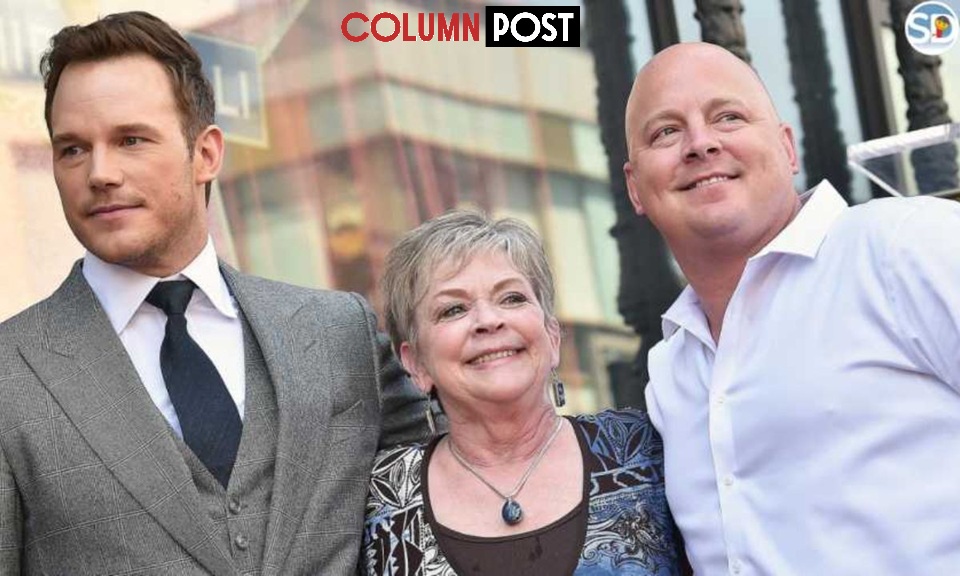
His older brother Cully became a law enforcement officer before retiring. His sister Angie built a quieter private life. Chris was the youngest — described in family accounts as the most physically oriented of the three, the most competitive, and the most naturally given to performance and entertainment in the informal social sense that translates, for some people, into something professional.
At Lake Stevens High School, he wrestled — placing fifth in the state championship, a result that required both talent and the willingness to submit to the kind of physical and psychological discipline that competitive wrestling demands at that level. He was also a track and field athlete, competing as a shot putter. The athletic foundation he built in high school would matter enormously later, when professional demands required him to transform his body in ways that non-athletes find genuinely difficult.
He is reported to have said, as a student at Lake Stevens, that he would either become famous or be a bum — a line he has confirmed in interviews with the self-aware amusement of someone who came closer to both outcomes than the teenager saying it could have imagined.
After graduating in 1997, he briefly attended a community college — dropping out after a semester, a decision that felt, at the time, like aimlessness and that looks, in retrospect, like a person who already sensed that the path being cleared for him was not the path he was going to take.
Hawaii: The Van, the Beach, and the Shrimp Restaurant
Chris Pratt arrived in Maui, Hawaii sometime around 1999 or 2000. He has described the circumstances with characteristic directness: he followed a friend there, ran out of money, and ended up living out of a van, sleeping in a tent on the beach, and working a series of jobs — including selling discount coupons to tourists — before landing the Bubba Gump Shrimp Company waiter position that would change everything.
The Hawaii period is one of the most frequently told episodes in his biographical narrative, and it functions differently in different tellings. In some versions it is comic — the future movie star, broke and beachside, hustling for tips at a theme restaurant. In others it carries a more serious undertone: a young man without direction, disconnected from the conventional pathways of education and professional development, living an existence that could easily have continued indefinitely in both directions — upward or nowhere.
What ended it was Rae Dawn Chong. Her visit to his section at Bubba Gump, her observation that he had something, her offer of a role in her independent film Cursed Part 3 (2000) — these constituted the first link in a chain whose subsequent links Chris Pratt forged himself. The film was small. The role was small. But it gave him something he did not have before: a professional credit, a set experience, and the confirmation that the instinct Rae Dawn Chong had acted on was one he should trust.
He moved to Los Angeles.
The Climb: Everwood, The O.C., and the Road to Parks
The early Los Angeles years were not the overnight success story that the Bubba Gump narrative can make them sound in compressed retelling. Chris Pratt spent years building the television résumé that eventually gave him the platform for something larger — guest roles, recurring parts, the slow accumulation of professional experience and industry visibility that character building in Hollywood requires for people who arrive without connections.
He appeared in the WB drama Everwood (2002–2006) as Bright Abbott — a supporting role in a family drama that gave him sustained screen time and the experience of working within a long-running ensemble production. He appeared in The O.C. He accumulated the kind of television credits that agents and casting directors recognise as evidence of reliability and range even when they don’t yet constitute stardom.
In 2007, he married actress Anna Faris — a comedian and actress whose own career was, at the time, more established than his. The marriage brought him deeper into the entertainment community’s social and professional fabric, though both parties have consistently described it as a genuine personal relationship rather than a professional arrangement.
Then came Andy Dwyer.
Parks and Recreation: The Character That Made the Career
When Parks and Recreation premiered on NBC in 2009, Chris Pratt was cast as Andy Dwyer — a manchild character originally written as a one-season antagonist whose primary function was to create complications in Leslie Knope’s life before being written out. What happened instead is one of the more instructive stories in television comedy history: Pratt made Andy so genuinely funny, so physically committed, and so unexpectedly warm that the writers built the show around him rather than removing him. Andy Dwyer evolved from obstacle to beloved ensemble cornerstone, and Chris Pratt spent six seasons demonstrating, to anyone paying close enough attention, that he possessed comedic intelligence, physical comedy skills, and a specific brand of lovable idiocy that was actually quite difficult to execute.

The show ran from 2009 to 2015, winning critical acclaim and developing a devoted audience. For Pratt, it provided something equally important: stability. A network comedy in its prime is a well-paying, professionally secure position that allows an actor to develop skills and credibility while maintaining the financial foundation that creative risk-taking elsewhere requires.
He used that foundation well. In 2011, casting director Alexa L. Fogel — working on Bennett Miller’s Moneyball — cast him as Scott Hatteberg, the real-life Oakland Athletics catcher whose story was a central thread of the film. The role required him to lose approximately 30 pounds in three months to convincingly portray an active professional baseball player. He did it — an early demonstration of the physical discipline that would become one of his most discussed professional attributes — and the performance was well-received, placing him credibly in the conversation for leading dramatic roles. He followed it with a small but memorable role in Kathryn Bigelow’s Zero Dark Thirty (2012).
The Transformation: Building the Body That Built the Franchise
When Marvel Studios cast Chris Pratt as Peter Quill/Star-Lord in Guardians of the Galaxy in 2012, the internet’s initial response was genuine scepticism. Pratt was known primarily as the chubby, lovable idiot from Parks and Recreation — a character defined partly by physical comedy and deliberate ungainliness. The leap from Andy Dwyer to a Marvel action hero seemed, to many observers, implausible.
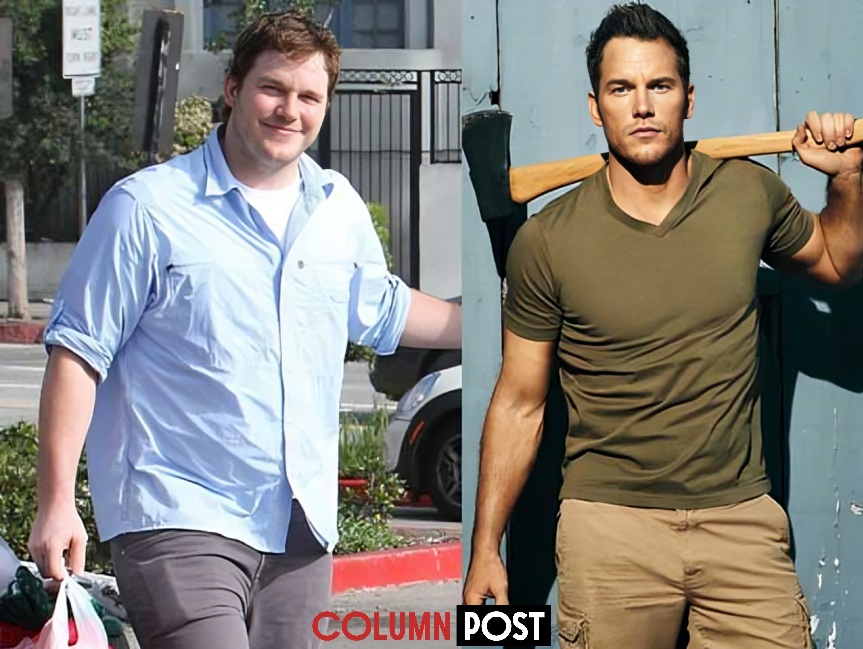
What followed was one of the most discussed physical transformations in recent Hollywood history. Working with trainer Duffy Gaver over approximately eight months, Pratt went from approximately 300 pounds to 215 pounds, losing fat while gaining significant muscle mass — a body composition change that required not just the gym sessions that received most of the coverage but the nutritional discipline and sleep management that serious body transformation demands at that level. He has spoken about swimming two miles a day, working out twice daily, eliminating alcohol, and eating precisely calibrated portions of protein, carbohydrates, and fat across months of sustained effort.
The physical result was visible and undeniable. But the more significant transformation was the demonstration it provided: that Chris Pratt was willing to work at exactly the level that a leading role in a major franchise requires, that his capability extended significantly beyond the comic character type he had established at Parks and Recreation, and that Marvel’s casting instinct — whatever the internet’s initial reaction — was justified.
Guardians of the Galaxy opened in August 2014 and grossed $773 million worldwide against a $170 million production budget. Its success was driven substantially by James Gunn’s direction and writing, by an ensemble cast of genuine quality, and by the specific energy that Pratt brought to Star-Lord — a character whose combination of swagger, emotional vulnerability, comedic timing, and physical presence required exactly the range that Pratt had spent fifteen years developing without anyone noticing.
Jurassic World and the $14 Billion Milestone
In June 2015, Jurassic World directed by Colin Trevorrow and starring Pratt as velociraptor trainer Owen Grady — opened to the largest opening weekend in box office history at that time, eventually grossing $1.671 billion worldwide. The film came eleven months after his father Daniel died. Chris Pratt was filming it in New Orleans when he received the call from Lake Stevens.
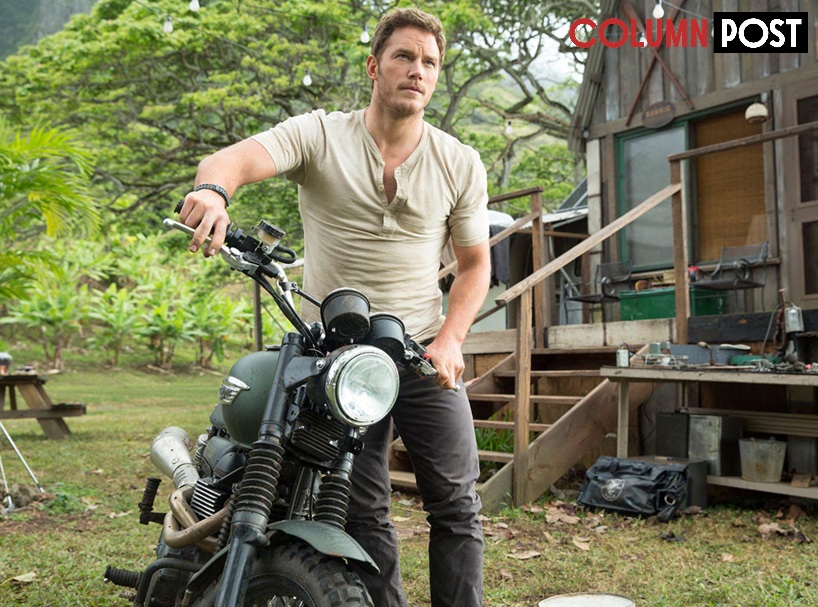
The combination of Guardians of the Galaxy and Jurassic World in consecutive summers established something that only a handful of actors in history have managed: simultaneous leadership of two separate major studio franchises. The box office mathematics of those two years placed Pratt in rarefied company — alongside Will Smith, Tom Hanks, and Harrison Ford as actors whose commercial drawing power could be relied upon to produce figures above $500 million per major release.
The sequels followed in succession. Guardians of the Galaxy Vol. 2 (2017) grossed $863 million. Avengers: Infinity War (2018) and Avengers: Endgame (2019) grossed $2.048 billion and $2.798 billion respectively — two of the four highest-grossing films in cinema history. Jurassic World: Fallen Kingdom (2018) grossed $1.309 billion. Jurassic World Dominion (2022) grossed $1 billion. Guardians of the Galaxy Vol. 3 (2023) grossed $845 million — the final chapter of a trilogy whose cumulative gross exceeded $2.5 billion and whose cultural impact on Marvel’s third phase was foundational.
His voice acting career added further billions: The Lego Movie (2014) grossed $469 million. The Super Mario Bros. Movie (2023) grossed $1.361 billion — the highest-grossing video game film adaptation in history. The Garfield Movie (2024) added $210 million.
The total box office figure for films in which Chris Pratt has appeared in any capacity exceeds $15.8 billion worldwide. His contribution as a leading actor accounts for the majority of that sum.
Personal Life: Anna, Jack, Katherine, Lyla, and Eloise
Chris Pratt married actress Anna Faris on July 9, 2009, in a ceremony in Bali, Indonesia. Their son, Jack Pratt, was born on August 10, 2012 — nine weeks premature, weighing less than four pounds, requiring extended neonatal care in circumstances that Pratt has described as the most frightening of his life. Jack survived and developed without lasting complications. Pratt has spoken about Jack’s premature birth as a transformative experience — one that deepened his faith, recalibrated his sense of what mattered, and produced a specific gratitude that he has articulated in multiple interviews with unusual directness for a public figure.
In August 2017, Pratt and Faris announced their separation via simultaneous social media posts. Their divorce was finalised in 2018. The separation was handled with public dignity on both sides — neither party made hostile public statements, and both have continued to co-parent Jack with evident commitment and functional communication.
On June 8, 2019, Chris Pratt married Katherine Schwarzenegger — author, daughter of Arnold Schwarzenegger and Maria Shriver, and a woman whose own public profile is built on her writing and advocacy work rather than on her family name. Their daughter Lyla Maria Pratt was born on August 10, 2020 — coincidentally the same date as Jack’s birthday. Their second daughter, Eloise Christina Pratt, was born on May 21, 2022. The family lives in the Pacific Palisades area of Los Angeles, in a property Pratt purchased in 2018 for approximately $15.6 million.
Faith, Philanthropy, and the Values Behind the Career
Chris Pratt’s Christian faith is one of the most consistently discussed aspects of his public persona — partly because he has spoken about it with a directness that is unusual in Hollywood, and partly because the specific nature of that faith (he attends Zoe Church in Los Angeles, associated with the Hillsong movement and with pastor Chad Veach) has attracted both support and criticism.
He has described his faith as the foundational organising principle of his life — preceding his career, his marriages, his philanthropy, and his response to difficulty. When Jack was born premature, he prayed. When his father died, he processed the grief through his faith. When he spoke at Harvard’s Class Day in 2018 and offered nine pieces of advice, seven of the nine were either explicitly faith-based or rooted in the values his faith produced.
His philanthropy is substantial and specific. He has donated over $1 million to provide glasses for underprivileged children — a cause connected to his son Jack’s own health challenges. He donated $500,000 to build a teen activity centre in Lake Stevens, Washington — the community where he grew up, where his mother still lives, and where the working-class roots that shaped his character remain a living reality. He donated $100,000 to the Feed Thy Neighbor initiative during the COVID-19 pandemic. He supports the United Way, the Children’s Hospital Los Angeles, and multiple veteran support organisations.
Chris Pratt Net Worth: The $80–$100 Million Figure
The most credible estimates of Chris Pratt’s net worth in 2026 place the figure between $80 million and $100 million — a range that reflects the compound effect of the following income streams:
| Income Source | Estimated Contribution |
|---|---|
| Guardians of the Galaxy trilogy (3 films) | $40–$60M total (escalating per film) |
| Jurassic World trilogy (3 films) | $30–$50M total |
| Avengers appearances (4 films) | $20–$30M total |
| Voice acting (Lego Movie, Mario, Garfield, Onward) | $10–$20M total |
| The Tomorrow War (Amazon Prime, 2021) | $~12M (reported) |
| Garfield Movie (2024) | Included above |
| Real estate gains (Pacific Palisades, Hollywood Hills) | $5–$10M net gain |
| Endorsements, production company | $5–$10M |
| Estimated Total Net Worth (2026) | $80 million – $100 million |
His per-film fee for major studio productions is estimated at $10–$15 million for leading roles, with significant backend participation in some franchise films. His annual earnings across active production years typically exceed $15–$20 million.
Conclusion
Chris Pratt was born in Virginia, Minnesota, on June 21, 1979, the son of a taconite miner and a Safeway worker. He placed fifth in a state wrestling championship in Lake Stevens, dropped out of community college, lived in a van in Hawaii, waited tables at a shrimp restaurant, was discovered by an actress-director who sat in his section, moved to Los Angeles, spent a decade building a television career as a lovable idiot in a critically acclaimed NBC comedy, lost sixty pounds and completely transformed his body to play a Marvel superhero, and proceeded to appear in films that have collectively grossed over $15 billion worldwide.
He lost his father while filming the biggest movie of his career. He was present for his son’s premature birth. He has been married twice, has three children, attends church, donates meaningfully, and speaks about faith and grief and gratitude with the directness of someone who has been through enough to know what actually matters.
The compass his father carried doesn’t work. Chris Pratt seems to know exactly where he is going.