
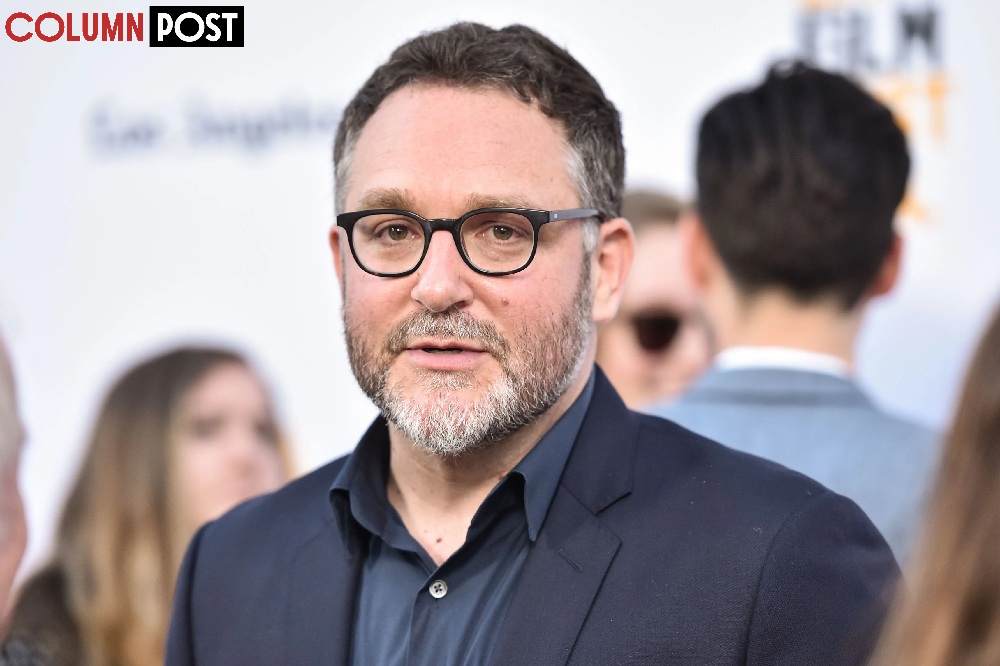
In 2012, Colin Trevorrow arrived at the Sundance Film Festival with a low-budget time-travel comedy made for $750,000, written with his NYU classmate Derek Connolly, and starring two actors — Aubrey Plaza and Mark Duplass — whose career arcs at the time were still primarily shaped by independent film and television rather than by mainstream commercial recognition. Safety Not Guaranteed won the Waldo Salt Screenwriting Award at Sundance, was acquired by FilmDistrict, and earned approximately $4 million at the box office — a modest but meaningful return that announced Trevorrow as a filmmaker of genuine voice and structural intelligence.
| Quick Facts | Details |
|---|---|
| Full Name | Colin T. Trevorrow |
| Date of Birth | September 13, 1976 |
| Birthplace | San Francisco, California, USA |
| Raised | Piedmont, California (Oakland area) |
| Age (2026) | 49 years old |
| Height | 5 ft 11 in (1.80 m) |
| Father | Musician (country rock band) |
| Mother | Photographer and day-care centre operator |
| High School | Piedmont High School, Piedmont, California |
| University | NYU Tisch School of the Arts (film) |
| Writing Partner | Derek Connolly — met at NYU; long-term creative collaborator |
| First Viral Film | Home Base (short, 2002) — 20+ million views online |
| Feature Debut | Safety Not Guaranteed (2012) — Sundance; Waldo Salt Award |
| Major Franchise | Jurassic World (2015, dir.); Fallen Kingdom (2018, exec. prod./writer); Dominion (2022, dir.) |
| Total Franchise Gross | $4+ billion worldwide |
| Star Wars | Hired Episode IX (2015); departed creative differences (2017) |
| Production Company | Metronome Film Co. (2019; London & Los Angeles) |
| Wife | Isabelle Trevorrow |
| Children | Two children |
| Residence | England (family); Los Angeles (professional) |
| Net Worth (est. 2026) | $5 million – $10 million |
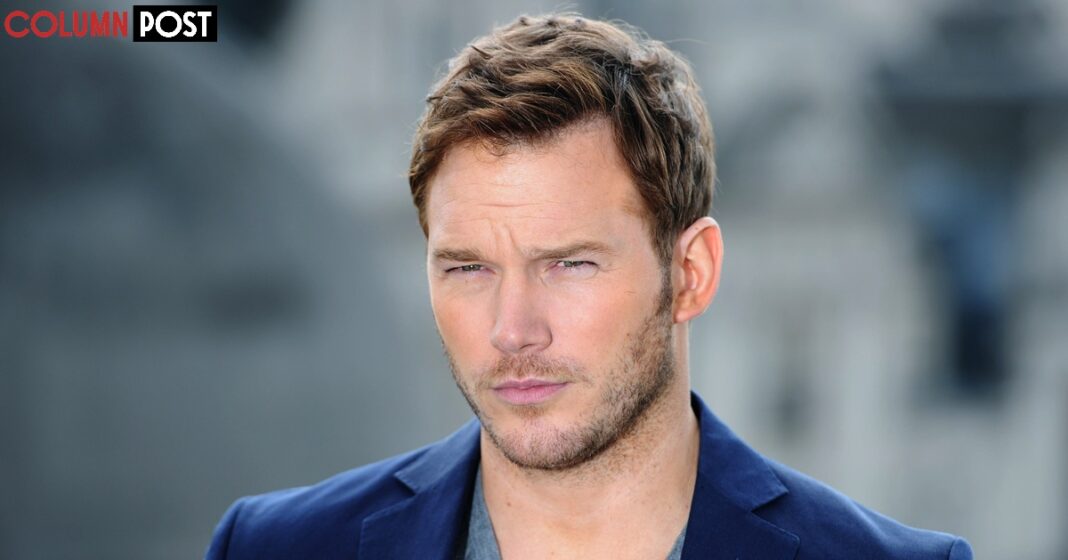
Three years later, the same man stood on a Universal Pictures soundstage directing Chris Pratt to run alongside computer-generated velociraptors in the film that would become the highest-grossing entry in the Jurassic Park franchise and, at the time of its release, the third-highest-grossing film in cinema history. Jurassic World earned $1.671 billion worldwide. The leap from $750,000 indie to $150 million franchise blockbuster — executed in a single directorial step, without a mid-tier studio film as an intermediate credential — is one of the more extreme trajectory changes in modern Hollywood, and understanding how it happened requires understanding who Colin Trevorrow is and what he was building toward before anyone outside the independent film community had heard his name.
Piedmont, California: The Artistic Family That Started It All
Colin Trevorrow was born on September 13, 1976, in San Francisco, California, and grew up in Piedmont — a small, affluent independent city entirely surrounded by Oakland, known for its strong public school system and the specific cultural character of a community whose proximity to San Francisco’s arts scene and Berkeley’s intellectual culture has shaped generations of residents.
His parents were not industry professionals in the conventional Hollywood sense, but they were unambiguously creative people. His father played in a country rock band — a working musician whose relationship to artistic expression was professional and daily rather than aspirational and occasional. His mother was both a photographer and the operator of a day-care centre — a combination that reflects a specific kind of practical creativity: someone who made art seriously while also running an organisation that served a community function.
The household’s artistic atmosphere produced a child who was, by every biographical account, oriented toward performance and storytelling from an unusually early age. Before he was a filmmaker, he was a singer — a boy soprano who performed in the San Francisco Opera chorus, accumulating the experience of large-scale live performance, precise coordination with an ensemble, and the specific discipline that professional opera demands of its young performers. The opera background is not a charming biographical footnote. It is evidence of a formal artistic training — in stagecraft, in emotional expression, in the relationship between performance and audience — that film school would later complement rather than replace.
He began making films at the age of twelve. The equipment available to a twelve-year-old in the late 1980s was modest — consumer video cameras, no editing software, no professional crew — but the impulse to construct narrative through moving images was clearly present and clearly serious. He entered his early short films in the Mill Valley Film Festival, the respected Northern California film festival that has, across its history, provided an early platform for filmmakers at exactly the developmental stage Trevorrow occupied. He won prizes there. The prizes confirmed what the making itself had already suggested: this was a direction, not a hobby.
He attended Piedmont High School, where the combination of musical training and filmmaking practice continued alongside conventional academic preparation, and graduated with an application to one of the most competitive film programmes in the United States already forming.
NYU Tisch and the Saturday Night Live Internship
Trevorrow enrolled at NYU’s Tisch School of the Arts — the New York University film programme whose alumni list includes an extraordinary proportion of the American directors, writers, and producers who have shaped cinema and television across the past four decades. Tisch’s specific culture — technically demanding, culturally diverse, immersed in the New York arts environment while maintaining rigorous practical training — produced in Trevorrow the combination of formal craft knowledge and independent artistic instinct that his later career consistently demonstrated.
At NYU, he met Derek Connolly — the writing partner whose creative collaboration would prove central to everything that followed. Connolly and Trevorrow developed the specific complementarity that effective screenwriting partnerships require: Connolly’s character-oriented instincts fitting Trevorrow’s structural and visual sensibilities in ways that their joint output consistently reflected. They would write Safety Not Guaranteed together, contribute to the Jurassic World franchise scripts together, and maintain a professional relationship built on genuine creative trust across more than two decades.
During his NYU years, Trevorrow secured an internship at Saturday Night Live — an experience whose professional value was not primarily technical but cultural. SNL’s production environment is one of the most intense and specifically demanding in American entertainment: weekly live broadcasts, extreme time pressure, the creative culture of a programme whose institutional history carries enormous weight while its weekly execution requires complete present-tense focus. The experience of being inside that environment — observing how professional comedy is made under genuine pressure — contributed to the comedic timing and tonal confidence that characterise Trevorrow’s best work.
The Early Career: Viral Shorts, Documentaries, and DreamWorks
After NYU, Trevorrow’s professional development followed the path that serious independent filmmakers of his generation navigated before YouTube transformed distribution and before streaming platforms created new pathways to professional recognition: short films, documentary work, and the laborious process of writing speculative feature scripts and finding their way to production companies.
In 2002, he made a short film called Home Base — a comedy that, by the standards of pre-YouTube internet distribution, achieved something remarkable: over 20 million views online. The figure contextualises differently now, when individual YouTube videos regularly accumulate billions of views, but in 2002, 20 million online views for a short independent film was a genuine phenomenon — evidence of an instinct for accessible, funny filmmaking that connected with a broad audience without institutional support or marketing resources.
In 2004, he directed Reality Show — a documentary that marked his theatrical release debut and demonstrated the documentary storytelling skills that would later inform the observational, character-grounded approach of Safety Not Guaranteed.
In 2006, he and Connolly sold their spec script Tester to DreamWorks — a transaction that provided both financial resources and the professional credibility of a major studio sale. Spec script sales to major studios are the industry’s standard mechanism for establishing a screenwriter’s commercial viability, and the DreamWorks sale placed Trevorrow and Connolly in the category of writers whose work was considered worth optioning at the level where production budgets become real.
These years — the viral short, the documentary, the spec sale — were not years of stagnation. They were the systematic construction of a professional foundation that would support the Sundance launch of Safety Not Guaranteed when it arrived.
Safety Not Guaranteed (2012): The Sundance Film That Changed Everything
Safety Not Guaranteed arrived at the Sundance Film Festival in 2012 with everything working in its favour except a budget. The script — written by Connolly, directed by Trevorrow — was based on a real classified advertisement placed in a 1997 issue of Backwoods Home Magazine by a man named John Silveira, who was genuinely seeking a companion for time travel and included the disclaimer “must bring your own weapons, safety not guaranteed.” The ad had become an early internet phenomenon years before the film’s conception; turning it into a feature required the kind of tonal intelligence that makes the difference between a cute premise and a genuinely affecting film.
What Trevorrow and Connolly made was a romantic comedy-drama of genuine emotional sophistication — a film that used its science fiction premise not as spectacle but as metaphor, exploring the relationship between faith, longing, and the desire to undo the past through the story of a journalist (played by Aubrey Plaza) who is sent to investigate a man (played by Mark Duplass) who may or may not actually be building a time machine. The film’s refusal to definitively answer that question — its insistence on emotional truth over genre clarification — was exactly the kind of structural confidence that Sundance prizes recognise.
The Waldo Salt Screenwriting Award went to Connolly. The film was acquired and released by FilmDistrict. It earned approximately $4 million at the box office — modest in absolute terms but significant in what it represented: a return of roughly five times its production cost, critical consensus around Trevorrow as a director of genuine promise, and the specific kind of industry attention that a strong Sundance debut generates from studio development executives looking for the next filmmaker capable of scaling upward.
Steven Spielberg and Frank Marshall — the producer of the Jurassic Park franchise — were among those watching.
Jurassic World (2015): How an Indie Director Got the Biggest Job in Hollywood
The process by which Colin Trevorrow came to direct Jurassic World is one of the more instructive stories about how Hollywood’s development ecosystem actually functions when it is working as intended.
Following Safety Not Guaranteed‘s Sundance success, Trevorrow was called in to meet with Steven Spielberg and Frank Marshall about the long-gestating fourth Jurassic Park film. Universal Pictures had been developing a sequel to the original trilogy for over a decade, cycling through scripts and directors without finding a version of the project that the key stakeholders felt was ready to produce. Spielberg and Marshall were looking for a filmmaker who could bring a specific combination of qualities: genuine reverence for the original film’s emotional language, the structural intelligence to manage a large-scale action narrative, and the character-driven sensibility to give audiences something to invest in emotionally rather than just visually.
Trevorrow’s pitch — developed with Connolly, built around the premise of a fully operational dinosaur theme park that had achieved exactly the commercial success the original film’s characters had predicted, and whose inhabitants had become so accustomed to the spectacle of dinosaurs that the park needed to create something new and more dangerous to maintain attendance — impressed Spielberg sufficiently to earn Trevorrow the job.
The scale of the undertaking was genuinely unprecedented for someone at his career stage. Jurassic World had a production budget of approximately $150 million — two hundred times the budget of Safety Not Guaranteed. The cast included Chris Pratt and Bryce Dallas Howard. The visual effects required by a film built around living, breathing digital dinosaurs at a level of photorealism the original trilogy had not attempted demanded coordination with effects houses of a complexity that no indie film could prepare you for. The pressure of delivering a sequel to one of the most beloved films in cinema history — a film whose 1993 original had genuinely transformed what audiences understood to be possible in cinema — was, by any objective measure, enormous.
Jurassic World opened on June 12, 2015, and earned $208.8 million in its opening weekend in the United States alone — the largest domestic opening weekend in cinema history at that time, breaking the record set by The Avengers three years earlier. It grossed $524.1 million domestically and $1.025 billion internationally for a worldwide total of $1.671 billion — the third-highest-grossing film in cinema history at the time of its release, behind only Avatar and Titanic.
The reviews were mixed — critics noted both the film’s spectacular visual achievements and its characterisation weaknesses — but the audience response was, in commercial terms, definitive.
Star Wars: The Episode IX That Never Was
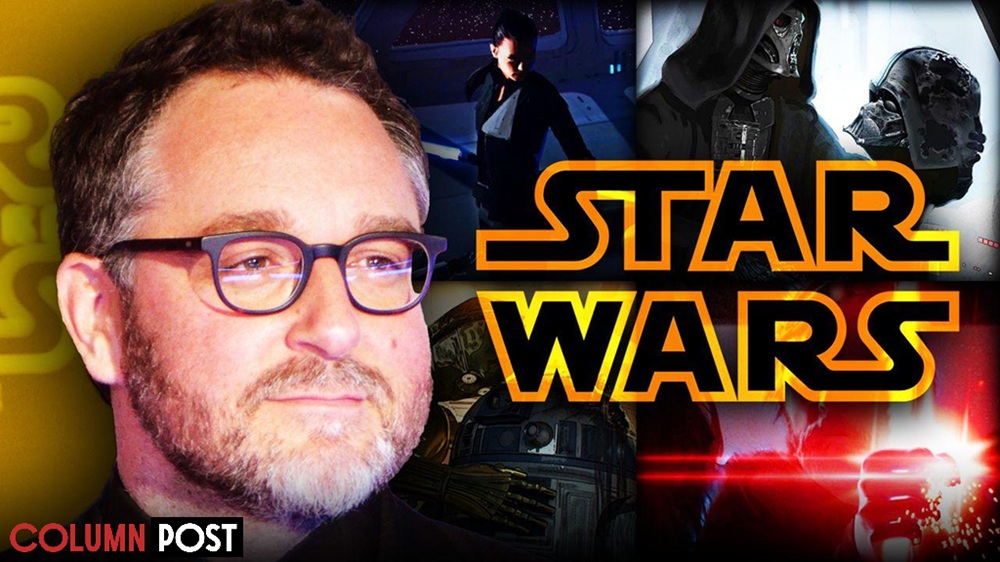
In June 2015 — the same month Jurassic World broke box office records — Disney and Lucasfilm announced that Colin Trevorrow had been hired to write and direct Star Wars: Episode IX, the concluding chapter of the sequel trilogy that The Force Awakens (2015) and The Last Jedi (2017) would precede. The announcement placed him in the most coveted directorial position in contemporary Hollywood.
The script he developed with Derek Connolly titled Duel of the Fates has since become one of the most discussed unproduced screenplays in Hollywood history following its leak online in 2020. The script took a substantially different approach to the trilogy’s conclusion than The Rise of Skywalker eventually did: it gave Finn a central and specifically political narrative arc, it used Coruscant as a setting, and it concluded the Kylo Ren storyline differently. Whether it was a better film than The Rise of Skywalker is a matter of ongoing debate; that it was a distinctly different film is beyond question.
In August 2017, Disney and Lucasfilm announced that Trevorrow was departing Episode IX due to creative differences. The announcement came approximately two months after the release of his second theatrical feature, The Book of Henry — a film that received some of the most negative critical reviews of any major-studio-adjacent release that year, with multiple critics noting with varying degrees of tact that its tonal lurches and structural problems were significant. The consensus around The Book of Henry appears to have contributed to the creative confidence issues that the Episode IX creative differences reflected.
Trevorrow has handled the episode with considerable public grace — avoiding specific accusations, acknowledging the difficulty of the creative clash without weaponising it, and donating his residuals from the story credit he retained on The Rise of Skywalker (which incorporated elements of Duel of the Fates) to charity. The maturity of that response says something about his character, whatever the specifics of what went wrong.
Completing the Jurassic Trilogy: Fallen Kingdom and Dominion
The Star Wars departure did not remove Trevorrow from the Jurassic World franchise. He served as executive producer and co-writer on Jurassic World: Fallen Kingdom (2018), directed by J.A. Bayona, which grossed $1.309 billion worldwide — the second consecutive Jurassic World film to gross over a billion dollars.
He returned to the director’s chair for Jurassic World: Dominion (2022) — the final chapter of both the Jurassic World trilogy and the broader six-film Jurassic Park/World saga, bringing together the original cast (Sam Neill, Laura Dern, Jeff Goldblum) with the Jurassic World leads (Pratt, Howard) for a conclusion that received, again, mixed reviews but performed robustly at the box office, grossing approximately $1 billion worldwide.
The Jurassic World trilogy’s aggregate worldwide gross exceeds $4 billion — placing it among the most commercially successful trilogies in cinema history and Trevorrow among the small group of directors who have delivered three consecutive billion-dollar entries in a franchise.
Metronome Film Co. and What Comes Next
In 2019, Trevorrow founded Metronome Film Co. — a production company based in both London and Los Angeles that reflects his professional priorities following the Jurassic World cycle. The London base is connected to his family’s residence in England and to his longstanding interest in international co-productions and European creative partnerships.
Metronome’s output has included Deep Cover (2025) — a crime comedy that demonstrates his interest in working at a smaller scale than the franchise work for which he is primarily known. He has also developed Intelligent Life, a science fiction project that reflects the more character-driven, tonally complex instincts of his Safety Not Guaranteed era, and War Magician, a period thriller with Benedict Cumberbatch attached as the lead — a project whose combination of historical setting and performance-driven narrative suggests a filmmaker consciously expanding his range.
The picture that emerges is of a director making deliberate choices: completing the franchise obligations that defined his 2015–2022 professional chapter, and then building a production infrastructure that gives him genuine creative independence rather than permanent dependence on studio franchise assignments.
Personal Life and the England Years
Colin Trevorrow is married to Isabelle Trevorrow, and the couple have two children together. The family’s primary residence is in England — a relocation from California that reflects both personal preference and the practical reality of Metronome Film Co.’s London presence. He maintains professional connections and spends working time in Los Angeles, but the family base has been deliberately established outside the gravitational pull of the Hollywood industry’s social and professional machinery.
He has not elaborated publicly on the specifics of his family life or his children’s biographical details — maintaining a private domestic sphere that is consistent with the generally measured and disciplined public persona he projects in professional contexts.
Colin Trevorrow Net Worth: The Honest Breakdown
| Income Source | Estimated Contribution |
|---|---|
| Safety Not Guaranteed directing fee | Modest; indie scale |
| Jurassic World directing fee (2015) | $5–$10M (est.) |
| Jurassic World: Fallen Kingdom (exec. prod./writer) | $2–$5M (est.) |
| Jurassic World: Dominion directing fee (2022) | $5–$10M (est.) |
| Star Wars Episode IX — partial payment before departure | $1–$3M (est.) |
| Screenplay sales and writing fees | $1–$3M cumulative |
| Metronome Film Co. productions | Ongoing |
| Estimated Total Net Worth (2026) | $5 million – $10 million |
The figure is more modest than casual observers might expect for the director of films that have grossed $4 billion — a reflection of the specific economics of franchise directing, in which the studio captures the overwhelming majority of revenue and directors are compensated through flat fees and modest backend arrangements rather than gross participation. Trevorrow is significantly wealthier than the average filmmaker. He is not in the stratospheric category of net worth that the box office numbers might superficially suggest.
Conclusion
Colin Trevorrow was born in San Francisco on September 13, 1976, sang in the San Francisco Opera chorus as a child, started making films at twelve, won prizes at the Mill Valley Film Festival, trained at NYU Tisch, interned at Saturday Night Live, made a viral short film in 2002, sold a spec script to DreamWorks in 2006, won the Waldo Salt Screenwriting Award at Sundance in 2012, directed the film that broke the all-time domestic opening weekend record in 2015, was hired and then departed from the most coveted directorial position in Hollywood, completed a franchise trilogy that grossed over $4 billion, founded a production company based between London and Los Angeles, and is currently developing films that suggest a filmmaker determined to prove that the range his career has always contained is wider than any single dinosaur franchise can fully contain.
The opera chorus to the Jurassic World franchise is, on reflection, a perfectly logical journey — both require you to know your place in an ensemble, to serve something larger than yourself, and to hit your mark with precision under conditions of enormous pressure. Colin Trevorrow has been doing exactly that since he was nine years old.