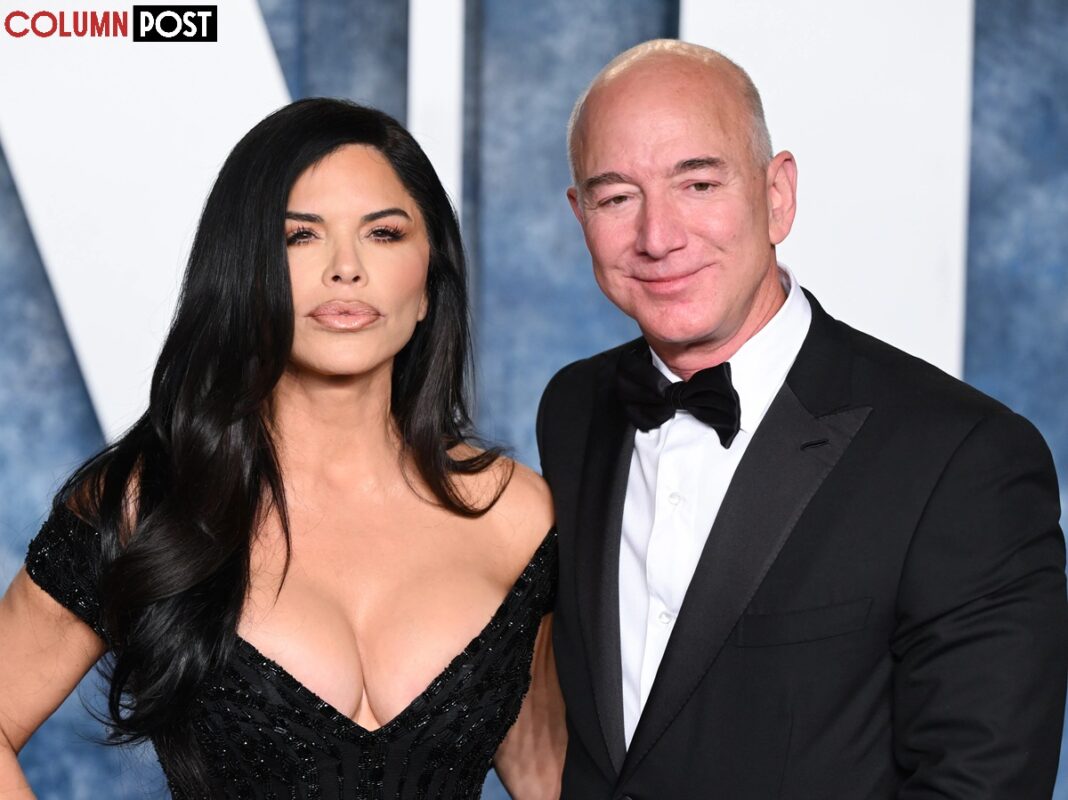

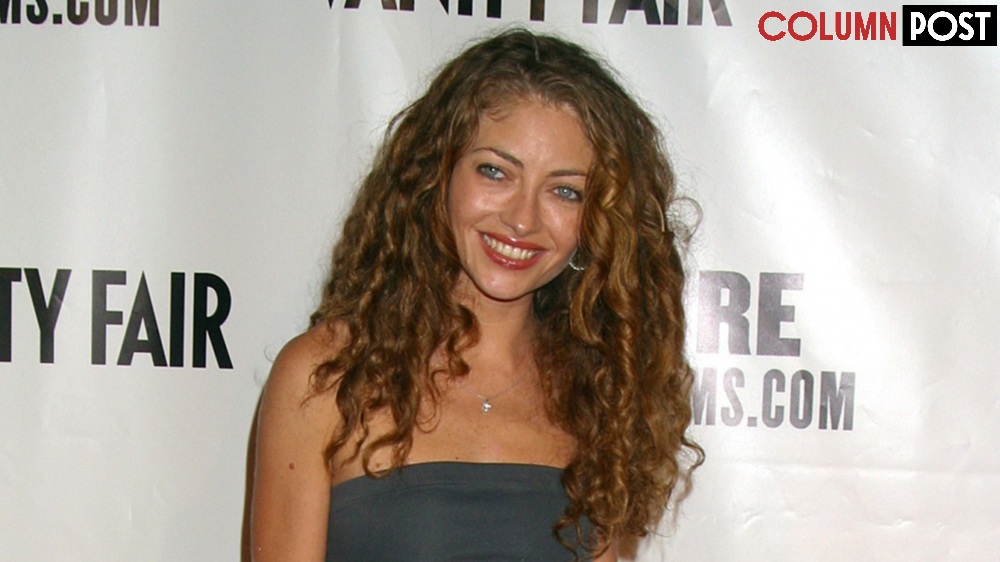
On March 17, 2026 — four days after the 98th Academy Awards, twenty-six days after her husband died Rebecca Gayheart walked the red carpet at the Los Angeles premiere of The Drama with her daughters Billie Beatrice, sixteen, and Georgia Geraldine, fourteen. It was their first public appearance since Eric Dane had died of respiratory failure due to ALS on February 19, 2026. She was fifty-four years old. She had been with Eric for twenty-three years, married for twenty-two, legally separated for eight, and his caretaker for the final ten months of his life — and the specific complexity of all of that was visible to anyone who knew the story and invisible to anyone who did not.
| Quick Facts | Details |
|---|---|
| Full Name | Rebecca Gayheart |
| Date of Birth | August 12, 1971 |
| Birthplace | Hazard, Kentucky, USA |
| Raised | Pine Top, Kentucky |
| Age (2026) | 54 years old |
| Height | 5 ft 7 in (170 cm) |
| Nationality | American |
| Heritage | German, English, Scottish, Scots-Irish |
| Father | Curtis Gayheart — coal miner and truck driver |
| Mother | Floneva “Flo” Gayheart (née Slone) — Mary Kay independent beauty consultant |
| Siblings | Rachel Deanne Gayheart; Elizabeth Gayheart; Curtis Wayne Gayheart |
| Education | Professional Children’s School, New York City; Lee Strasberg Theatre and Film Institute |
| Modelling | Noxzema Girl — national TV commercials from 1991; JCPenney; Campbell’s Soup; Burger King |
| Film debut | Whatever Happened to Mason Reese? (1990, Brett Ratner NYU short) |
| TV debut | Loving (ABC soap, 1992–1993) — Hannah Mayberry |
| Key TV | Earth 2 (1994–1995); Beverly Hills 90210 (1995, Antonia Marchette); Dead Like Me (2003); Nip/Tuck (2004–2006); Grey’s Anatomy; The Mindy Project |
| Key films | Scream 2 (1997); Urban Legend (1998, lead); Jawbreaker (1999, lead); Can’t Hardly Wait (1998); Once Upon a Time in Hollywood (2019, Mrs. Daniels) |
| Firefly | Cast as Inara Serra — replaced by Morena Baccarin after one day of shooting |
| Broadway | Steel Magnolias (March–July 2005) |
| 2001 accident | June 13, 2001 — struck 9-year-old Jorge Cruz Jr., who died next day; no contest plea; 3 years’ probation; 750 hours community service; $2,800 fine; 1-year licence suspension |
| Met Eric Dane | 2003 |
| Married | October 29, 2004 |
| Daughters | Billie Beatrice Dane (b. March 3, 2010); Georgia Geraldine Dane (b. December 28, 2011) |
| Separation | September 2017 |
| Divorce filed | February 2018; dismissed March 2025 |
| The Cut essay | December 2025 — “familial love”; lived in same home 8 years while not exclusive |
| After Eric’s death | Instagram Feb 22, 2026; first public appearance March 17, 2026 — The Drama premiere with daughters |
| Eric’s Famous Last Words | Called her his “best friend” and “biggest champion” |
| Net worth (est. 2026) | $5 million |
Six days earlier, in a Variety interview published March 11, 2026, she had said: “I’m having trouble receiving all of the support and love coming at me from every which way.” And then she said something that reflected the specific character of a woman who had spent most of her professional life on the receiving end of an industry’s judgments — about her choices, about the accident, about the marriage, about everything — and who had arrived at a specific and clear opinion about what she had found: “Hollywood gets a bad rap. That kind of makes me mad.”
The story of Rebecca Gayheart is the story of a girl from Pine Top, Kentucky — the coal country girl who won a local modelling contest at fifteen, moved to New York, became the Noxzema Girl on national television, moved to Los Angeles, became the lead actress in Urban Legend and Jawbreaker, was cast as Inara Serra in Firefly for one day before the network changed its mind, struck a nine-year-old boy with her car in 2001 and carried the weight of that for the rest of her life, met Eric Dane in 2003, married him in 2004, had two daughters with him, and then separated from him, and then filed for divorce, and then spent eight years living in the same house as him while they were not together, and then dismissed the divorce when he was diagnosed with ALS, and then became his caretaker, and then held his hand while he died, and then stood on a red carpet twenty-six days later with her daughters to show them that this is what you do. This is what forward looks like.
Pine Top, Kentucky: The Coal Miner’s Daughter
Rebecca Gayheart was born on August 12, 1971, in Hazard, Kentucky — the small city in Perry County in the heart of the Appalachian coalfields whose specific identity is inseparable from the extractive industry that built it and the specific character of the communities that the coal economy produced: tight-knit, rooted in faith and family, shaped by the particular combination of hardship and warmth that Appalachian culture consistently generates in the people who grow up within it.
She grew up in Pine Top — an even smaller community in Knott County — in a household that she has described with the specific directness of someone who was proud of where she came from without romanticising what it contained. “I grew up dirt poor,” she has said in multiple interviews, without qualification or apology. Her father Curtis Gayheart worked as a coal miner and truck driver — the specific physical labour of the Appalachian economy that sustained families through its demands on the men who performed it. Her mother Floneva “Flo” Gayheart née Slone worked as an independent Mary Kay beauty consultant — the specific entrepreneurial model available to women in small communities whose access to the formal professional economy was limited, and whose work ethic and aspirational drive gave her daughter the specific model of a woman who built what she could with what she had.
There are three siblings — Rachel Deanne, Elizabeth, and Curtis Wayne — in the specific family configuration of a household that was large by current standards and ordinary by the standards of the Appalachian community in which it was embedded. Rebecca was the second child, the first daughter, the one who won the modelling contest and moved to New York at fifteen — an origin story that requires, in retrospect, both the specific beauty that the contest identified and the specific courage that the decision demanded of a fifteen-year-old from Pine Top, Kentucky, and of the parents who let her go.
Her heritage is German, English, Scottish, and Scots-Irish — the specific ethnic blend of the Appalachian settler communities whose ancestors arrived in the mountains of eastern Kentucky through the 18th and 19th century migrations that populated the region. The heritage is the background against which the specific identity of someone who knows exactly who she is and where she came from has always operated.
New York at Fifteen: The Professional Children’s School and the Noxzema Girl
After winning a regional modelling contest, the specific opportunity that small-city talent competitions have always provided for the most capable entrants — a pathway out of the geographic limitations of the community whose entry form you filled in — Rebecca Gayheart moved to New York City at fifteen years old. She enrolled at the Professional Children’s School — the Manhattan institution whose specific educational mission of providing academic rigour alongside performance training for working child actors and models has served as the starting point for careers in entertainment since 1914.

The modelling work came quickly: early assignments for JCPenney catalogues, Campbell’s Soup advertisements, and Burger King campaigns gave her the basic professional portfolio of a young model building the client relationships and the on-camera comfort that sustained commercial work requires. These were not the campaigns that made her nationally known. The campaign that made her nationally known was Noxzema.
From 1991 onward, Rebecca Gayheart was the face of Noxzema skincare on national American television — the Noxzema Girl, whose specific combination of Kentucky-born natural beauty, easy on-camera charm, and the particular accessibility of a young woman whose appearance was aspirational rather than intimidating gave the brand the specific identity that the campaign required. The moniker stuck: “The Noxzema Girl” was how she was introduced in professional contexts, how the entertainment press described her when her acting career began, and how a specific generation of Americans who grew up watching those commercials still recognises her.
The Noxzema years were, simultaneously, the years in which her acting training was developing: she studied at the Lee Strasberg Theatre and Film Institute in Los Angeles, whose Method acting approach had produced the emotional foundation for the dramatic work that the commercial career was running alongside.
Her film debut came in 1990 — a short film by Brett Ratner, then a NYU student, called Whatever Happened to Mason Reese? The television debut followed in 1992: Hannah Mayberry in Loving, the ABC daytime soap opera whose standard function as a training ground for young actors gave her the specific sustained professional experience of working in a production environment without the support of a star’s billing or a major studio’s resources.
Earth 2, Beverly Hills 90210, and the 1990s Career

The television work of the mid-1990s — Bess Martin in NBC’s Earth 2 (1994–1995), the science fiction drama about a group of colonists travelling to a habitable planet whose one-season run established her as a television presence without sustaining the career momentum the role might have generated with a longer run — built the résumé that Beverly Hills, 90210 would subsequently make visible to a significantly larger audience.
In 1995, Rebecca Gayheart joined the cast of Beverly Hills, 90210 as Antonia Marchette — Luke Perry’s new love interest in the show’s sixth season, a character whose introduction was intended to give the series the romantic energy that Perry’s character Dylandifficult had always generated and whose exit, ten episodes later, was handled with the specific economy of a writers’ room that had changed its mind about where the storyline was going. The audience responded to the character; the show’s creative direction chose not to follow the response. She left after ten episodes.
Her music video appearances from the same period — including Heavy D and the Boyz’s “Nuttin’ But Love” and Train’s “Meet Virginia” (1999) — were the specific genre of 1990s career building that the intersection of music and visual media provided for young actresses whose faces the entertainment industry was learning to place.
The concert films and smaller credits accumulated through the mid-1990s. The film career that would define her 1990s was building toward its breakthrough with the specific patience of someone who was working consistently without having yet found the role that would make the working visible.
Scream 2, Urban Legend, and Jawbreaker: The Horror Queen Years
The late 1990s produced the specific chapter of Rebecca Gayheart’s career that her subsequent biography has most consistently been defined by — a three-film run across the horror and dark comedy genres that established her as a face of the specific generation of Hollywood performers whose careers were shaped by the post-Scream horror revival.
Scream 2 (1997) — Wes Craven’s sequel to the film that had revitalised the slasher genre with self-awareness and casting intelligence — cast her as Darla, one of the film’s characters navigating the specific terror of a killer who has seen all the same horror movies the characters have. The role placed her in the ensemble of one of the decade’s most commercially successful franchises and demonstrated her specific capability for the genre’s demands: the particular combination of physical vulnerability and quick-witted survival instinct that post-Scream horror required of its female characters.
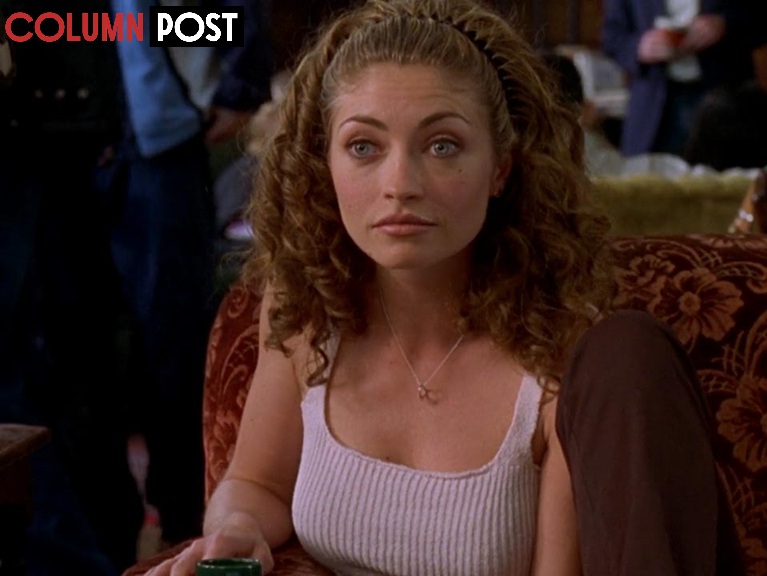
Urban Legend (1998) — the campus horror film whose specific premise, a killer motivated by urban myth scenarios, gave it the particular self-referential quality that the genre was developing across the period — cast her as the film’s lead: Natalie, the student whose investigation of the killings placed her at the centre of the narrative across the film’s full two hours. The lead performance demonstrated that the ensemble quality she had shown in Scream 2 was the subset of a more sustained dramatic capability, and that the horror genre’s specific demands — the sustained physical performance, the emotional escalation across a full narrative arc, the specific quality of genuine fear on screen — were within her range.
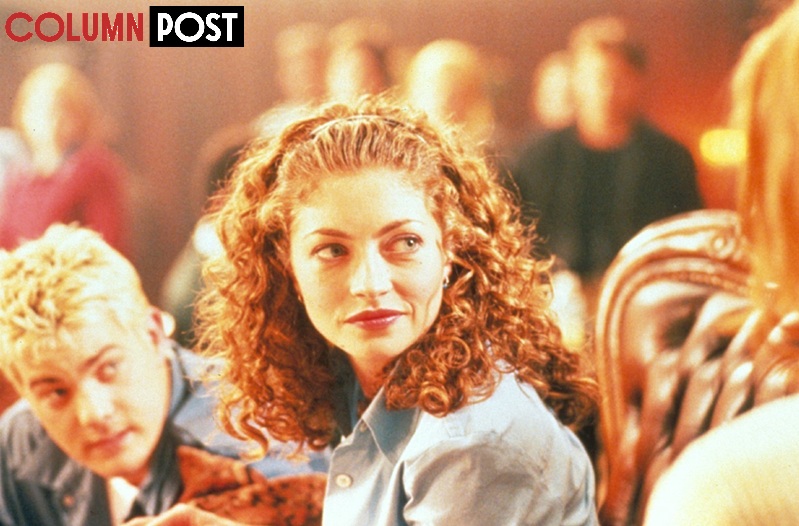
Jawbreaker (1999) — Darren Stein’s dark comedy about the popular girl clique at Reagan High School whose accidental killing of their most beloved member sets in motion the specific social machinery of teenage cruelty and hierarchical survival — cast her as Courtney Shayne: the queen bee, the ringleader, the specific archetype of beautiful cruelty that American high school cinema had been circling since Heathers and that Stein’s script gave its most crystallised expression in Courtney’s specific combination of genuine menace and camp self-awareness. The performance is the most technically complete of her film career — the specific quality of someone playing villainy with sufficient intelligence to make the character comprehensible rather than simply monstrous, whose specific pleasure in her own power is the source of the film’s comedy and the source of its unease simultaneously.

Firefly and the Role That Wasn’t
In 2002, Rebecca Gayheart was cast as Inara Serra — the Companion, the refined and professional courtesan who provides the Firefly crew with both legitimate cover and the specific moral complexity of a character whose service is simultaneously respected and stigmatised — in Joss Whedon’s Firefly, the Fox space Western whose cancellation after eleven aired episodes and subsequent cult resurrection through the Serenity film and sustained fan devotion made it one of the most discussed cases of network short-sightedness in television history.
She filmed one day of production before being replaced. The reasons for the replacement have not been fully disclosed in the public record — the standard industry ambiguity of a casting change whose specific mechanics are managed between agents and studio executives in the specific language of professional courtesy that makes these situations legible to insiders without providing the information that the public record would require to make a full accounting. Morena Baccarin replaced her and played Inara Serra across Firefly’s run and the subsequent film. The role became, in retrospect, one of the most beloved in the Whedon universe.
The specifically counterfactual biography of what Rebecca Gayheart’s career might have been had she remained in Firefly — had the network not changed its mind, had the casting held — is the biographical might-have-been that her actual career makes genuinely interesting to consider.
June 13, 2001: Jorge Cruz Jr.
On June 13, 2001 — between the Jawbreaker success and the Firefly casting — Rebecca Gayheart struck a nine-year-old boy named Jorge Cruz Jr. with her car in a residential Los Angeles neighbourhood. Jorge had been walking home from school and was crossing the street approximately 160 feet from the nearest crosswalk when Gayheart, swerving around stopped traffic, entered the left-turn lane and struck him. He was taken to Los Angeles Children’s Hospital. He died the following day.
She pleaded no contest to vehicular manslaughter — the specific legal acknowledgment of responsibility without formal admission of guilt that the circumstances of the case warranted — and was sentenced to three years’ probation, a one-year driver’s licence suspension, a $2,800 fine, and 750 hours of community service. She was also ordered to make a public service announcement about dangerous driving. She paid $10,000 toward Jorge Cruz Jr.’s funeral expenses.
She has spoken about the accident in multiple interviews across the years since, and in every instance with the specific gravity of someone who has not allowed the professional consequences to become the centre of the accounting she is required to do. Jorge Cruz Jr. was nine years old. He was walking home from school. She has said she thinks about him. The specific weight of that — the specific daily presence of an irreversible event whose consequences she has lived with for twenty-five years — is the biographical fact whose full dimensions are not reducible to a legal outcome.
Eric Dane: Meeting, Marriage, and the Complicated Love
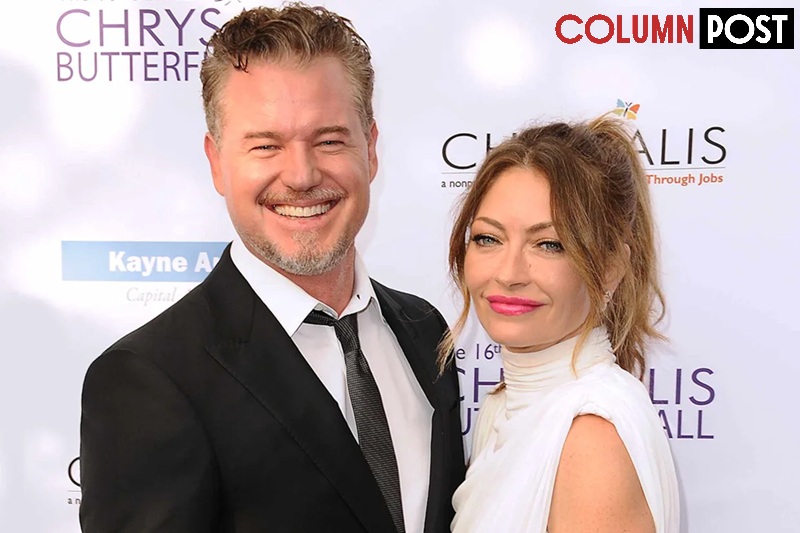
Rebecca Gayheart met Eric Dane in 2003 — the year after Firefly, two years after the accident, in the specific professional and personal circumstances of someone whose career and whose life had both been reshaped by events whose weight she was still carrying.
They married on October 29, 2004. Their daughter Billie Beatrice Dane was born on March 3, 2010. Their daughter Georgia Geraldine Dane was born on December 28, 2011. The marriage they built across those years was, by the accounts of both parties, genuine and warm and shaped by the specific connection between two people who understood each other well.
They separated in September 2017. Rebecca filed for divorce in February 2018. The divorce was never finalised. They lived in the same home for eight years while not being exclusive — the specific domestic arrangement whose logic is the shared parenthood of two daughters who needed both of them present, and whose emotional complexity they navigated without the clean resolution that a completed divorce would have represented.
In her December 2025 essay for The Cut, Rebecca described the arrangement with a directness that the entertainment press did not know how to receive and that the people who knew them found entirely consistent with how both had always lived: “Our love may not be romantic, but it’s a familial love. Eric knows that I am always going to want the best for him. That I’m going to do my best to do right by him. And I know he would do the same for me. So whatever I can do or however I can show up to make this journey better for him or easier for him, I want to do that. And I want to model that for my girls: That’s what you do. That’s the right thing to do.”
When Eric was diagnosed with ALS in April 2025, Rebecca Gayheart filed to dismiss the divorce petition in March 2025 — the month before the diagnosis was made public, suggesting she had known for some time and had already made her decision about what the diagnosis required of her.
She became his caretaker.
The ALS Chapter: The Best Friend at the Bedside
What Rebecca Gayheart did across the ten months of Eric Dane’s public ALS battle was not the performance of a devoted wife for the entertainment press. It was the daily work of someone who had decided, with full clarity about the complexity of what she and Eric were to each other and what they had been to each other across the preceding eight years, that she was the person who should be there.
Eric called her his “best friend” and his “biggest champion” in his Famous Last Words Netflix interview — filmed in the months before his death and released the day after he died. He told the interviewer: “We’re still really best friends, but we’re not together.” The specific candour of that sentence — the acknowledgement of what had changed and what had not — is the most complete available description of a relationship whose specific character the conventional categories of marriage and divorce do not accommodate.
Rebecca has described Eric’s approach to the disease with the specific admiration of someone who watched it from the closest possible distance: he “simply refused to let this disease take away hope, his life, his ability to do things, his friendships, his relationships. He did not want his purpose stripped away by this disease.”
He died on February 19, 2026. He spent his final days surrounded by Rebecca, Billie, Georgia, and close friends. The family statement confirmed it: “He spent his final days surrounded by dear friends, his devoted wife, and his two beautiful daughters, Billie and Georgia, who were the center of his world.”
After Eric: The Instagram Post and the Red Carpet
On February 22, 2026 — three days after Eric died — Rebecca Gayheart posted to Instagram: “There aren’t enough words to express our gratitude. You are truly holding us up during this difficult time.”
On March 11, 2026 — a week before the first public appearance — Variety published an interview in which she gave the first extended account of her state of mind: “I’m in a state of shock.” And then: “I’m having trouble receiving all of the support and love coming at me from every which way.” On the subject of the industry’s response: “Hollywood gets a bad rap. That kind of makes me mad.”
On March 17, 2026 — four days before today — Rebecca Gayheart attended the Los Angeles premiere of The Drama with Billie Beatrice, sixteen, and Georgia Geraldine, fourteen. It was their first public appearance as a family of three. Billie and Georgia wore dresses. Rebecca was beside them. The three of them walked the carpet together — the specific image of what forward looks like when the loss is four weeks old and the daughters are watching what their mother does next.
She is fifty-four years old. She is from Pine Top, Kentucky. She grew up dirt poor. She moved to New York at fifteen. She became the Noxzema Girl. She was in Jawbreaker and Urban Legend and she was cast in Firefly for one day. She struck a nine-year-old boy with her car in 2001 and carried it. She married Eric Dane and had two daughters with him and separated from him and filed for divorce and lived in the same house with him for eight years anyway and dismissed the divorce and became his caretaker and held his hand while he died.
She put it in the simplest available terms, in The Cut, in December 2025: “That’s what you do. That’s the right thing to do.”
Net Worth and the Career That Continues
| Income Source | Estimated Contribution |
|---|---|
| Noxzema Girl campaign (1991–mid 1990s) | Significant modelling income |
| Earth 2 (1994–1995); Beverly Hills 90210 (1995) | TV regular fees |
| Scream 2 (1997); Urban Legend (1998, lead) | Film fees |
| Can’t Hardly Wait (1998); Jawbreaker (1999, lead) | Film fees |
| Dead Like Me (2003); Nip/Tuck (2004–2006) | Cable TV fees |
| Steel Magnolias Broadway (2005) | Theatre fee |
| Once Upon a Time in Hollywood (2019) | Tarantino ensemble fee |
| The Mindy Project; Grey’s Anatomy | TV guest fees |
| Estimated Net Worth (2026) | $5 million |
Conclusion
Rebecca Gayheart was born in Hazard, Kentucky, on August 12, 1971, the daughter of a coal miner and a Mary Kay consultant. She grew up dirt poor in Pine Top. She won a modelling contest, moved to New York at fifteen, became the Noxzema Girl, moved to Los Angeles, made Urban Legend and Jawbreaker, was cast in Firefly and replaced after one day, struck a nine-year-old boy with her car and pleaded no contest and served her probation and made the PSA and carried it for twenty-five years, met Eric Dane in 2003, married him in 2004, had Billie in 2010 and Georgia in 2011, separated in 2017, filed for divorce in 2018, lived with him for eight years without finalising it, dismissed the divorce when he was diagnosed with ALS, became his caretaker, was called his best friend and biggest champion in his final interview, held him while he died on February 19, 2026, thanked people on Instagram three days later, told Variety she was in a state of shock and that Hollywood gets a bad rap and that made her mad, and walked the red carpet with her daughters twenty-six days after her husband died because that’s what you do and that’s the right thing to do.
She is fifty-four years old. She is still the Noxzema Girl from Pine Top, Kentucky, in the specific sense that matters — the girl who moved toward things that mattered and did not look away from the things that were hard.
FAQs
1. What happened to Rebecca Gayheart in 2001? On June 13, 2001, Rebecca Gayheart struck nine-year-old Jorge Cruz Jr. with her car in Los Angeles. The boy was crossing the street when Gayheart swerved around traffic and hit him. He died the following day. She pleaded no contest to vehicular manslaughter and was sentenced to three years’ probation, 750 hours community service, a $2,800 fine, and a one-year licence suspension.
2. Why didn’t Rebecca Gayheart divorce Eric Dane? Rebecca Gayheart filed for divorce in February 2018 after they separated in 2017, but the divorce was never finalised. They lived in the same home for eight years while no longer being exclusive, primarily to co-parent their daughters. When Eric was diagnosed with ALS in 2025, Gayheart dismissed the divorce petition to become his caretaker. She has described their bond as a “familial love” that endured despite the end of their romantic relationship.
3. Who are Rebecca Gayheart’s daughters? Rebecca Gayheart and Eric Dane have two daughters: Billie Beatrice Dane (born March 3, 2010) and Georgia Geraldine Dane (born December 28, 2011). Both daughters were with their mother at her first public appearance after Eric’s death on March 17, 2026.
4. What was Rebecca Gayheart’s most famous role? Beyond her Noxzema commercials, her best-known film roles are Courtney Shayne in Jawbreaker (1999) and the lead in Urban Legend (1998). She also appeared in Scream 2 (1997), Beverly Hills 90210 (1995), and in a brief role in Quentin Tarantino’s Once Upon a Time in Hollywood (2019).
5. Was Rebecca Gayheart cast in Firefly? Yes — Rebecca Gayheart was originally cast as Inara Serra in Joss Whedon’s Firefly (2002) but was replaced by Morena Baccarin after just one day of filming. The reasons for the replacement were never fully disclosed publicly.
6. What is Rebecca Gayheart’s net worth in 2026? Rebecca Gayheart’s estimated net worth in 2026 is approximately $5 million, accumulated through her modelling career as the Noxzema Girl, her film work in Urban Legend, Jawbreaker, and Scream 2, and her television work across multiple series.