
| Quick Facts | Details |
|---|---|
| Full Name | Susan Ruth Aikens |
| Date of Birth | July 1, 1963 |
| Birthplace | Mount Prospect, Illinois, USA |
| Age (2026) | 62 years old |
| Ancestry | American; grandfather originally from Scotland |
| Childhood | Moved to Alaska age ~12; abandoned by mother; raised herself in wilderness |
| Education | Graduated high school age 13 (accelerated programme) |
| Kavik River Camp | 197 miles north of the Arctic Circle; near Arctic National Wildlife Refuge; 500 miles from Fairbanks |
| Bear Attack | 2007 — grizzly attack; survived alone 10 days; sewed own wounds |
| TV Career | Sarah Palin’s Alaska (2010); Flying Wild Alaska (2011–2012); Life Below Zero (2013–present) |
| Life Below Zero | All 23+ seasons; 5 Primetime Emmy Awards (show) |
| BBC Lawsuit | Filed February 2017; claimed forced into dangerous staged snowmachine crash; dismissed June 2017 for procedural reasons |
| Producer Credit | Panama (2022) — starring Mel Gibson, Cole Hauser |
| Marriages | Three — first husband died of brain cancer; second husband (Eddie James Aikens, m. June 1987) died after ~17-year marriage/2004 divorce; third left her for younger woman |
| Current Partner | Michael G. Heinrich — journeyman electrician, Flushing, New York; engaged |
| Children | One daughter; one son (Jesse Aikens) |
| Granddaughter (deceased) | Pen — died 2022 |
| Camp Rate | $350 per day for visitors/hunters |
| Annual Salary (est.) | ~$200,000 |
| Net Worth (est. 2026) | $1.5 million – $2 million |
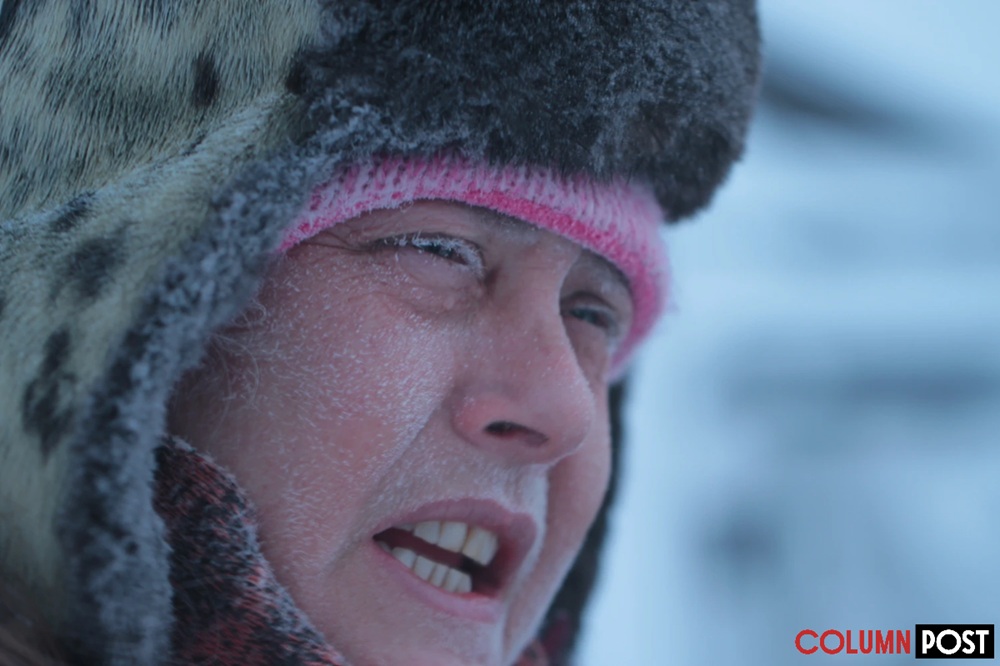
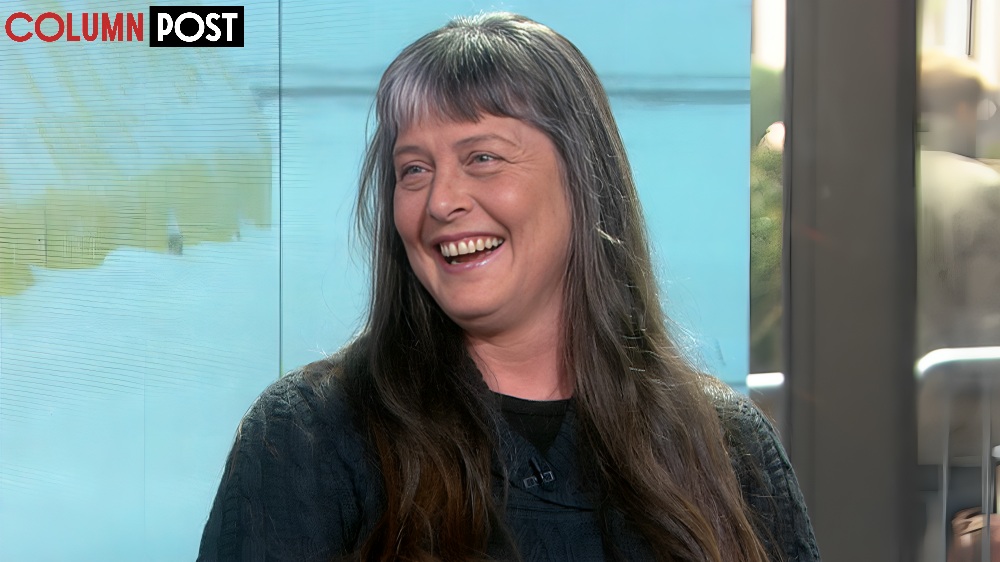
There is a specific kind of toughness that Alaskans recognise and the rest of the world tends to underestimate — the toughness not of aggression or bravado but of the person who has learned, through accumulated experience rather than choice, that survival is simply what you do when the alternative is not surviving. Sue Aikens is the clearest living example of that quality that American television has ever put on screen. She lives alone, for nine months of every year, at Kavik River Camp — a wilderness outpost located 197 miles north of the Arctic Circle, 500 miles from the nearest city of Fairbanks, accessible only by aircraft, situated in the middle of grizzly bear territory, and subject to temperatures that regularly fall below minus 40 degrees Fahrenheit in winter. She has done this for decades. She intends to continue.
Her motto — “If it hurts, don’t think about it” — is not a performance. It is the operational philosophy of a woman who, in 2007, was attacked by a grizzly bear, sewed her own wounds together with available materials, dragged herself across a river, found the bear that attacked her, shot it, called for help on her radio, and then lay injured and alone for ten days until a local pilot found her. It is the philosophy of a woman who graduated high school at thirteen, was abandoned in Alaska by her mother at twelve, and built a life in one of the most remote and hostile environments on the North American continent through skill, determination, and the refusal to treat difficulty as a reason to stop.
Mount Prospect to the Last Frontier: A Childhood That Forged Everything
Susan Ruth Aikens was born on July 1, 1963, at Holy Family Hospital in Mount Prospect, Illinois — a suburban community in Cook County, northwest of Chicago, whose character could not be more different from the Arctic wilderness in which she would eventually make her permanent home. Her grandfather was originally from Scotland; the broader family background is American, with the specific working-class Midwestern character that Mount Prospect and its surrounding communities represented in the 1960s.
Her parents separated when she was young — during the late 1960s or early 1970s — and the consequences of that separation set the trajectory of everything that followed. When Sue was approximately twelve years old, her mother relocated to Alaska, taking Sue with her to a friend of the family in Fairbanks. What happened next is, by Sue’s own account, simple and brutal: her mother, unable to adapt to the cold and the isolation, left. She did not take Sue with her. She left her daughter in Alaska and returned to Illinois.
The abandonment was not temporary. Sue Aikens grew up in the Alaskan wilderness, functionally without parental guidance, learning the skills that survival in that environment requires from whatever sources were available. An old Alaskan sourdough — the term for a long-experienced Alaskan wilderness resident — taught her to hunt with a rifle. She learned to fly a plane. She absorbed the practical knowledge of the Arctic: how to read weather, how to manage water in a landscape where the ground is frozen year-round, how to hunt and fish and preserve food through conditions that would constitute an emergency for most people and are simply Tuesday for someone who has learned to live in them.
She graduated from high school at thirteen through an accelerated programme — not because the academic content was insufficient but because she had already determined that the life she intended to live did not require the conventional institutional pathways, and that the faster she completed the formal requirements, the sooner she could pursue the wilderness existence that already defined her sense of identity and purpose. The graduation at thirteen is not a quirky biographical footnote. It is evidence of a specific intelligence — the kind that knows exactly what it wants and moves toward it without detour.
Kavik River Camp: The Place at the Edge of the World
Kavik River Camp sits at coordinates 69.4°N, 146.54°W — in the northern foothills of the Brooks Range, a few miles from the boundary of the Arctic National Wildlife Refuge, 197 miles north of the Arctic Circle, and accessible only by a 5,500-foot gravel airstrip that Sue maintains herself. There is no road. There is no neighbour within any practical distance. The nearest city, Fairbanks, is approximately 500 miles to the south.
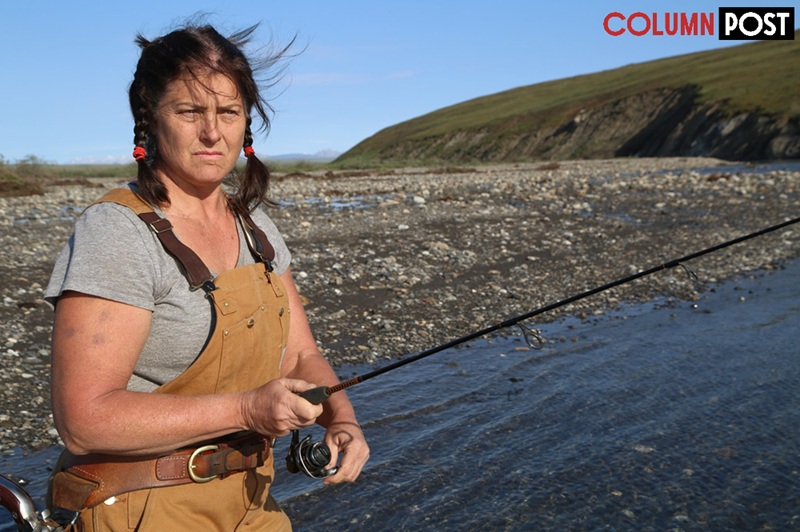
The camp was originally established as a support facility for oil exploration operations on the North Slope — the vast, flat, treeless plain that stretches from the Brooks Range to the Arctic Ocean and that the 1968 discovery of the Prudhoe Bay oil field transformed into one of the most economically significant pieces of real estate in American history. When the oil exploration infrastructure moved on, the camp remained — a collection of buildings, a runway, fuel storage, and the basic infrastructure of a remote operations base — and Sue Aikens eventually took it over, transforming it from an industrial remnant into a functioning wilderness camp that operates from early June through the end of September each year.
During the operating season, Kavik River Camp serves hunters, nature enthusiasts, scientific researchers, birders, and adventurers who want to experience the Arctic on its own terms. The camp charges $350 per day for visitors and provides lodging, logistical support, and access to the hunting and wildlife watching opportunities that the surrounding landscape offers in extraordinary abundance. The camp can house a significant number of guests at one time, has WiFi capability for its clients, and provides the fuel services that aircraft operating in this part of Alaska require. During the nine months of winter when no visitors come, Sue remains alone — managing maintenance, monitoring the camp’s infrastructure, hunting and fishing for the food she needs to survive, and doing all of it without neighbours, without emergency services within any reasonable response distance, and without the option of simply calling someone when something goes wrong.
“The Arctic and wilderness have been a passion and part of my soul for a long time,” she told Forbes. The understatement in that sentence is characteristic.
The 2007 Bear Attack: Ten Days Alone
In 2007, Sue Aikens was performing one of the routine tasks that Kavik River Camp’s late-season operations required — pumping water from the Kavik River before it froze solid for the winter. She had, as she always did when working outdoors in bear country, brought her rifle. Operating the water pump required both hands. She put the rifle down.
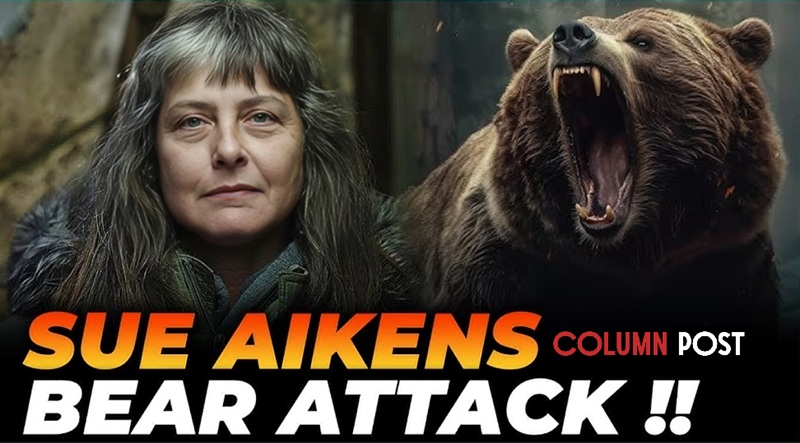
She had seen the bear before. It was a juvenile male grizzly that had been burying caribou carcasses near the camp — using the area around the helicopter landing pad as a food cache, which meant the carcasses had to be moved both to deter the bear from coming closer and to keep the landing area clear. She had been aware of its presence and had been managing the situation with the pragmatic caution of someone who understands bear behaviour from long experience rather than from wildlife documentaries.
The bear came out of the fog from the riverbank while both her hands were on the pump. She had no time to reach the rifle. The bear pushed her to the ground.
What followed is documented in Sue’s own account, given to The Scotsman and to National Geographic in multiple interviews, and represents one of the most remarkable individual survival stories in recent Alaskan history. The bear, she later explained, was climbing the social hierarchy — its attack was about dominance rather than predation, which meant playing docile rather than fighting back was the correct response. She played docile. It worked, in the sense that the bear did not kill her — but it left her severely injured, with dislocated hips, serious wounds to her head and arm, and injuries that would have constituted a medical emergency even in proximity to hospital facilities.
She was not in proximity to hospital facilities. She was alone, injured, at Kavik River Camp, 197 miles north of the Arctic Circle.
What she did next is the foundation of everything people understand about Sue Aikens. She sewed her own head wound together. She dealt with her arm injury. She fashioned a belt support to stabilise her dislocated hips. She dragged herself across the river to where the bear had gone. She found it. She shot it. She radioed for help. Then she lay there and waited.
Help came after ten days. A local pilot found her at the camp. By any clinical assessment, her survival across that ten-day period — injured, alone, in late-season Arctic conditions — required a combination of physical toughness, practical knowledge, and psychological resilience that most people do not possess and that Sue Aikens had been building, without design but with accumulating purpose, since a twelve-year-old girl was left alone in Alaska by a mother who didn’t come back.
“If you live my lifestyle, you must be comfortable with your own death,” she said in a later interview. The comfort is evidently genuine. The bear attack did not make her leave. She went back to Kavik River Camp as soon as she had recovered sufficiently to return, and she has been there since.
Television: From Sarah Palin’s Alaska to Life Below Zero
Sue Aikens’s transition from wilderness camp operator to television personality began in 2010, when she appeared in Sarah Palin’s Alaska — the TLC documentary series that followed Alaska’s former governor across the state’s landscapes and communities. The appearance introduced her to a broader audience and established the screen presence — direct, unpolished, funny, and genuinely competent in ways that most reality television “competence” is not — that subsequent productions would develop more fully.
She appeared in Flying Wild Alaska (2011–2012), the Discovery Channel series about the Era Alaska bush pilot operation, which further developed her television profile and demonstrated that her appeal was not dependent on a single format but was intrinsic to her character and circumstances.
In 2013, she joined the cast of Life Below Zero as one of its founding participants — appearing in the premiere episode, “End of the Road,” on May 19, 2013. The National Geographic series, produced by BBC Worldwide Reality Productions, documented the lives of several Alaskans living subsistence lifestyles in remote locations across the state. Sue’s segment, filmed at Kavik River Camp, became one of the show’s defining components: the woman alone at the edge of the world, managing infrastructure, hunting for food, maintaining equipment, and doing all of it with the matter-of-fact efficiency of someone for whom the extraordinary is simply the ordinary.
The show ran to 23 seasons and counting, winning five Primetime Emmy Awards across its broadcast history and accumulating 16 Emmy nominations. Sue has appeared in every season — making her one of the programme’s longest-serving and most recognisable cast members. Other participants across the show’s run have included Chip and Agnes Hailstone, Glenn Villeneuve, and Jessie Holmes — a rotating ensemble of Alaskans whose various approaches to remote subsistence living gave the series its breadth. Sue’s segment, set furthest north of any cast member, consistently provided the show’s most extreme conditions.
“They show me swearing, smoking stogies, and not brushing my hair for months on end,” she told the Anchorage Daily News, with the amused directness of someone who has made her peace with being televised on entirely her own terms.
The BBC Lawsuit: When the Documentary Became a Stunt Show
In February 2017, Sue Aikens filed a 32-page lawsuit in U.S. District Court in Anchorage against BBC Worldwide Reality Productions, three of its subsidiaries, producer Aaron Mellman, and unnamed crew members. The lawsuit’s allegations constituted one of the most detailed and specific accounts of reality television production malpractice to emerge from the industry in recent years.
The central incident concerned a season five episode titled “The Crash,” which aired on June 15, 2015. According to the lawsuit — which drew on contemporaneous accounts and was filed by Aikens’ legal representatives with specific factual detail — producer Aaron Mellman had arrived at Kavik River Camp in February 2015 with a production crew and proceeded to direct the filming with a disregard for Aikens’ safety and the documentary nature of her contract that escalated progressively across the production period.
The lawsuit alleged that Mellman forced Aikens to remain outdoors in temperatures of minus 72 degrees Fahrenheit without a face mask — insisting on capturing her face on camera despite her requests for protective equipment — resulting in frostbite. When Aikens suggested genuinely organic filming opportunities — hunting for ptarmigan, for example, which would have provided both authentic documentary content and practical food acquisition — Mellman directed her instead toward scripted scenarios that served the production’s drama requirements rather than the documentary representation of her actual life that her contract specified.
The crash itself occurred when Mellman directed Aikens to travel the river on her snowmachine and navigate overflow ice — a hazard that, as the lawsuit noted, Alaskans avoid at all costs under normal circumstances. Aikens objected explicitly. Mellman reportedly responded with anger. She complied, driving across the overflow at approximately 60 mph. She hit glare ice, went into a side slide she could not recover from, collided with an ice heave, and was thrown from the vehicle. She reported hearing her bones snap. She lay in the snow, conscious but unable to move or breathe normally.
The crew was within twenty feet of the crash site. According to the lawsuit, rather than immediately calling for a life-flight rescue, Mellman directed the pilot to land at the far end of the mile-long Kavik runway — in order to film Aikens walking injured toward the aircraft. The defendants, the lawsuit alleged, “wanted to film how much pain Plaintiff was suffering.”
On the show, the episode presented Aikens as having made a misjudgment — “a stupid mistake,” she appears to say on camera. The lawsuit alleged this framing was constructed from footage and materials manipulated to fictionalise the incident in violation of her contract’s specific provision that “the producer will not use the footage and materials to fictionalize an event.”
The lawsuit was dismissed on June 16, 2017, for procedural reasons — specifically, failure to make proper service to the defendants. The dismissal was procedural rather than substantive; no court ruled on the merits of the allegations. Producer Aaron Mellman’s IMDB credits end with Life Below Zero episodes from 2016, suggesting he did not continue with the production after the lawsuit period. BBC Worldwide Reality Productions issued no substantive public response to the allegations.
Personal Life: Three Marriages, Children, and the Loss of Pen
Sue Aikens has been married three times. Her first husband died of brain cancer — the specific timeline of this marriage is not fully documented in public records, but it preceded her June 1987 marriage to Eddie James Aikens, whose surname she has retained professionally and personally across the decades since. The marriage to Eddie lasted approximately seventeen years before their divorce in 2004; Eddie died shortly after the divorce, leaving Sue as both a divorcée and a widow within a short timeframe. A third husband subsequently left her for a younger woman.
The combination of those three outcomes — one husband dead of cancer, one divorced and then dead, one departed by choice — has been noted in Sue’s interviews with the specific brevity of a person who has processed these losses practically rather than publicly. She has not dwelt on them for the camera. She has continued.
She has one daughter and one son, Jesse Aikens, whose own family has given Sue multiple grandchildren. Her granddaughter Amelia Jean Aikens was born on January 23, 2020 — a new life that Sue announced publicly with visible joy. Her grandson Nathan Payne appeared in a Life Below Zero episode visiting her at the camp. In 2022, Sue suffered the loss of her granddaughter Pen, whose death she acknowledged publicly with the grief of a grandmother who had loved specifically and lost concretely.
She is currently engaged to Michael G. Heinrich — a journeyman electrician from Flushing, New York, whose relationship with Sue represents the long-distance partnership of two people whose lives are geographically incompatible in conventional terms and apparently workable on the terms they have negotiated.
Net Worth: What Kavik River Camp and Twenty-Three Seasons Add Up To
| Income Source | Estimated Contribution |
|---|---|
| Life Below Zero — per episode fee (~$4,500 × 23 seasons) | ~$500,000+ cumulative |
| Annual salary from show (est.) | ~$200,000/year |
| Kavik River Camp — $350/day, operating season | Seasonal; variable |
| Guest appearances (Joe Rogan Experience, Today, Fox & Friends, Access Hollywood Live) | Additional |
| Executive producer credit — Panama (2022) | Modest fee |
| Estimated Total Net Worth (2026) | $1.5 million – $2 million |
The figure is modest relative to the cultural footprint of a woman who has appeared in every season of an Emmy-winning National Geographic series for over a decade — a reflection both of the specific economics of documentary reality television and of the fact that Sue Aikens’s primary asset is not financial but experiential: the camp, the skills, the land, the life she has built 197 miles north of the Arctic Circle.
Conclusion
Sue Aikens was born in Mount Prospect, Illinois, on July 1, 1963, abandoned in Alaska at twelve, graduated high school at thirteen, learned to hunt and fly and survive in one of the most hostile environments on the continent, survived a grizzly bear attack by sewing her own wounds and lying alone for ten days, built a wilderness camp at the edge of the Arctic world, became one of the most recognisable faces in documentary television, sued the BBC for staging the drama they were supposed to be documenting, lost a granddaughter, got engaged to an electrician from New York, and continues — season after season, winter after winter — to live exactly the life she chose.
Her motto remains unchanged: if it hurts, don’t think about it. The Arctic, and everything it has required of her, has given her no reason to revise it